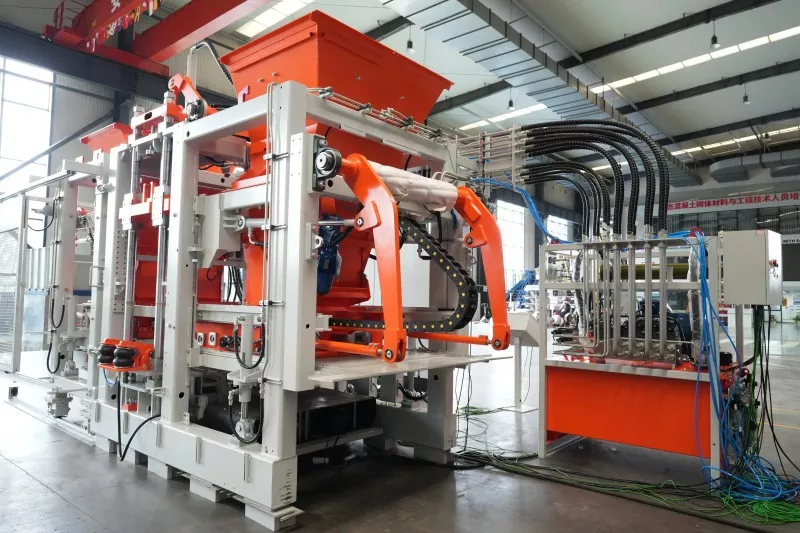
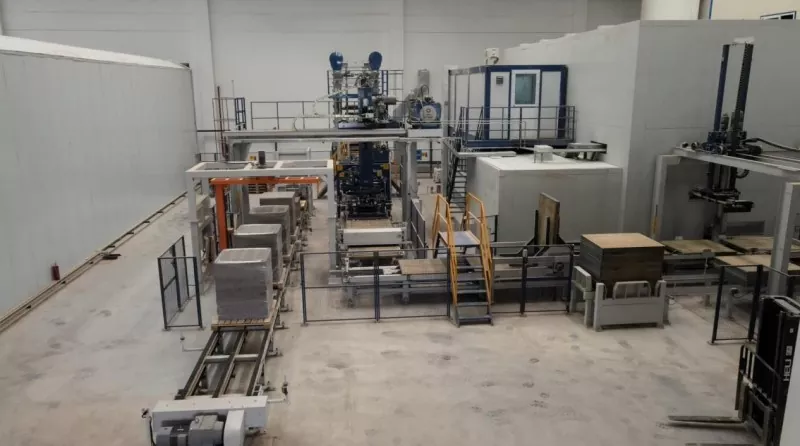
Many manufacturers believe that improving block quality starts with purchasing a more advanced machine. In reality, the performance of any paving block machine depends heavily on one fundamental factor—the concrete mix.
Southeast Asia is experiencing rapid urban expansion, infrastructure development, and large-scale redevelopment projects. Countries including Indonesia, Vietnam, Malaysia, Thailand, and the Philippines are investing heavily in transportation networks, residential communities, industrial parks, and urban renewal programs.
Producing premium concrete blocks is not simply about using more cement or investing in larger equipment. The real advantage comes from creating a balanced production system where raw materials, machine performance, and process control work together efficiently.
With the increasing impact of global climate change, extreme high-temperature weather has become more frequent in many regions. For concrete block manufacturing plants, summer heat is not only a challenge for operators but also a critical test for block making machines, concrete block production lines, and factory safety management systems.
In today's construction materials industry, increasing production output is one of the fastest ways to improve profitability. However, many manufacturers mistakenly believe that higher capacity can only be achieved by purchasing new equipment.
For many concrete product manufacturers across Southeast Asia, improving block quality is often associated with higher spending on raw materials, labor, or equipment upgrades. In reality, some of the most effective quality improvements come from optimizing existing resources rather than increasing operational budgets.
In the concrete products industry, consistency is often more important than peak performance. Producing one batch of high-quality blocks is relatively easy; producing thousands of blocks with identical strength, density, dimensions, and appearance day after day is the real challenge.
In today's highly competitive concrete products industry, producing high-quality blocks consistently requires far more than simply operating a machine. Product performance, dimensional accuracy, and manufacturing efficiency are all influenced by a series of interconnected factors, including raw materials, equipment configuration, process control, and maintenance practices.
In the construction industry, compressive strength is one of the most important indicators of concrete paving block performance. However, the strongest paver block is not always the best paver block. The real objective is to achieve the right strength level for the intended application while maintaining production efficiency, material economy, and long-term durability.
For producers of concrete blocks and paving products, a block machine is more than just production equipment—it is a long-term investment that directly impacts operating costs, output stability, and business growth. Whether operating a cement paving block machine for local construction projects or a large-scale automated production line, extending machine lifespan is essential for maximizing return on investment.
In the concrete products industry, molds are far more than replaceable wear parts—they are critical precision-engineered components that directly influence block dimensions, surface appearance, and overall product strength. Whether operating a standard block machine,or a high-capacity paving block making machine, mold condition has a direct impact on production efficiency and finished product quality.
In the realm of concrete block manufacturing, machinery like those from QGM sets the standard for production efficiency, but the true foundation of product excellence lies in the precise balance of cement and aggregate.
In the concrete block manufacturing industry, searching for a single "best mix design" is often a misguided pursuit. The reality is that no universal formula exists. Every production environment is unique, shaped by distinct local raw materials, specific equipment capabilities, and varying end-product specifications.
For many small concrete block producers across the U.S., increasing output doesn't necessarily mean purchasing a larger machine or investing in a fully automated production line. More often, productivity losses come from inefficient workflows, inconsistent operating practices, avoidable downtime, and equipment that isn't being utilized to its full potential.
We use cookies to offer you a better browsing experience, analyze site traffic and personalize content. By using this site, you agree to our use of cookies.Privacy Policy