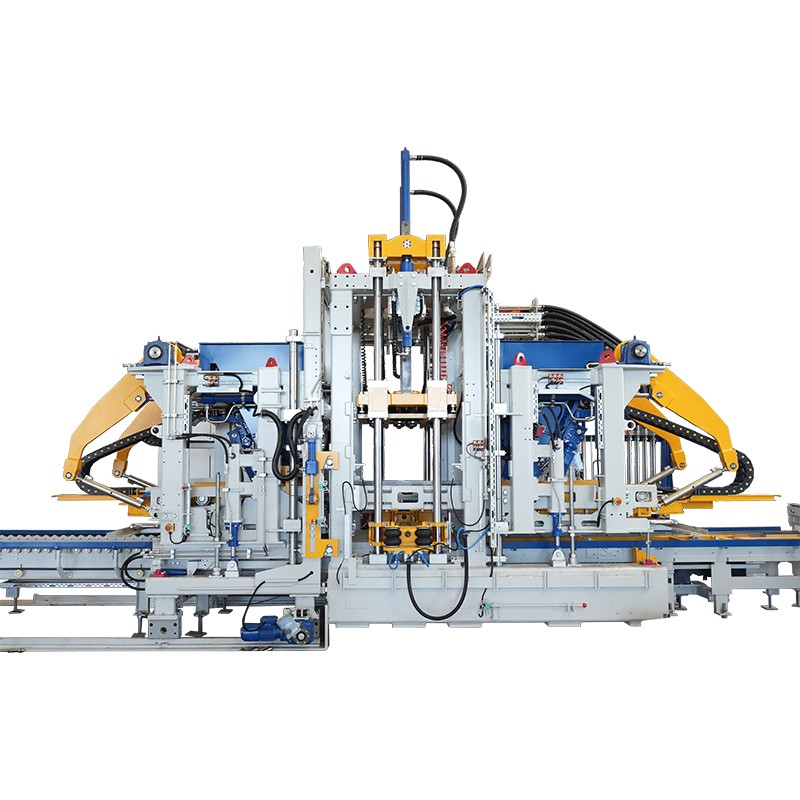
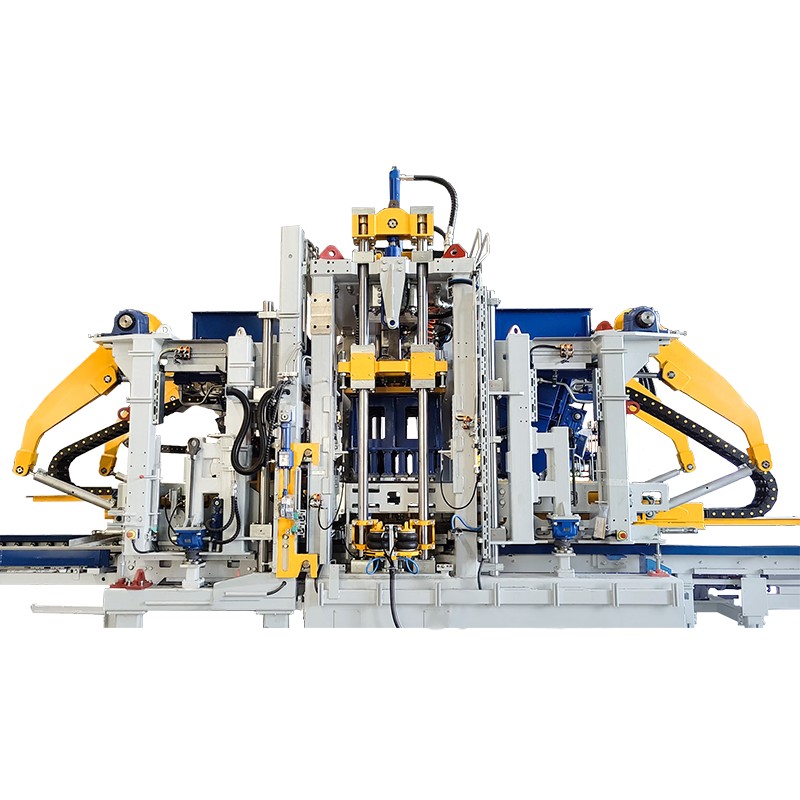
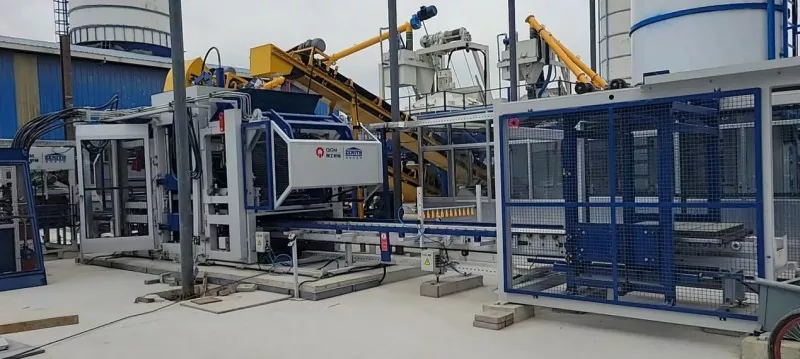
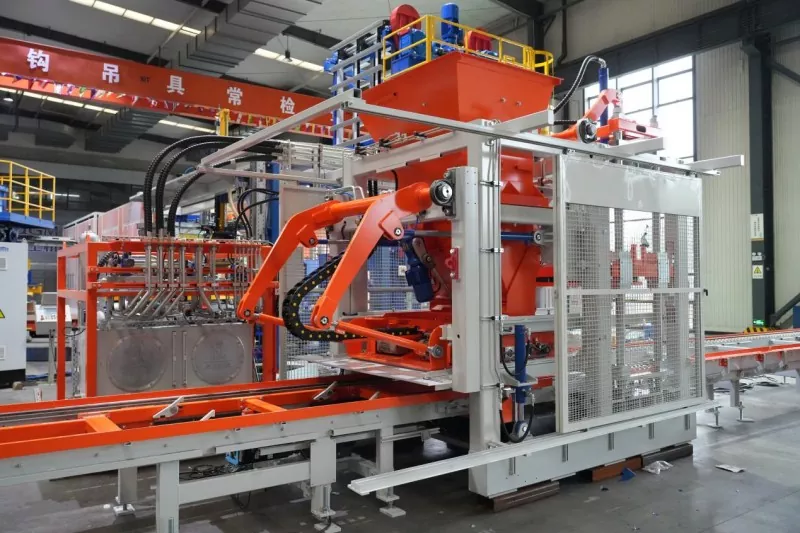
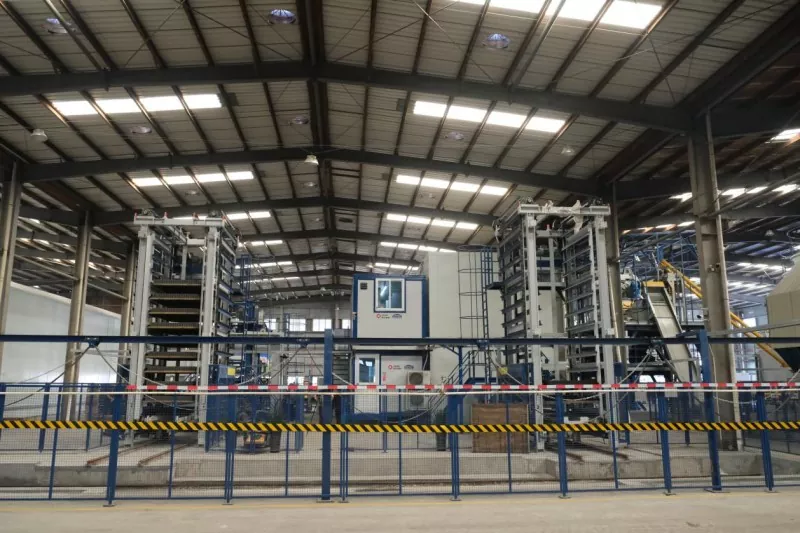
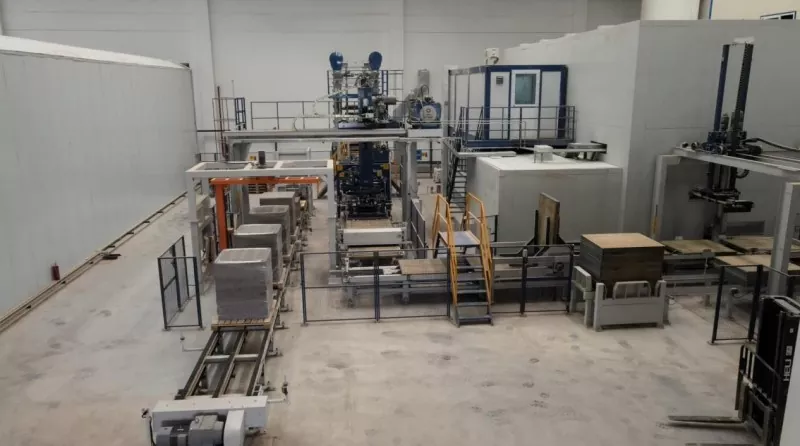
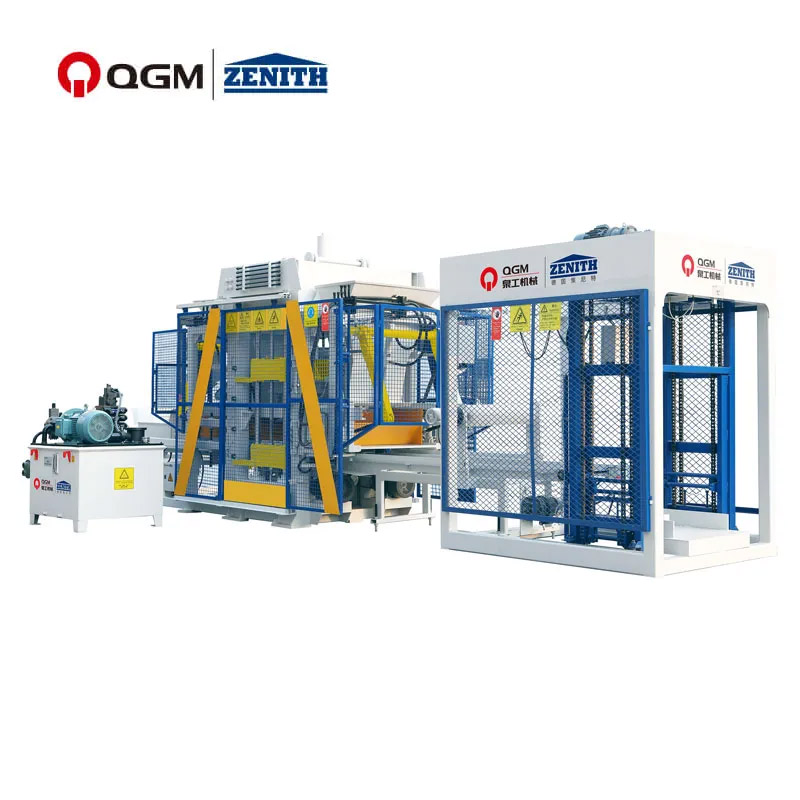
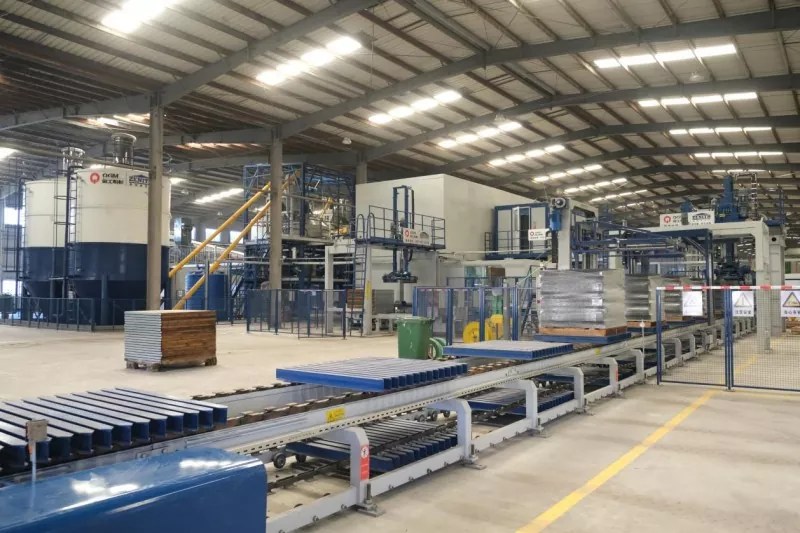
Unlike smartphones and passenger cars, block making machines rarely attract public attention. They are not products typically displayed in shopping malls or compared by consumers based on specifications and features. Instead, these heavy-duty machines operate behind the scenes in concrete block plants and precast concrete production facilities, where they are responsible for continuous forming, stable production, and large-scale manufacturing.
Yet these relatively low-profile pieces of construction equipment can reveal a great deal about a manufacturer's true technical capabilities and global competitiveness. From engineering and manufacturing to installation, commissioning, operation, maintenance, and after-sales support, the performance of a concrete block machine depends on much more than the machine itself. It also reflects a manufacturer's R&D capabilities, quality control, supply chain management, international service network, and understanding of local market requirements.
When a block making machine can operate reliably on production lines across different countries and regions, it represents more than a successful equipment export. It demonstrates a manufacturer's ability to take its products from the domestic market to the global stage and, more importantly, to provide long-term technical and service support after installation.
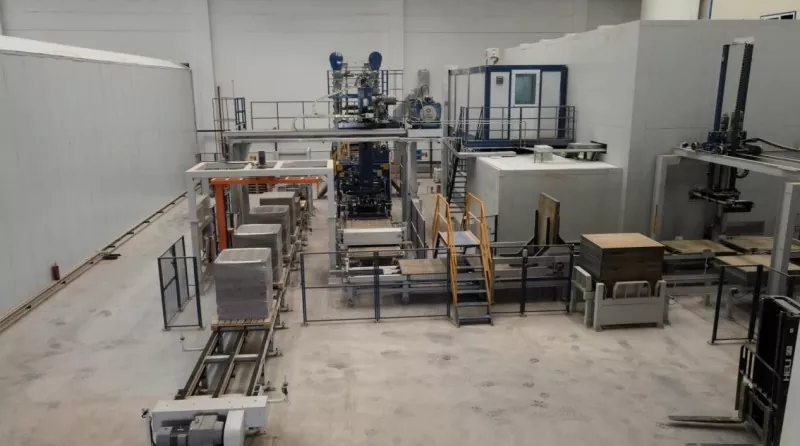
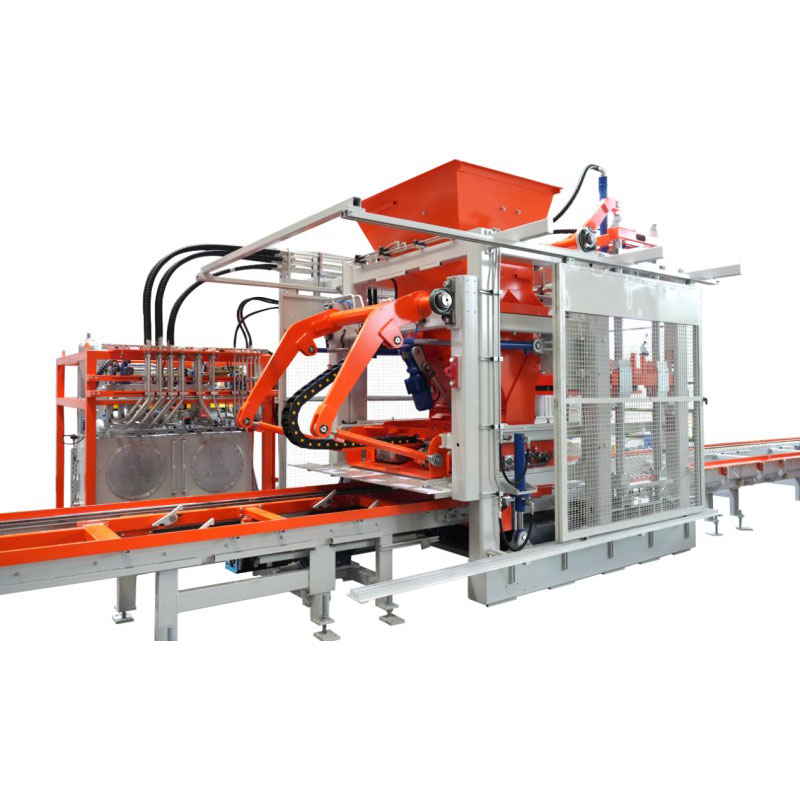
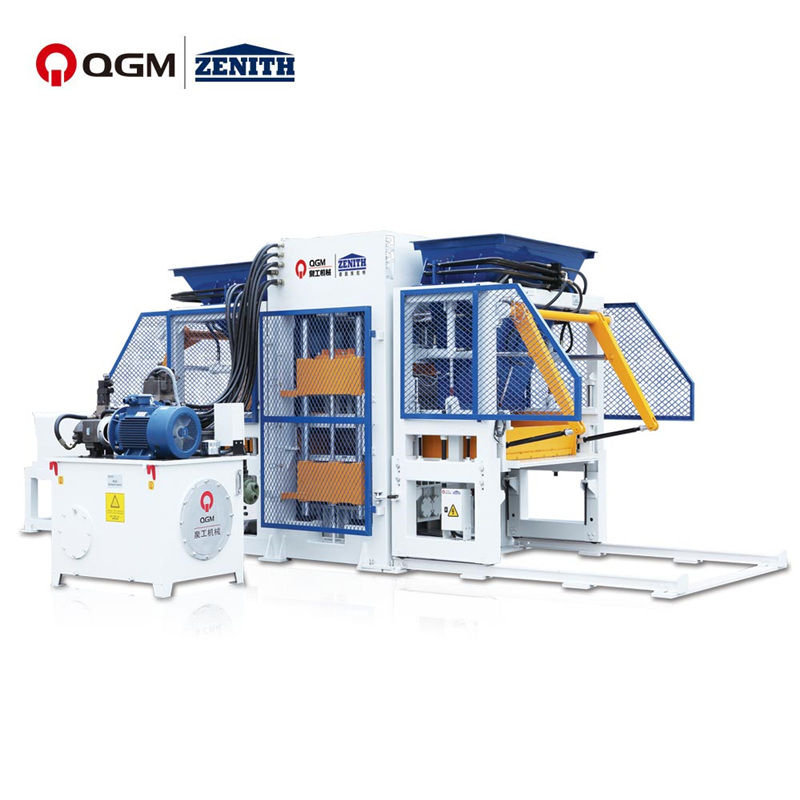
△Successful Global Applications of QGM Automatic Block Machines
When discussing the international expansion of Chinese manufacturing, people often focus on competitive pricing and cost performance. These factors remain important, but for industrial equipment such as block making machines, concrete block machines, and fully automatic concrete block production lines, price is often only the starting point of a business relationship.
Once the equipment is installed overseas, customers tend to focus on more practical questions. Can the production line operate reliably? How quickly can technical problems be resolved? Are genuine spare parts readily available? Will the manufacturer continue to provide technical support several years after commissioning?
For a block making machine manufacturer, therefore, exporting equipment does not mark the end of a project. In many respects, it marks the beginning of the real test of a company's capabilities.
Once a machine leaves the factory and begins operating at an overseas customer's production site, the manufacturer must demonstrate that its technology, service infrastructure, spare parts system, and technical expertise can support the customer over the long term.
When a concrete block machine encounters a problem in its domestic market, service engineers can usually reach the site relatively quickly. International projects are different. A machine installed in Southeast Asia, the Middle East, Africa, Europe, or Latin America may be thousands of kilometers away from the manufacturer's headquarters.
Visa procedures, international flights, local transportation, site access, and coordination with the customer's production team can all affect response times.
For consumer products, waiting several days for a repair may be inconvenient but manageable. For a concrete block production line, however, prolonged downtime can directly affect production schedules, order fulfillment, labor utilization, and delivery commitments to downstream construction projects.
A modern automatic block production line is also much more complex than a standalone machine. It may include batching and mixing systems, material feeding and distribution systems, the block molding machine, conveyors, pallet handling, and stacking equipment, together with mechanical, hydraulic, electrical, and automation systems.
As a result, what initially appears to be a simple equipment fault may require systematic troubleshooting across several interconnected systems.
The challenge for an international manufacturer is therefore not simply whether it has service engineers, but whether it can deliver technical support quickly and effectively at the customer's location. This is why manufacturers with established international operations are increasingly developing regional service centers, authorized service networks, and local technical partnerships. Equipment can be exported from one country to another, but effective service cannot always depend on engineers traveling from headquarters.
Distance is only one part of the challenge. Spare parts supply is equally important to the long-term operation of overseas block making equipment.
A production stoppage is not always caused by a major technical failure. A relatively small component, such as a sensor, seal, electrical component, or hydraulic part, can prevent a production line from returning to normal operation if the required replacement part is unavailable locally.
The cost of the component itself may be relatively low, but its absence can keep an entire automatic block making machine out of production.
A mature international after-sales system therefore requires more than a central spare parts warehouse. Manufacturers need to understand equipment populations, operating conditions, failure patterns, and component consumption in different regions in order to establish appropriate spare parts inventories.
Frequently replaced wear parts, critical components, and region-specific parts may require different inventory strategies. Standardized and interchangeable components can also simplify maintenance and shorten replacement times.
From this perspective, an overseas spare parts network is not simply about holding more inventory. Its real purpose is to reduce equipment downtime and restore production as quickly as possible. For heavy-duty industrial equipment, spare parts availability is an important measure of after-sales service capability.
Once a block making machine enters international markets, it must operate under widely different environmental and production conditions.
Some areas of Southeast Asia experience high temperatures, high humidity, and extended rainy seasons. Parts of the Middle East and North Africa may involve high temperatures, dry conditions, and high levels of dust. European customers may place greater emphasis on energy efficiency, environmental requirements, equipment reliability, and applicable technical standards.
Raw materials can also vary significantly from one market to another and even between production sites within the same country.
Concrete block production is particularly sensitive to material conditions. Changes in aggregate size, moisture content, grading, or material sources can affect the properties of the concrete mix. When raw materials change, production parameters may also need to be adjusted to maintain consistent block quality.
For this reason, overseas after-sales service should not be limited to repairing equipment after a failure. A professional concrete block machine manufacturer should also be able to support parameter adjustment, production process optimization, operator training, preventive maintenance, and analysis of production abnormalities.
International after-sales service is therefore evolving from traditional equipment repair toward comprehensive technical support throughout the customer's production process.
Not every problem encountered at an overseas production site is caused by equipment failure. In some cases, the challenge is simply communication.
For example, when a customer reports that the machine has suddenly stopped, service engineers need to determine whether the issue is related to an electrical alarm, hydraulic system, sensor signal, control logic, or operating procedure.
When the customer and service team speak different languages or have different levels of technical knowledge, diagnosing what may otherwise be a straightforward issue can take considerably longer.
Modern automatic block making machines increasingly incorporate PLC control systems, servo technology, intelligent hydraulics, sensors, and digital monitoring. As equipment becomes more sophisticated, overseas service engineers need a broader understanding of both mechanical systems and automation technologies.
A professional service engineer should not only be able to replace components but also understand machine operating logic, interpret diagnostic information, and translate complex technical problems into clear and practical solutions for customers.
This makes standardized technical documentation increasingly important. Operating manuals, maintenance manuals, fault-code references, spare parts catalogs, technical videos, and remote diagnostic tools can help reduce the impact of language barriers and geographical distance on service efficiency.
For a block making machine manufacturer seeking sustainable international growth, after-sales service should no longer be treated as a function that begins after the sale. It should be incorporated into the project from the planning stage.
Before equipment is shipped, manufacturers need to consider local climate, raw materials, production capacity, power supply, factory layout, and operating conditions when configuring the equipment and designing the production line.
After installation and commissioning, systematic operator training can help customers develop the skills required for daily operation, inspection, and basic preventive maintenance.
For strategically important markets, manufacturers can go a step further by establishing regional service centers, local technical partnerships, and strategically positioned spare parts inventories. Local teams can handle routine service requirements quickly, while complex technical issues can be escalated to the manufacturer's headquarters for remote or on-site support.
Digital technologies are also transforming overseas after-sales service. Through equipment operating data, remote monitoring, and diagnostic systems, technical teams can gain visibility into machine conditions without being physically present at the customer's site. This makes it possible to identify potential problems earlier and reduce unnecessary waiting time.
Over time, accumulated operating data can also help manufacturers analyze regional failure patterns, component consumption, and maintenance intervals, enabling them to optimize spare parts inventories and preventive maintenance strategies.
In the past, a manufacturer could gain international market share by offering a competitive product and relying on distributors to sell equipment overseas. As customers increasingly evaluate total cost of ownership, equipment availability, and lifecycle performance, however, price and machine specifications alone are no longer enough to create a sustainable competitive advantage.
A mature global market strategy must integrate equipment, technology, spare parts, technical personnel, and service networks.
For fully automatic block making machines and large-scale concrete block production lines, customers are not simply purchasing a molding machine. They are investing in a production system designed to deliver reliable output over many years.
This creates a clear trend in the international market: the more complex the equipment and the larger the investment, the more important reliable after-sales support becomes.
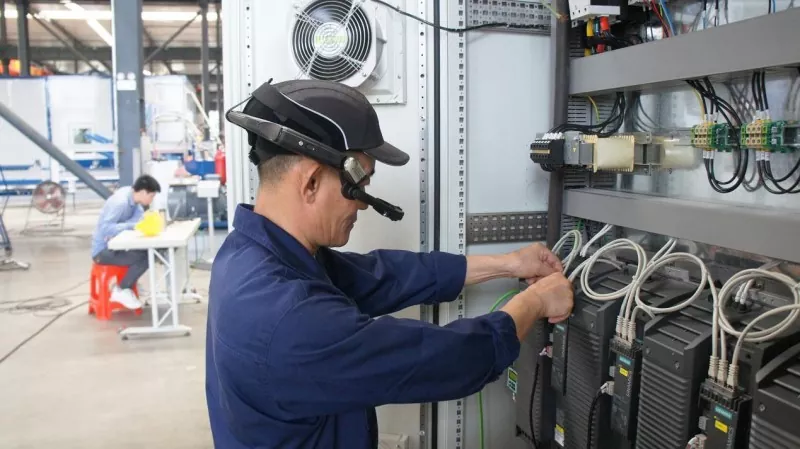
△QGM Intelligent AR Technology for Equipment Inspection and Maintenance
The international expansion of Chinese block making machine manufacturers is moving beyond the simple goal of selling equipment overseas. The next stage is about ensuring that machines continue to operate reliably after they are installed.
Competitive pricing can attract customers. Engineering expertise can help win projects. But long-term customer relationships are often built through what happens after commissioning.
When a production line encounters a problem, can the manufacturer identify the root cause quickly? When a replacement component is required, can genuine spare parts be supplied in time? When raw materials or production requirements change, can the manufacturer provide effective process support? And several years after installation, is the manufacturer still capable of providing technical assistance and lifecycle service?
These questions increasingly shape how international customers evaluate a block making machine supplier.
The future competition in the global block making machine market will therefore extend beyond equipment specifications and purchase price. Manufacturers that can establish reliable regional service networks, efficient spare parts systems, experienced technical teams, and responsive remote support will be better positioned to turn individual equipment sales into long-term customer relationships.
For companies expanding into overseas markets, the investment should not stop at developing a better concrete block machine. It should also include building a global service system capable of overcoming geographical distance, language barriers, and differences in operating conditions.
For an overseas customer, the real value of a block making machine is not measured only when it arrives at the factory. It is demonstrated years later, when the equipment continues to perform reliably—and when the manufacturer is still there to provide support when it is needed.
After-sales service is essential because an overseas block making machine may be thousands of kilometers away from the manufacturer. Reliable technical support, fast troubleshooting, spare parts availability, and operator training can help reduce downtime, maintain stable production, and protect the long-term value of the equipment.
A reliable concrete block machine manufacturer should provide comprehensive lifecycle support, including installation and commissioning, operator training, technical troubleshooting, preventive maintenance, genuine spare parts, remote diagnostics, production optimization, and equipment upgrades. Regional service centers and local technical teams can further improve response times.
Fast access to genuine spare parts can significantly shorten repair times when critical components or wear parts need to be replaced. A well-organized spare parts network helps manufacturers maintain appropriate regional inventories and enables customers to restore their automatic block making machines to operation more quickly.
Operating conditions such as temperature, humidity, dust, and local raw material characteristics can affect concrete mixing, feeding, compaction, and block quality. Professional technical support can help customers adjust production parameters and processes according to local conditions to maintain consistent concrete block production.
Digital technologies such as remote monitoring, equipment data analysis, and remote diagnostics allow service teams to monitor machine operating conditions without always being physically present at the customer's site. These technologies can help identify potential faults earlier, support predictive maintenance, reduce unplanned downtime, and improve the long-term availability of concrete block production lines.