ZENITH Maschinenfabrik GmbH
Products
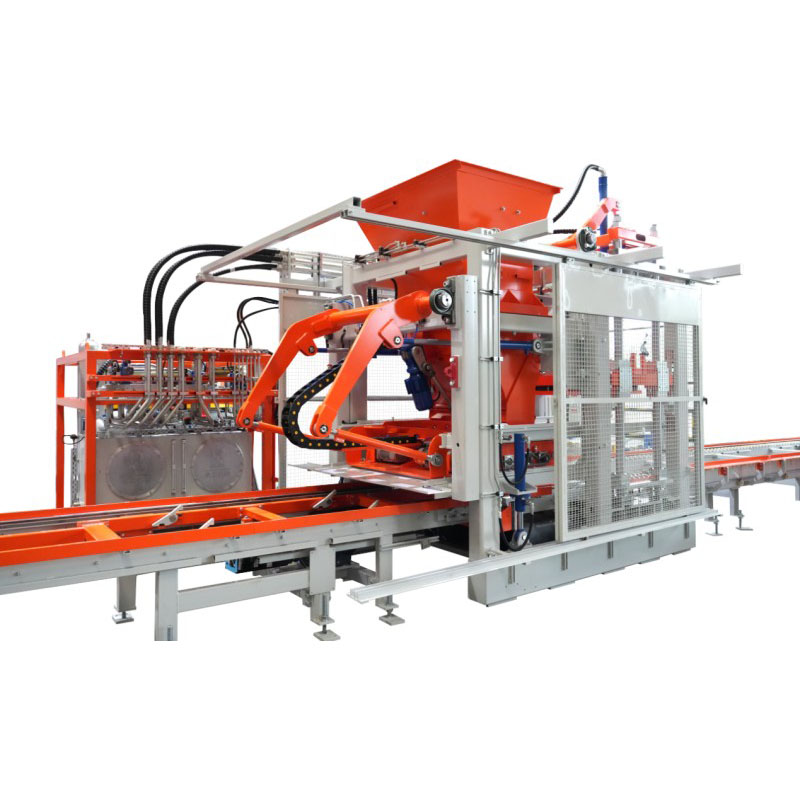
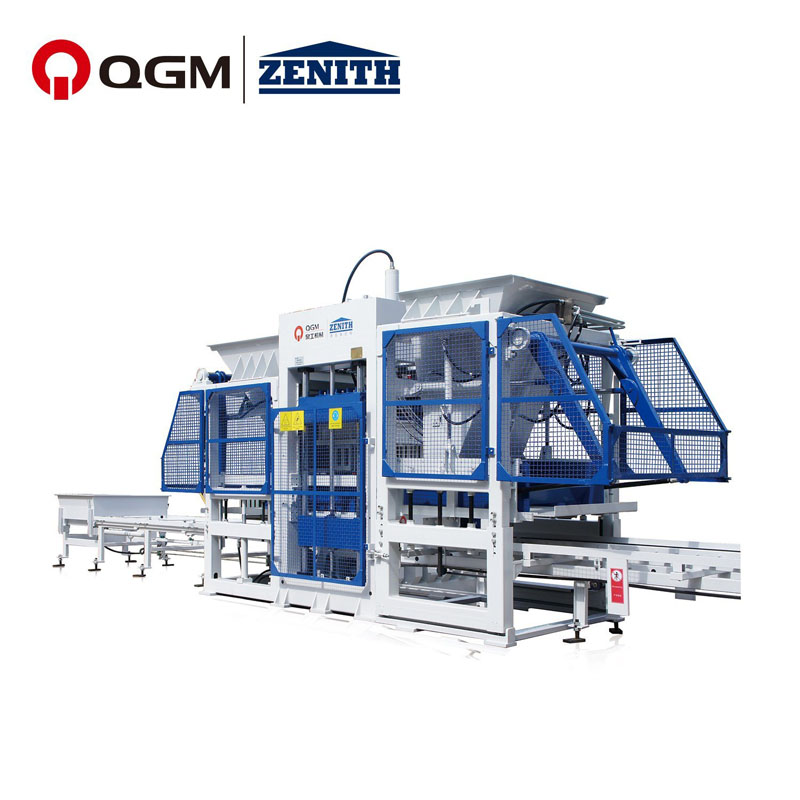
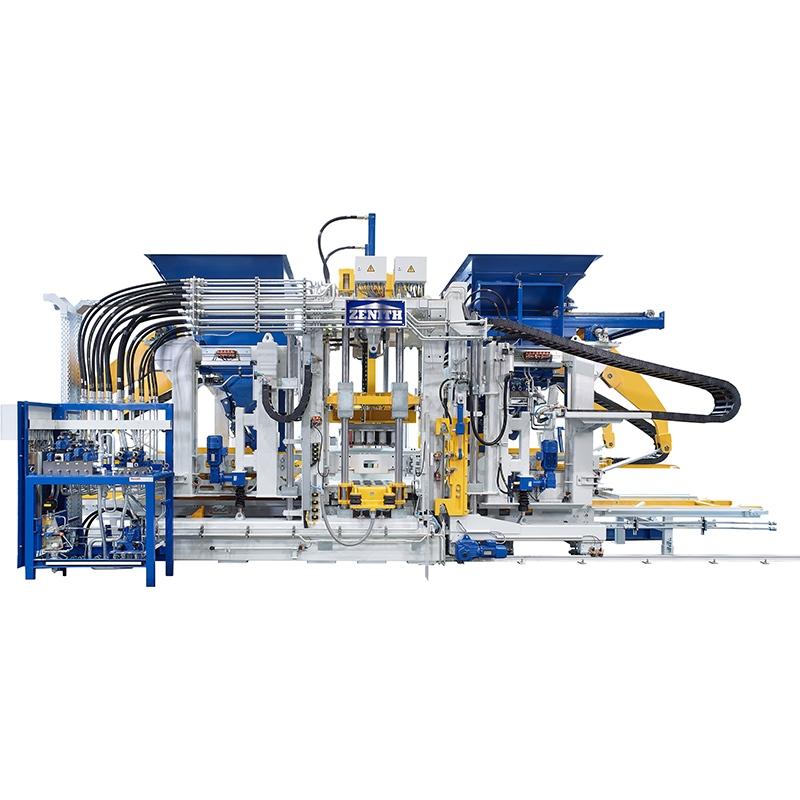
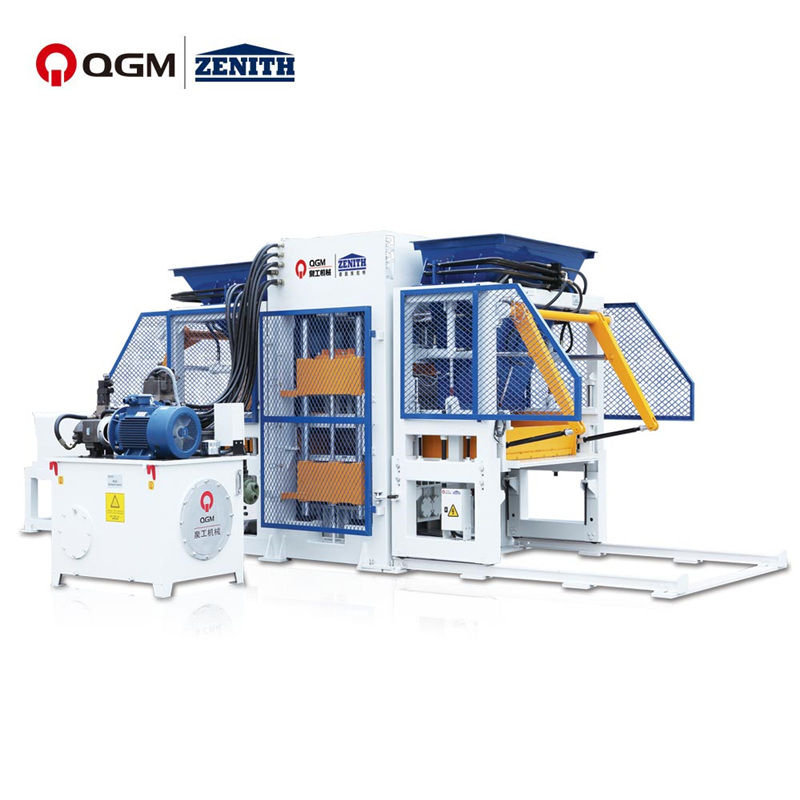
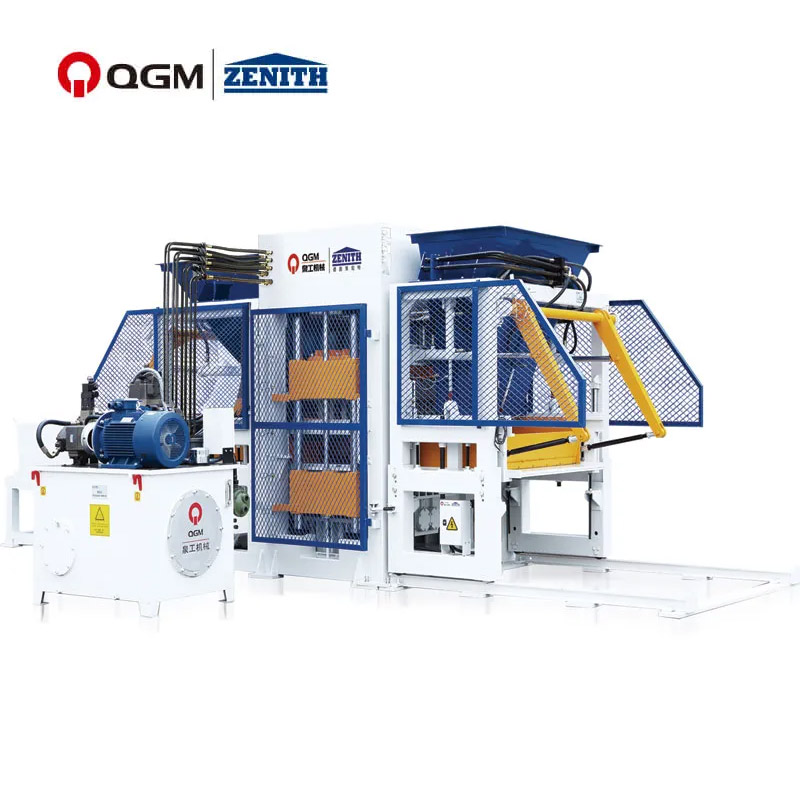
Fully Automatic Concrete Block Making Machine for Hollow Blocks
  • Fully Automatic Concrete Block Making Machine for Hollow BlocksFully Automatic Concrete Block Making Machine for Hollow Blocks
  • Fully Automatic Concrete Block Making Machine for Hollow BlocksFully Automatic Concrete Block Making Machine for Hollow Blocks

Fully Automatic Concrete Block Making Machine for Hollow Blocks

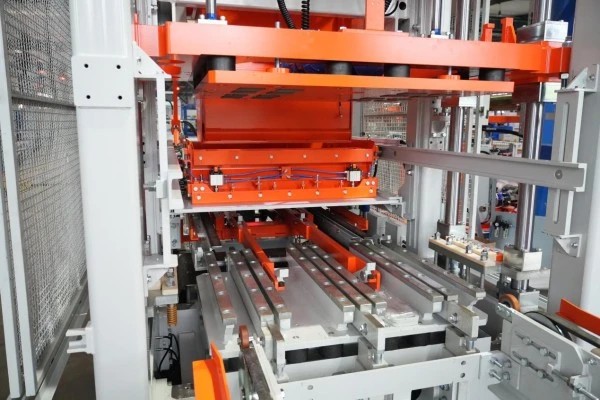
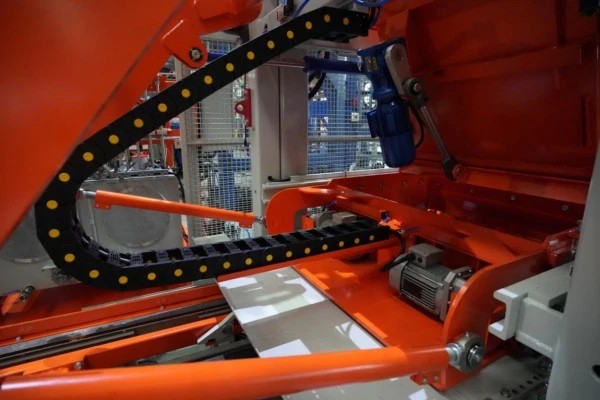
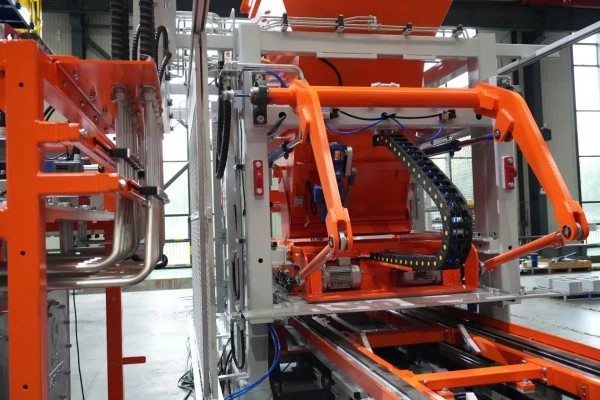
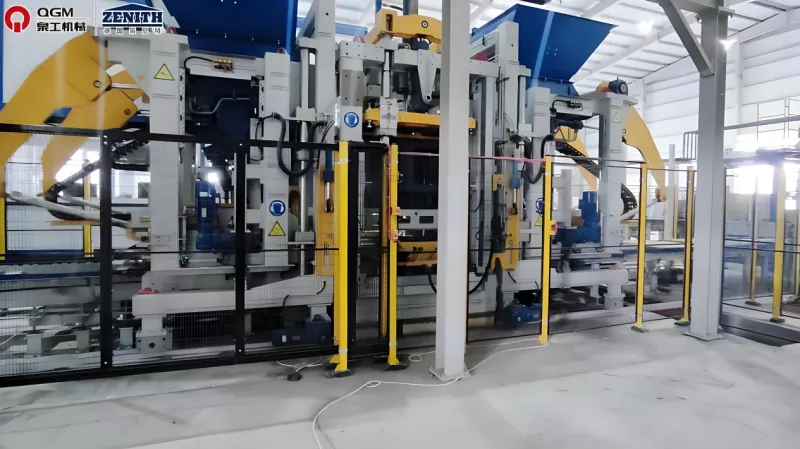
The QGM T10 Concrete Block Making Machine combines QGM’s proven block making technology with advanced German engineering expertise and intelligent control technology. Designed for efficient and reliable concrete product manufacturing, the T10 features a compact machine design, reliable operation, user-friendly controls, and cost-effective performance, making it a practical solution for medium- to large-scale concrete product manufacturers as well as new production projects.

The T10 block making machine is designed to support the utilization of suitable recycled materials and mineral-based industrial by-products, subject to material characteristics, mix design, and applicable production standards. Depending on local material conditions, potential feedstocks may include fly ash, coal gangue, steel slag, mining and industrial tailings, and processed construction and demolition waste.

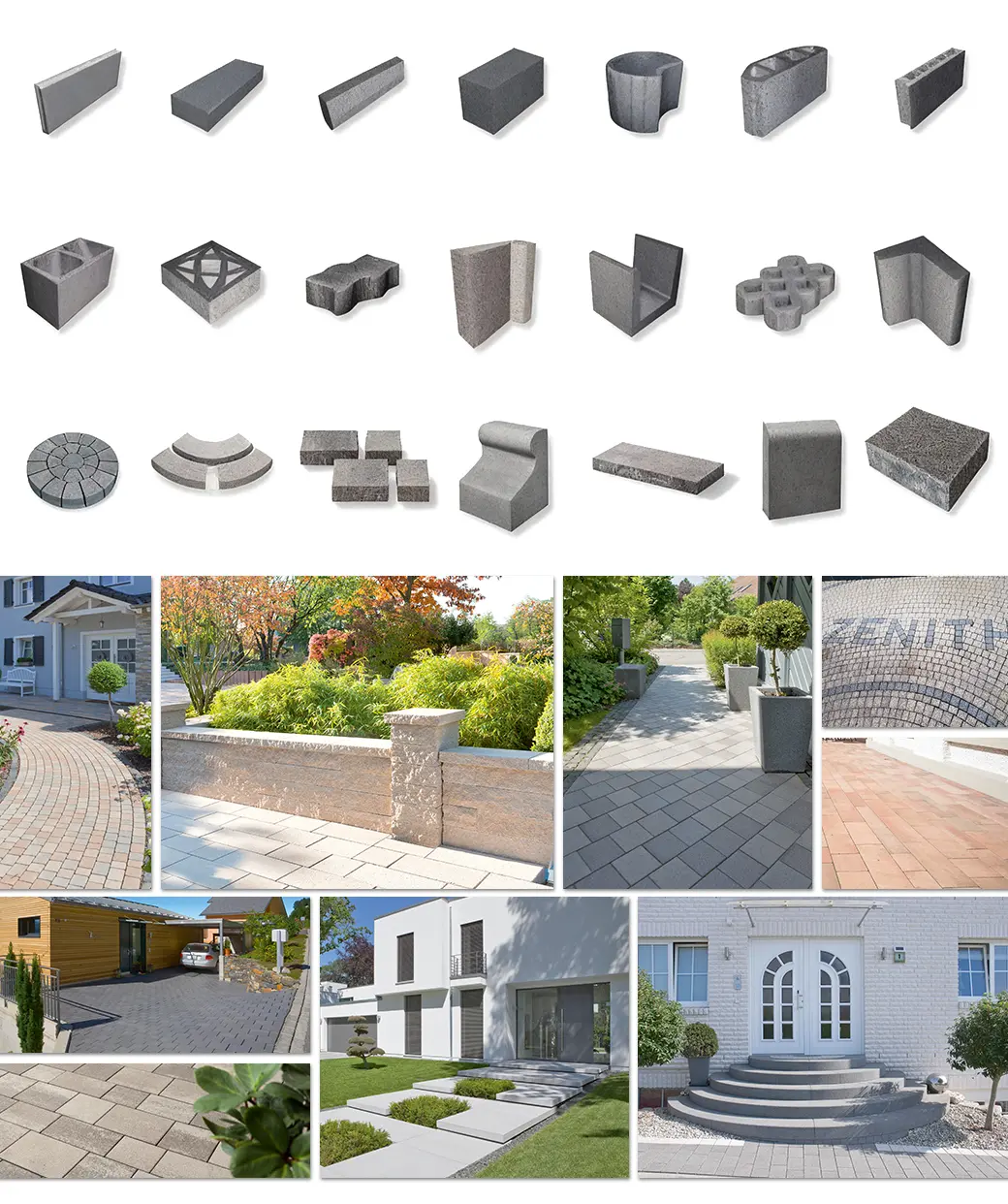
With different mold configurations, the QGM T10 can produce a variety of concrete products, including concrete blocks, paving blocks, slope protection blocks, grass pavers, and other precast concrete products. These products can be used in sponge city projects, parks and public plazas, residential communities, municipal infrastructure, and other urban construction applications.

By combining automated block production, flexible product configurations, and recycled material utilization, the QGM T10 provides concrete product manufacturers with a versatile solution for improving production efficiency, expanding product offerings, and supporting more sustainable concrete block manufacturing and green building material production.

Technical Specifications

Products External dimensions Number of molded blocks (blocks/mold) 8-hour production capacity
Hollow bricks 390*190*190mm 10 11,520-14,420
Standard bricks 240*115*53mm 51 73,440-97,920
Dutch bricks 200*100*60mm 35 40,320-50,400
T10 Standard pallet dimensions (mm): 1200×950 / 1200×870 Main Vibration Mode: Table Vibration
Finished product height (mm): 40–300 / 40–500 Control System: Siemens
Molding cycle (s): 15–25 Max. Molding Area (mm): 1100 × 820

Technical Advantages

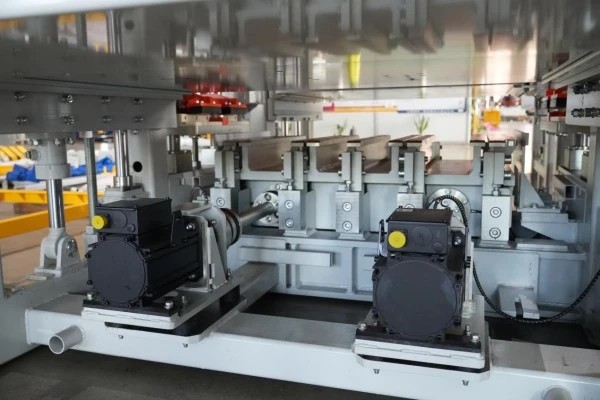
1. Four-Axis Servo Vibration System: High-Precision Vibration Control

The four-axis servo vibration system is one of the available vibration configuration options for the machine, designed for high-precision vibration control and efficient concrete compaction.
Servo Drive and Balanced Vibration:Four independent servo motors synchronously drive four sets of eccentric shafts. The eccentrics are arranged in a centrally symmetrical configuration, helping counterbalance horizontal vibration components and direct the primary excitation force vertically toward the mold. This balanced design supports stable vibration performance while helping reduce unnecessary vibration losses and mechanical stress.
Stepless Vibration Adjustment for Different Mix Designs:The servo system enables stepless adjustment of excitation force, allowing vibration parameters to be precisely matched to different concrete products and mix designs. This helps optimize material compaction, product density, dimensional consistency, and forming stability.

2. Optional Two-Axis Servo Vibration System: Flexible Vibration Control

The two-axis servo vibration system is an alternative vibration configuration available for customers who do not select the four-axis servo vibration system. It provides precise and flexible control of key vibration parameters while offering a cost-effective configuration for different concrete product manufacturing requirements.
Two-Axis Servo Drive with Closed-Loop Control:The system uses two synchronized servo motors combined with multi-axis servo drives and a bus-based closed-loop control system. This enables precise control of key vibration parameters, including frequency, amplitude, and phase, according to different product and process requirements.
Flexible Parameter Adjustment for Multi-Product Production:The two-axis servo system allows vibration parameters to be quickly adjusted for different concrete products and mix designs. This flexibility supports consistent compaction and forming quality across different production requirements while providing manufacturers with an alternative servo vibration solution.

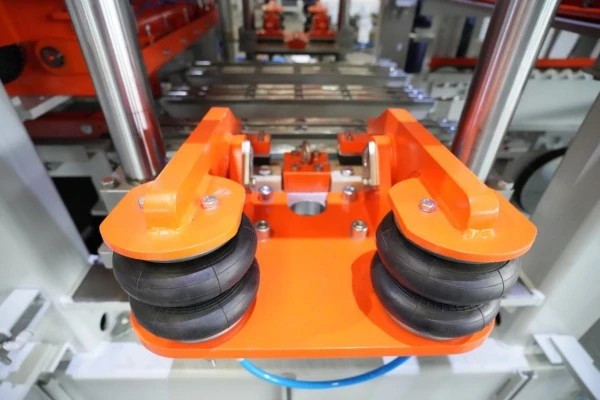
3. Air Spring Mold Frame Clamping System: Fast Clamping for Efficient Mold Changeovers

The air spring mold frame clamping system replaces conventional mechanical clamping mechanisms with controlled pneumatic air springs. It is designed to provide fast mold frame clamping and release while maintaining stable mold positioning during production.
Air Spring Clamping for Fast and Consistent Locking:Controlled inflation and deflation of the air springs enables rapid mold frame clamping and release. The system provides fast response, consistent clamping force, and accurate positioning, helping simplify mold installation and changeover procedures.
Stable Mold Fixation and Reduced Changeover Time:The air spring clamping structure helps maintain stable mold positioning during vibration and forming operations while reducing mechanical contact and wear associated with conventional locking mechanisms. Faster clamping and release also help shorten mold changeover time and production downtime, improving overall equipment utilization.

4. Vibrating Ram System: Quick Changeover and Auxiliary Vibration for Consistent Forming

The vibrating ram system combines rapid ram replacement with auxiliary vibration to improve concrete compaction and product consistency.
Air-Cushion Quick Locking for Efficient Ram Replacement:The ram features an air-cushion quick-locking mechanism that simplifies installation, fixation, and removal. This design helps reduce maintenance time and facilitates faster equipment changeovers when switching between different concrete products.
Auxiliary Vibration for Improved Compaction:High-efficiency vibration motors are installed on both sides of the ram and operate in coordination with the main vibration system. The auxiliary excitation helps distribute vibration more evenly through the concrete mixture, supporting uniform compaction, product density, dimensional accuracy, compressive strength, and surface finish.

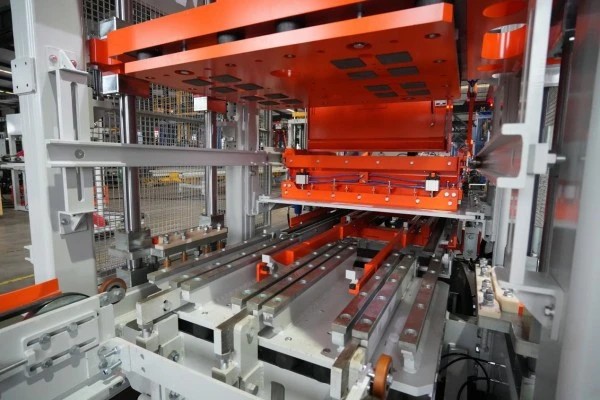
5. Rapid Mold Change System: Automated Mold Handling for Reduced Downtime

The rapid mold change system automates key mold-handling operations, including mold insertion, positioning, and withdrawal. By reducing manual handling during mold changes, the system helps improve production flexibility and equipment uptime.
Automated Mold Handling and Precise Positioning:The system automatically moves the mold into the forming position, performs precise positioning, and withdraws the mold during changeover. This reduces manual intervention and helps ensure repeatable mold installation.
Faster Changeovers for Multi-Product Production:The modular mold-handling design helps shorten changeover cycles and supports flexible production across different concrete block and paving product specifications. This allows manufacturers to switch between products more efficiently while reducing production downtime.

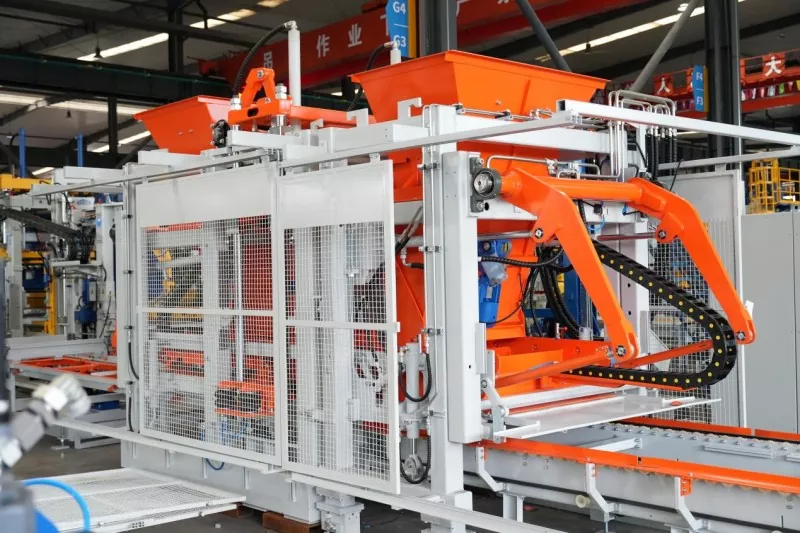
6. Hydraulic Base Material Feeding System: Precise Feeding for Uniform Mold Filling

The hydraulic base material feeding system provides controlled and consistent delivery of the concrete mixture into the mold cavities. Precise hydraulic control helps maintain stable material distribution throughout the feeding process.
Hydraulic Drive for Precise Material Control:The hydraulic cylinders precisely control feeding speed and thrust, helping ensure uniform filling of the mold cavities with the base concrete mixture. Controlled material placement supports consistent filling conditions across different mold configurations.
Consistent Feeding for Stable Product Quality:The system is designed to reduce material jamming, leakage, segregation, and uneven filling, helping maintain consistent material distribution from one production cycle to the next. Stable feeding contributes to consistent product density, dimensional accuracy, and production continuity.

7. 360° Rotating Arch-Breaking System: Continuous Material Flow and Reduced Bridging

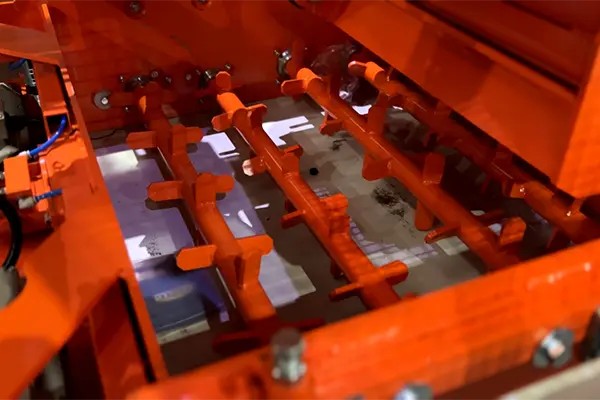
The 360° rotating arch-breaking system is designed to maintain continuous material flow in the base material hopper and reduce the risk of material bridging and blockage during production.
Continuous 360° Material Agitation:An independent reduction drive rotates wear-resistant material-displacing blades through a continuous 360° operating cycle, coordinated with the material distribution process. This active agitation helps break material arches and maintain a more consistent flow of base material from the hopper to the feeding system.
Reduced Material Bridging and Production Downtime:Compared with conventional oscillating or vibrating arch-breaking mechanisms, continuous rotary agitation helps reduce material bridging, hopper blockages, and interruptions caused by material buildup. This supports more reliable feeding, reduces cleaning-related downtime, and improves overall production continuity.

8. Integrated Hydraulic Power Unit: Compact Architecture for Reliable and Efficient Operation

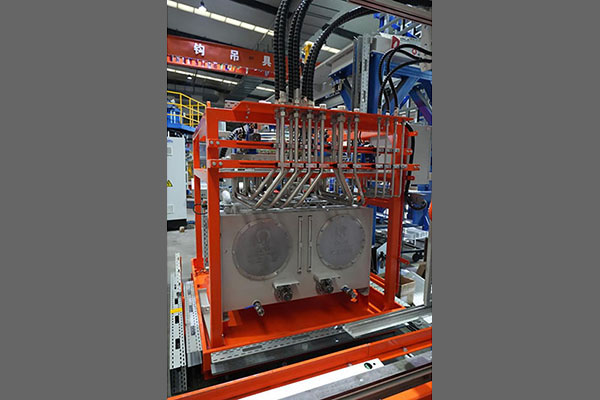
The integrated hydraulic power unit combines hydraulic power components, control elements, and fluid circuits into a unified module. This compact architecture reduces external hydraulic connections and simplifies system maintenance.
Integrated Design for Improved Hydraulic Reliability:Compared with conventional split hydraulic configurations, the integrated design reduces the number of external piping connections and potential leakage points. It also simplifies access to key hydraulic components, making routine inspection and maintenance more convenient.
Stable Hydraulic Performance for Continuous Production:The system is designed to provide fast hydraulic response, stable pressure control, and efficient power delivery during continuous machine operation. The integrated configuration supports long-term, high-intensity production while helping improve hydraulic system reliability and manage energy consumption.

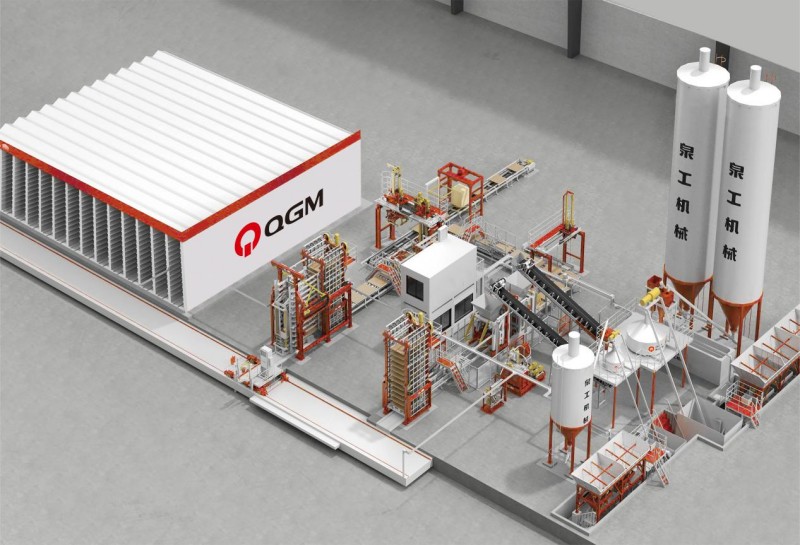
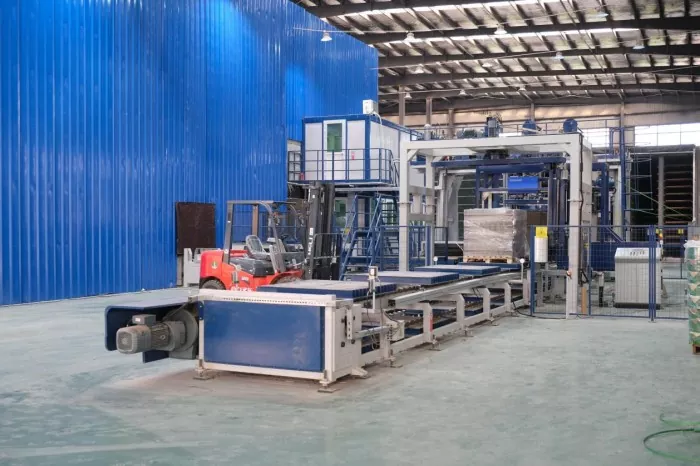
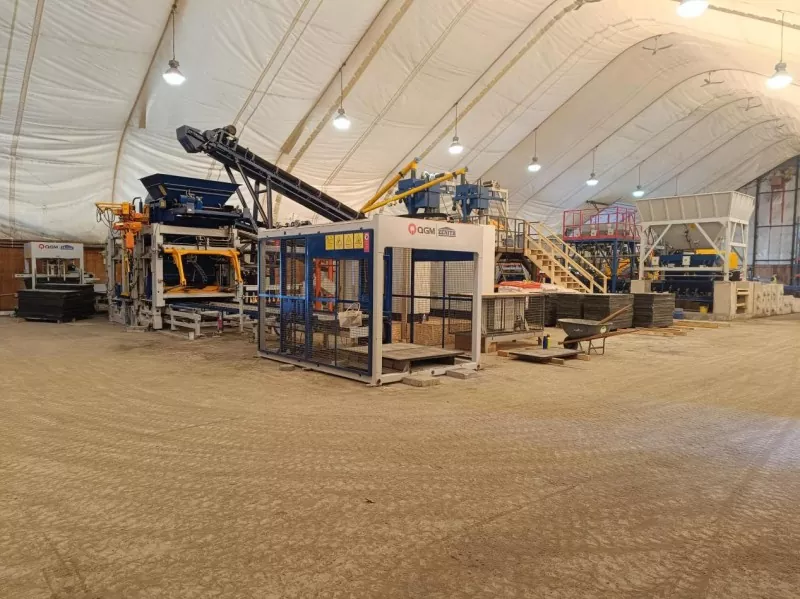
Production line layout

Block Samples and Application Scenarios

Hot Tags: Solid brick forming machine
Send Inquiry
Contact Info
Customer proximity is one of our strengths. Whenever you need us, you can rely on us. We do everything we can to be available for you worldwide and to be able to react as quickly as possible when it matters.
ZENITH Maschinenfabrik GmbH
Zenith-Straße 1
D-57290 Neunkirchen

By sending the contact form, you agree that your data may be used to process your request (further information and revocation notices can be found in the data protection declaration).

X
We use cookies to offer you a better browsing experience, analyze site traffic and personalize content. By using this site, you agree to our use of cookies.Privacy Policy
RejectAccept