ZENITH Maschinenfabrik GmbH

How Block Making Machines Improve Concrete Block Quality and Production Efficiency

2026-09-29 0 Leave me a message

Better concrete block quality does not always require more cement, more labor, or a larger investment in equipment.

In many block manufacturing plants, quality problems are closely related to process variation. Changes in aggregate moisture, inconsistent mixing, inefficient compaction, mold wear, unstable machine settings, and poor curing practices can all affect the finished product. When these issues are not identified, manufacturers may try to solve them by increasing material consumption or slowing down production—both of which can raise costs without addressing the real cause.

A more practical approach is to make better use of the resources already available.

For manufacturers producing concrete blocks, paving blocks, hollow blocks, or other precast concrete products, improving quality and controlling costs can often be pursued together. The key is to reduce unnecessary variation, improve process control, and make each production cycle more predictable.


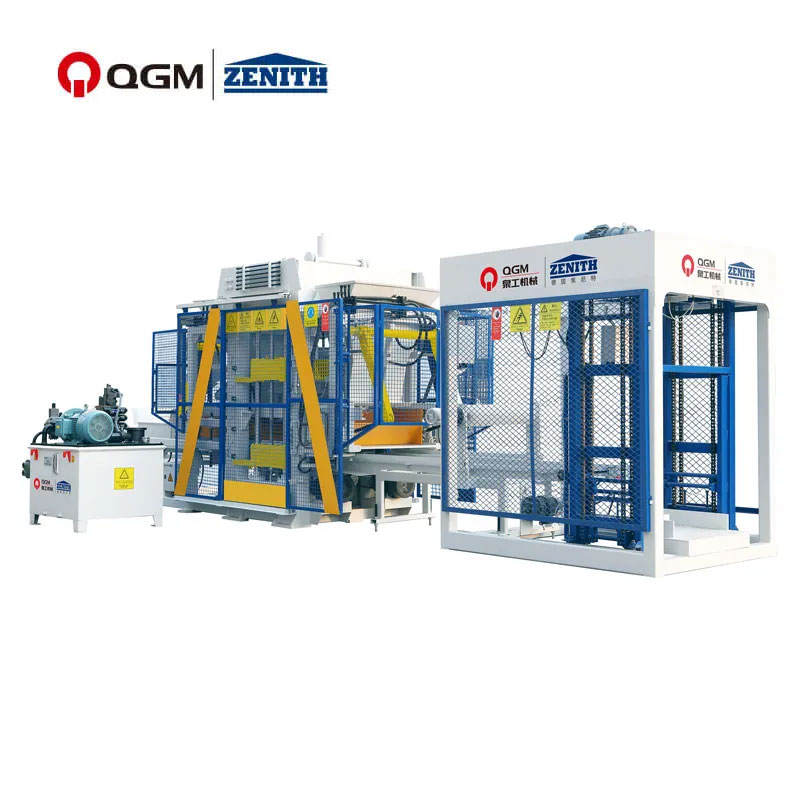
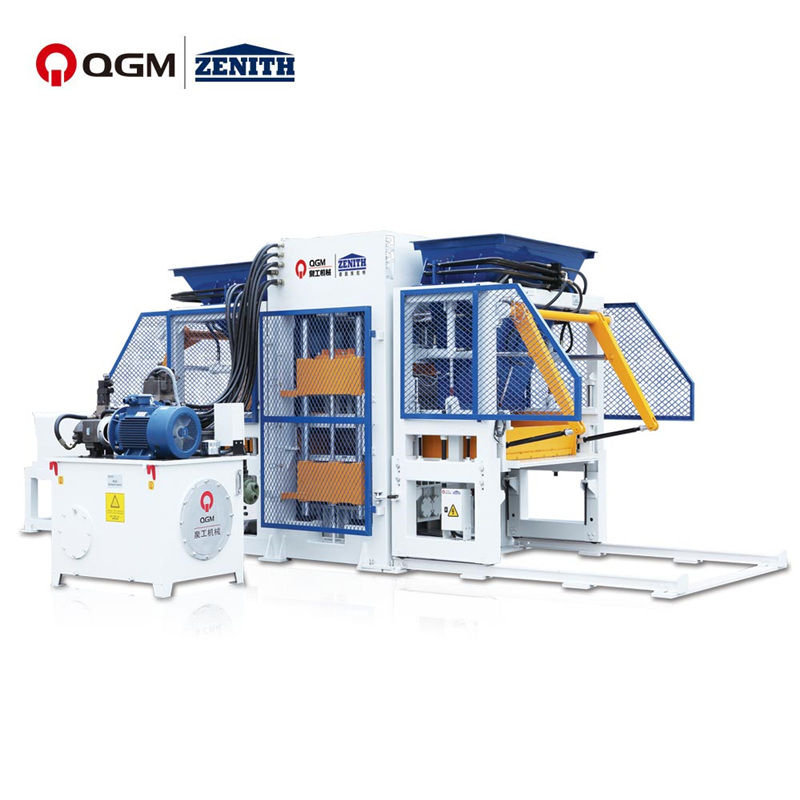
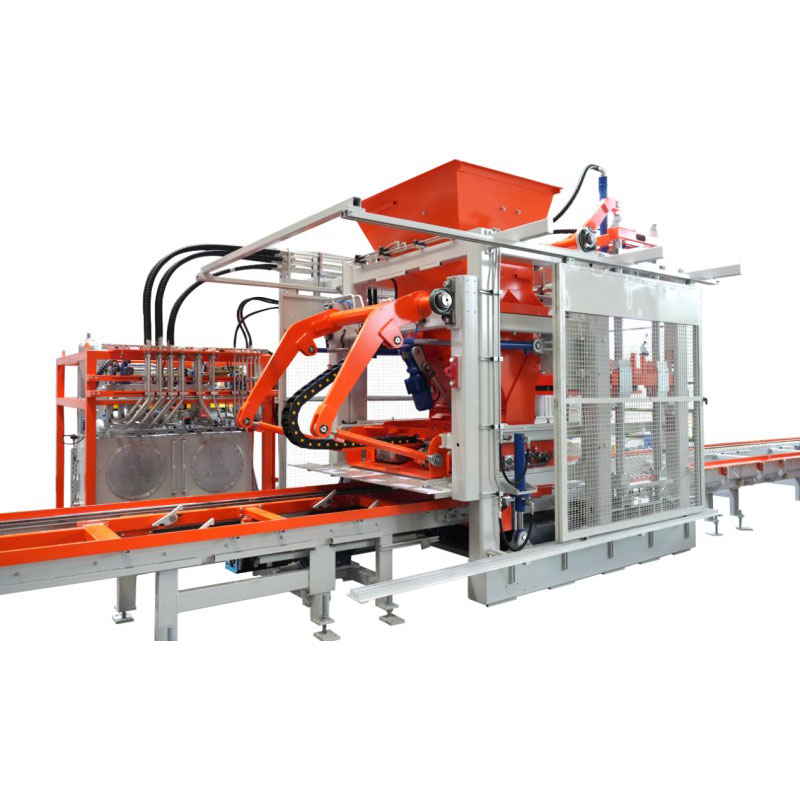
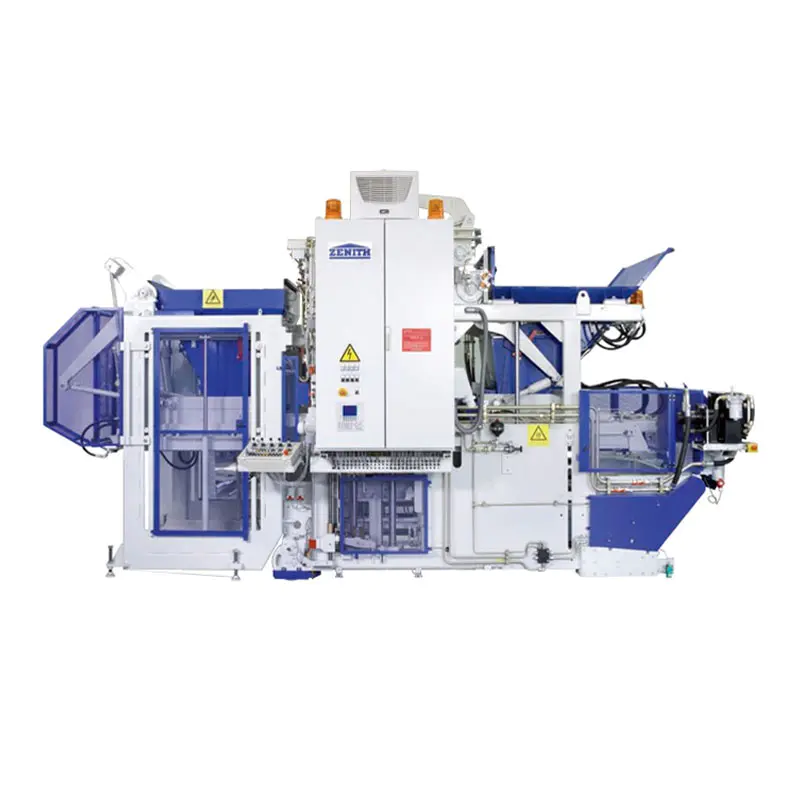
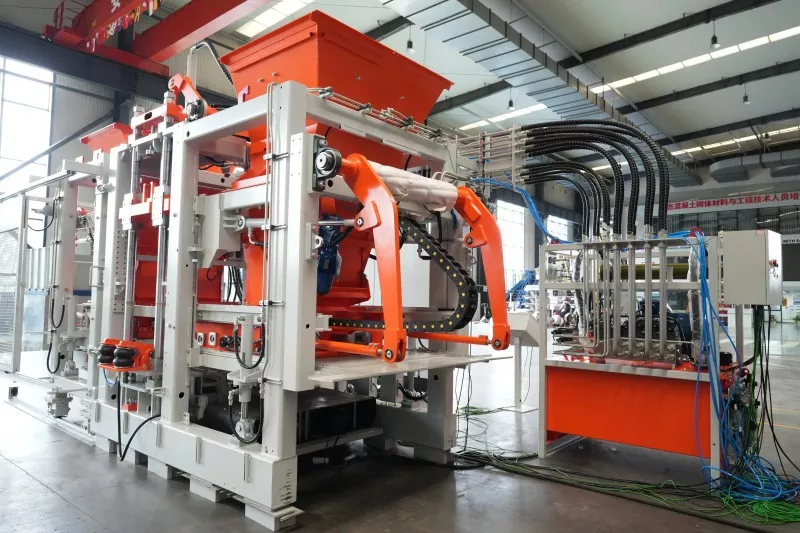
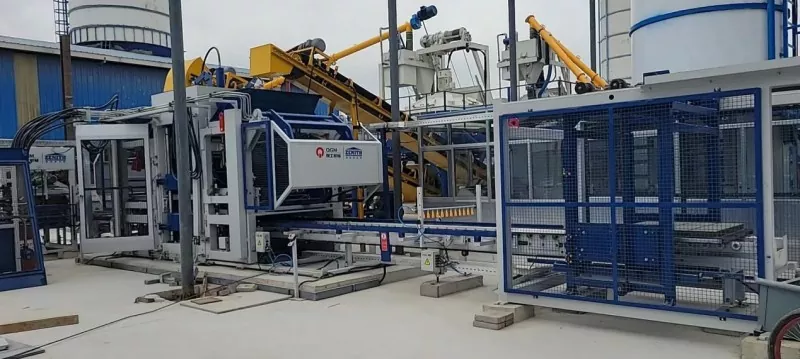
QGM Block Making Machine

△QGM Block Making Machine Applications for Concrete Blocks, Paving Blocks and More


Here are 8 areas where manufacturers can look for improvement.


1. Start With the Mix, Not With More Cement

When block strength falls below expectations, increasing cement content is often the quickest response.

Cement is a major component of concrete block production costs, so using more of it to compensate for an inefficient mix can quickly reduce margins. A better starting point is to understand how the existing materials work together.

Aggregate grading has a particularly important role. A well-balanced particle distribution can improve packing density and reduce the amount of empty space within the concrete mixture. This can support better compaction without simply increasing cement consumption.

Water control is equally important. Changes in aggregate moisture can alter the effective water content of the mix, affecting workability and molding performance.


A more efficient approach

Instead of adding cement whenever quality changes, production teams can first review:

* Aggregate grading and particle distribution

* Moisture content of aggregates

* Water-to-cement ratio

* Material proportions

* Mixing consistency

* Batch-to-batch variation


For a concrete block manufacturing plant, even small improvements in material utilization can have a meaningful effect when multiplied across thousands of production cycles.


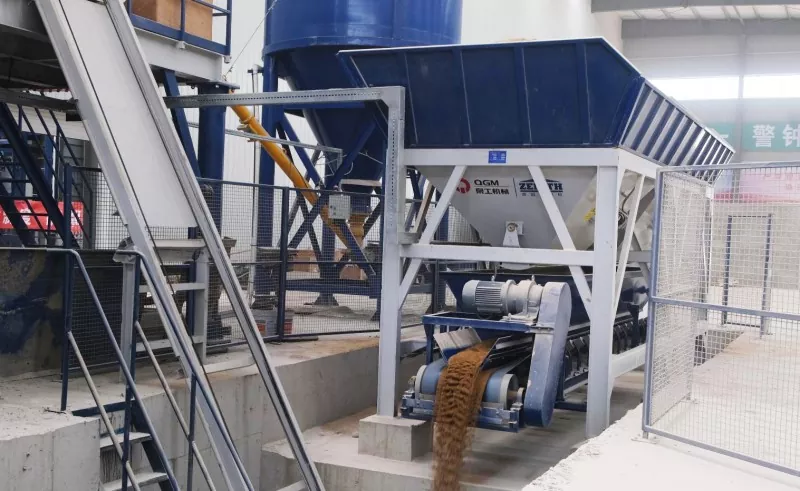
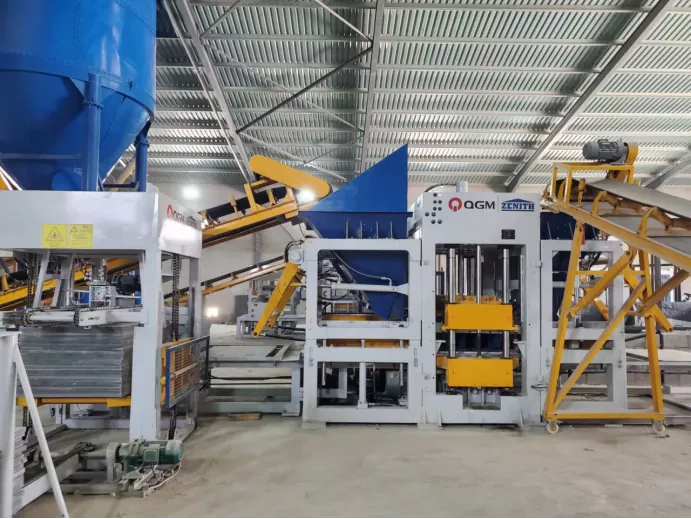
QGM Batching and Mixing System

△QGM Batching and Mixing System for Consistent Concrete Block Production


2. Make Compaction More Consistent

A good mix still needs to be properly compacted.

During block molding, vibration and pressing work together to distribute the material and achieve the required density. If compaction is inconsistent, finished products may show differences in density, appearance, dimensional stability, or strength.

This does not necessarily mean that the machine needs to operate at higher vibration intensity.

The more important question is whether the vibration and compaction parameters are appropriate for the specific product and mix.

Different products can behave differently during molding. A dense paving block, a hollow concrete block, and a larger structural product may require different production settings.


Focus on repeatability

Operators should pay attention to:

* Vibration frequency

* Vibration duration

* Pressing conditions

* Material filling consistency

* Product geometry

* Mix characteristics

Once suitable parameters have been established, they should be documented and repeated rather than adjusted unnecessarily from one production cycle to another.

This helps reduce variation without requiring additional raw materials or increasing machine operating time.


3. Keep Material Feeding and Mixing Under Control

Quality problems are sometimes blamed on the molding machine when the actual source is upstream.

If the quantity of material entering the mixer changes from batch to batch, or if the mixture is not sufficiently uniform, the molding process will start with inconsistent material.

The same principle applies to feeding. Uneven material distribution in the mold can affect the density and appearance of the finished block even when the machine itself is operating correctly.


Look upstream when quality changes

A useful production check should include:Batching → Mixing → Feeding → Filling → Compaction

Improving the consistency of batching and feeding can therefore reduce the need for adjustments later in the process. It can also help lower the number of defective products and make production results easier to reproduce.

For plants running an automatic block making machine, stable material handling is an important part of achieving the machine's intended production performance.


4. Reduce Operator-to-Operator Variation

Two operators using the same equipment can sometimes achieve different results.

This does not necessarily mean that one operator is more capable. It may simply indicate that too many production decisions depend on individual judgment.

Frequent manual adjustments to machine settings, material quantities, or production parameters can make it difficult to establish a consistent baseline.

Automation and digital controls can help reduce this variation by allowing production parameters and operating recipes to be managed more systematically.


Turn experience into a repeatable process

A practical production system should make it easier to:

* Store product-specific settings

* Monitor machine operating conditions

* Track production cycles

* Identify abnormal conditions

* Repeat proven production parameters

* Compare results between shifts

The purpose of intelligent control is not to remove the operator from the process. It is to give operators a more consistent reference point.

This becomes increasingly valuable when a block production line operates across multiple shifts or produces several product types.


5. Keep Molds Within Their Working Tolerance

As a mold wears, dimensions can gradually change. Edges may become less defined, surfaces may deteriorate, and product release can become less consistent.

These problems are sometimes addressed by adjusting machine parameters when the more appropriate solution is to inspect the mold itself.


Mold management should be part of quality control

Regular checks should cover:

* Mold dimensions

* Wear on high-contact areas

* Alignment

* Locking condition

* Product release

* Surface quality

* Dimensional consistency

A well-maintained mold helps the concrete block making machine produce repeatable shapes without unnecessary corrections during the production cycle.

Timely mold maintenance can also reduce rejected products, which means less wasted material and fewer lost production hours.


6. Treat Defective Blocks as a Cost Indicator

A rejected block is more than a quality problem. It represents material that has already been purchased, processed, mixed, molded, handled, and often cured. Labor and machine time have also been consumed.

This makes rejection rate a useful indicator of production efficiency. Suppose a factory produces a large number of blocks every day. Even a relatively small percentage of rejected products can translate into substantial annual losses.


Track where waste is coming from

Instead of simply recording the number of rejected blocks, manufacturers can classify defects according to their likely causes:

* Dimensional variation

* Cracks

* Poor compaction

* Surface defects

* Edge damage

* Inconsistent color or appearance

* Insufficient strength

* Handling damage

When recurring defects are connected to specific production stages, operators can address the underlying process rather than repeatedly removing defective products at the end of the line.

In this way, concrete block quality control becomes part of cost management rather than a separate activity.


7. Improve Curing Before Increasing Material Consumption

A block that looks acceptable immediately after molding may not deliver the required performance after curing.

Curing influences the development of concrete strength and durability, yet it is sometimes treated as a secondary operation because the main focus remains on the molding machine.

Poor curing conditions can undermine improvements made earlier in the production process.The good news is that improving curing does not necessarily require a major investment.


Start with process discipline

Manufacturers can review:

* Curing duration

* Temperature conditions

* Humidity or moisture conditions

* Product stacking

* Air circulation

* Handling time after molding

* Environmental changes throughout the curing cycle

The appropriate curing method depends on the product, concrete mix, production environment, and required performance.If curing conditions vary significantly from one production batch to another, finished product performance can vary as well.


8. Optimize the Production Line as One Process

The biggest opportunity for cost-neutral quality improvement may not be found in any single machine.It may be found between machines.

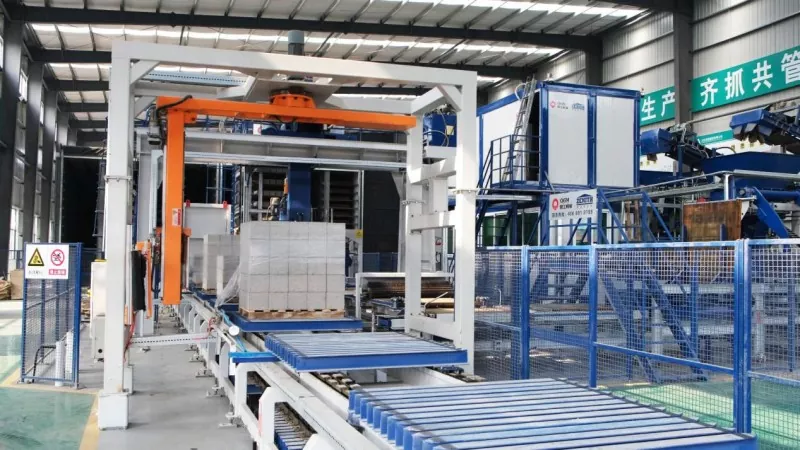
A concrete block production line is a sequence of connected processes. Raw material preparation affects mixing. Mixing affects feeding. Feeding affects molding. Molding affects handling. Handling affects curing. Curing affects the final product.

Improving one stage while ignoring the others may simply move the bottleneck somewhere else.

For example, increasing molding speed does not necessarily improve overall productivity if curing capacity, pallet circulation, or material handling cannot keep up.


Look at the complete production flow

A useful way to evaluate production is:

Raw Materials → Batching & Mixing → Material Feeding → Block Molding → Demolding → Handling → Curing → Storage → Delivery

The objective is to identify where variation, waiting time, waste, or unnecessary intervention enters the process.

Once the production line is viewed as a connected system, manufacturers can often find improvements that require little or no additional capital expenditure.


Where Quality Improvement and Cost Reduction Meet

Quality and cost are sometimes treated as opposing goals.In concrete product manufacturing, they are often closely connected.

Poor quality creates waste. Waste increases material consumption. Rework consumes labor and machine time. Unplanned downtime disrupts production schedules. Inconsistent products can also lead to customer complaints, returns, or lost orders.Improving the stability of the production process can therefore create benefits on both sides.


Use Existing Equipment More Effectively Before Buying More

When a production problem appears, the immediate response is sometimes to consider new equipment.

Before making that decision, manufacturers should first determine whether the existing block making machine is being operated under appropriate conditions.


Questions worth asking include:

* Are the current production parameters optimized for each product?

* Are raw materials consistent?

* Are molds within acceptable wear limits?

* Is the machine receiving regular preventive maintenance?

* Are operators following the same production procedures?

* Are recurring quality problems being recorded and analyzed?

* Is the actual bottleneck known?

These questions can reveal opportunities for improvement that do not require major capital expenditure.

Of course, some production limitations ultimately require equipment upgrades or additional capacity. But understanding the existing process first allows investment decisions to be based on actual production data rather than assumptions.


From Cost-Saving Measures to More Predictable Production

The most sustainable way to improve concrete block quality is not to search for a single adjustment that solves every problem.

That means treating raw materials, machine settings, molds, operators, maintenance, curing, and material handling as parts of one manufacturing process.

For manufacturers operating modern automatic block making machines, digital monitoring and automated controls can provide additional visibility into production performance. Combined with standardized procedures and preventive maintenance, these tools can make it easier to identify deviations before they result in significant waste.

QGM's equipment and integrated block manufacturing solutions are developed around this production-oriented approach, with a focus on automation, process stability, product consistency, and long-term equipment performance.

For manufacturers, however, the principle extends beyond any particular machine brand.The most cost-effective quality improvement is often the one that prevents waste before it occurs.

When the mix is controlled, the machine is properly adjusted, molds are maintained, operators follow consistent procedures, and curing is managed correctly, higher-quality concrete products can become the natural result of a more efficient process.

That is ultimately a stronger manufacturing strategy than simply spending more to compensate for process instability.


FAQ

1. How can I improve concrete block strength without using more cement?

Start by reviewing aggregate grading, moisture content, mix proportions, water control, mixing consistency, and compaction. A well-balanced mix combined with appropriate molding parameters can improve density and strength without relying solely on higher cement consumption.


2. What causes inconsistent quality in concrete block production?

Common causes include variations in raw materials, inconsistent batching and mixing, unstable feeding, inappropriate vibration or pressing parameters, worn molds, inadequate curing, and differences between operators or production shifts.


3. Does increasing vibration always improve concrete block quality?

No. Excessive vibration can be counterproductive and may contribute to material segregation. Vibration should be matched to the mix design, product type, mold configuration, and required density. The goal is consistent and effective compaction rather than maximum vibration intensity.


4. How can a block factory reduce production waste?

Start by identifying the main sources of rejected products. Monitor defects such as dimensional variation, cracking, poor compaction, surface problems, and handling damage. Standardizing production parameters, maintaining molds, controlling materials, and improving curing can help reduce waste without necessarily increasing production costs.


5. Can automation improve concrete block quality without increasing operating costs?

Automation can reduce variation caused by inconsistent manual adjustments and help operators maintain repeatable production parameters. However, automation alone does not guarantee quality. It works best when combined with proper mix control, equipment maintenance, mold management, operator training, and standardized production procedures.

Related News
Leave me a message
X
We use cookies to offer you a better browsing experience, analyze site traffic and personalize content. By using this site, you agree to our use of cookies. Privacy Policy
RejectAccept