ZENITH Maschinenfabrik GmbH

Best Concrete Block Mix Design: How to Optimize Materials for Stronger Blocks and Higher Production Efficiency

2026-08-03 0 Leave me a message

Producing premium concrete blocks is not simply about using more cement or investing in larger equipment. The real advantage comes from creating a balanced production system where raw materials, machine performance, and process control work together efficiently.

Whether operating a paving block machine for interlocking pavers or a cement paving block making machine for structural masonry products, manufacturers should understand that mix design must always match both production objectives and machine capabilities.


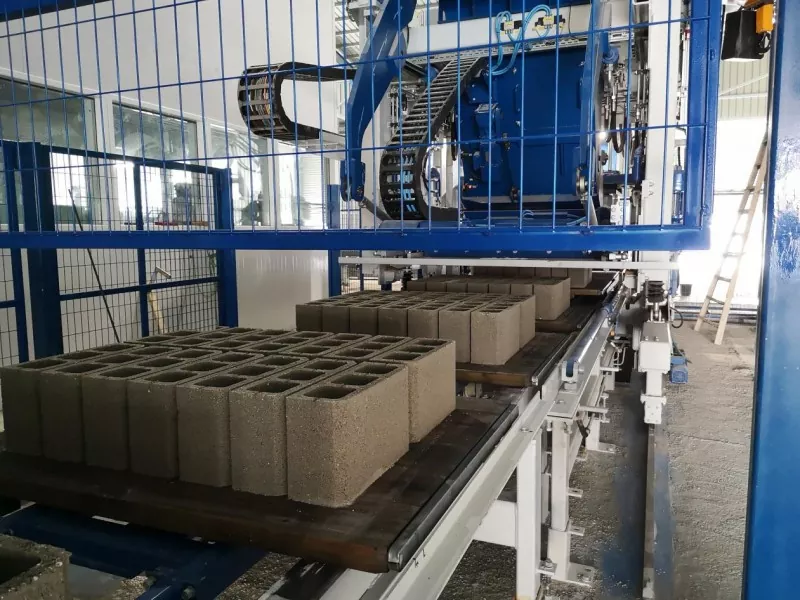
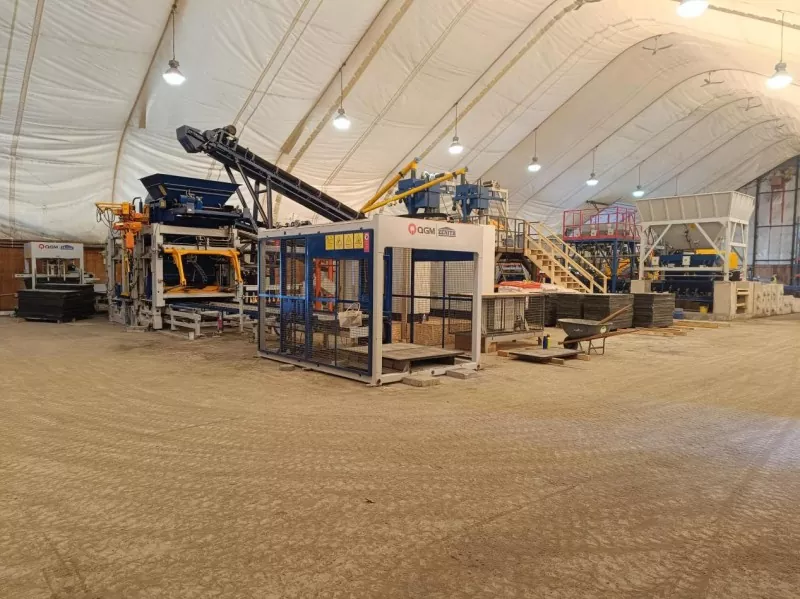
Successful Applications of QGM Automatic Block Machines in Global Concrete Block Production Lines

△Successful Applications of QGM Automatic Block Machines in Global Concrete Block Production Lines


Instead of searching for one "perfect formula," successful producers continuously optimize their mix according to available raw materials, product specifications, and production conditions.


Quick Overview: What Determines an Effective Mix Design?

Key Factor

Why It Matters

Production Benefit

Aggregate grading

Improves particle packing

Higher density with less cement

Water control

Supports proper hydration

Better strength consistency

Mixing quality

Ensures uniform material distribution

Better strength consistency

Machine compaction

Maximizes density

Higher compressive strength

Hydraulic stability

Maintains constant forming pressure

Uniform block dimensions

Precision moulds

Preserves finished quality

Lower rejection rate

Continuous testing

Adapts to material changes

Stable long-term production


Start with Product Performance Instead of Material Ratios

Many manufacturers begin by asking how much cement should be added.

A more practical question is: What performance should the finished block achieve?

Different concrete products require different material characteristics.


For example:

✔ Load-bearing blocks require high compressive strength.

✔ Landscape products prioritize surface appearance.

✔ Interlocking pavers demand excellent wear resistance.

✔ Hollow blocks focus on strength-to-weight balance.


Factories operating a concrete paving block machine should first establish engineering targets before modifying material proportions.


Build a Dense Aggregate Structure Before Adding More Cement

Aggregate occupies the largest proportion of any concrete block mixture.

Poor particle distribution creates excessive internal voids, forcing manufacturers to consume more cement while achieving lower strength.


Recommended approach

✔ Blend coarse and fine aggregates scientifically.

✔ Reduce unnecessary air gaps.

✔ Improve particle interlocking.

✔ Maintain consistent aggregate quality.


Production Tip

A well-designed aggregate grading curve often delivers greater strength improvements than increasing cement dosage, while also reducing overall production costs.


Keep Water Content Stable Throughout Production

Water influences much more than workability.

If moisture fluctuates between batches, manufacturers commonly experience:

⚠ Different block weights

⚠ Variable compressive strength

⚠ Surface defects

⚠ Increased rejection rates


Good production practice includes:

●Measuring aggregate moisture frequently

●Maintaining a stable water-cement ratio

●Preventing excessive water during batching

Factories producing paving products with a paving block making machine generally achieve much better dimensional consistency when moisture is carefully controlled.


Uniform Mixing Creates Predictable Product Quality

Even an excellent mix design cannot perform well if materials are unevenly blended.

A homogeneous concrete mixture allows every mould cavity to receive identical material characteristics.


Mixing Checklist

✔ Consistent batching sequence

✔ Appropriate mixing duration

✔ No mixer overloading

✔ Stable material feeding

The objective is not simply mixing longer—but mixing more uniformly.


Match Mix Design with Machine Compaction Capability

Material optimization only delivers maximum value when paired with efficient compaction technology.

QGM equips its production lines with the Zenith Ultra Dynamic Vibration System, allowing concrete particles to rearrange efficiently during vibration while minimizing unnecessary energy loss.


Advantages include

✔ Faster density development

✔ Improved particle interlock

✔ Lower cement consumptio

✔ Higher compressive strength

✔ Stable forming cycles

For manufacturers operating a cement paving block machine, efficient vibration enables stronger products without increasing material costs.


Stable Hydraulic Performance Protects Mix Consistency

Even a well-designed mixture can produce inconsistent blocks if forming pressure fluctuates.

QGM hydraulic systems utilize precision proportional control valves combined with premium hydraulic pumps to maintain smooth and repeatable pressing performance.


Consistent hydraulic operation provides:

●Uniform compaction pressure

●Stable mould movement

●Reduced dimensional variation

●Improved production reliability

Hydraulic stability becomes particularly important for continuous production using a paver block machine.


Intelligent Automation Reduces Production Variation

Modern concrete production depends on repeatability rather than operator experience alone.


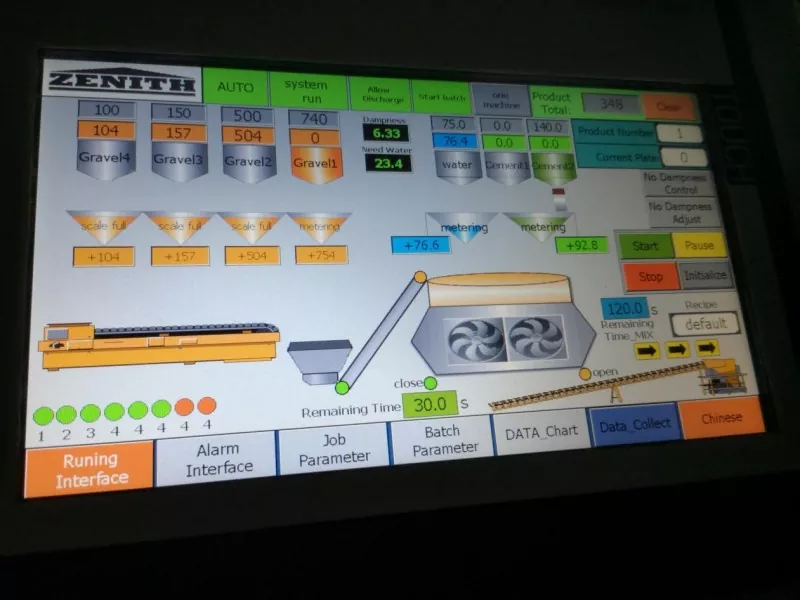
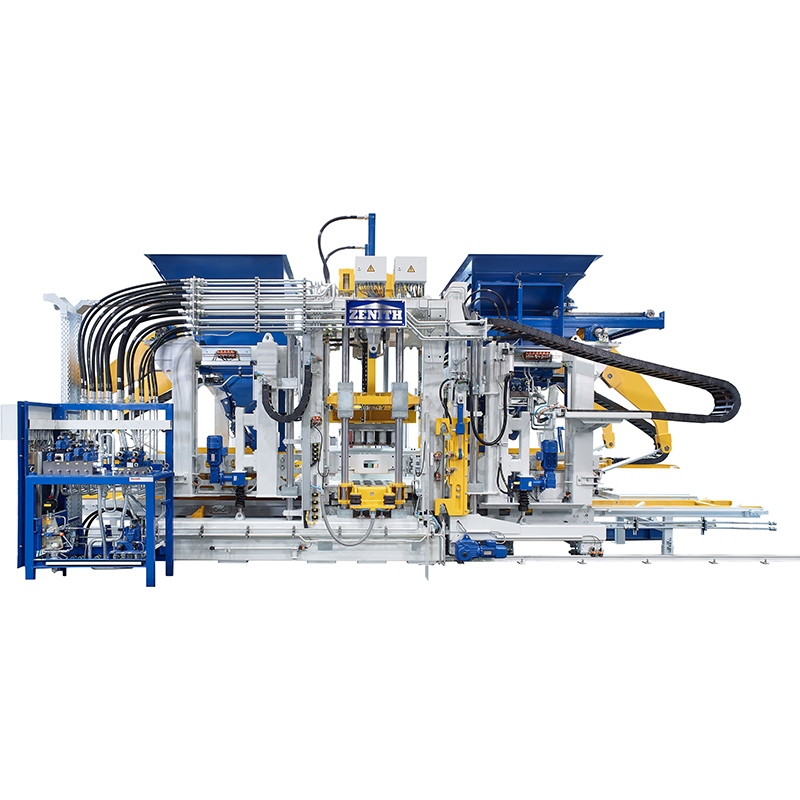
QGM Smart Block Machine with SIEMENS S7-1500 PLC Intelligent Control System

△ QGM Smart Block Machine with SIEMENS S7-1500 PLC Intelligent Control System


QGM integrates the SIEMENS S7-1500 PLC control system, enabling manufacturers to:

● Monitor production data in real time

● Store recipes for different products

● Adjust operating parameters accurately

● Detect abnormalities before quality problems occur

For factories operating a concrete paving block making machine, automated control greatly improves batch-to-batch consistency while reducing unnecessary manual adjustments.


Precision Moulds Preserve Material Performance

Excellent raw materials cannot compensate for worn or poorly aligned moulds.

Precision moulds help transform optimized concrete into finished products with accurate geometry and consistent surface quality.


Proper mould management includes

✔ Regular dimensional inspection

✔ Timely replacement of worn components

✔ Correct installation and alignment

✔ Routine maintenance

QGM manufactures precision moulds compatible with internationally recognized machine platforms, with all moulds undergoing professional heat treatment to improve durability and production stability.


Continuous Optimization Delivers Long-Term Results

Raw material conditions naturally change over time.

Sand moisture, aggregate grading, cement characteristics, and environmental conditions all influence production performance.

Rather than relying on one permanent formula, leading manufacturers regularly review production data and fine-tune their mix.


Recommended monitoring includes:

●Compressive strength testing

●Block density measurement

●Moisture analysis

●Material consumption records

●Production efficiency reports

Continuous optimization enables manufacturers to maintain stable quality while improving overall operating efficiency.


Why QGM Helps Manufacturers Achieve Better Mix Performance

QGM believes that superior concrete products are created through complete production integration rather than isolated equipment improvements.


Integrated Technology Advantages

QGM Technology

Production Value

Zenith Ultra Dynamic Vibration System

Higher compaction efficiency with reduced cement consumption

Precision hydraulic system

Stable forming pressure and repeatable production

SIEMENS PLC automation

Consistent machine operation and quality control

Precision heat-treated moulds

Accurate dimensions and longer service life

Complete production solutions

Better coordination between materials, equipment and process control


Whether producing structural blocks, kerbstones or paving products with a cement paving block making machine, QGM solutions help manufacturers convert optimized mix designs into consistently high-quality finished products.


Conclusion: Great Mix Design Is a Continuous Optimization Process

There is no single concrete mix suitable for every factory or every product.

The most effective mix design is one that balances raw materials, machine performance, hydraulic stability, compaction efficiency, mould precision, and intelligent process control.

By integrating optimized aggregate grading, stable water control, the Zenith Ultra Dynamic Vibration System, advanced automation, and precision manufacturing technology, QGM enables producers to achieve stronger concrete blocks while improving production efficiency and reducing unnecessary material consumption.

As competition continues to increase across Southeast Asia and international construction markets, manufacturers that continuously optimize both materials and production systems will gain higher productivity, more consistent quality, and stronger long-term competitiveness.

Ultimately, the best concrete block mix is not defined by a fixed ratio—it is achieved through continuous engineering improvement and disciplined production management.


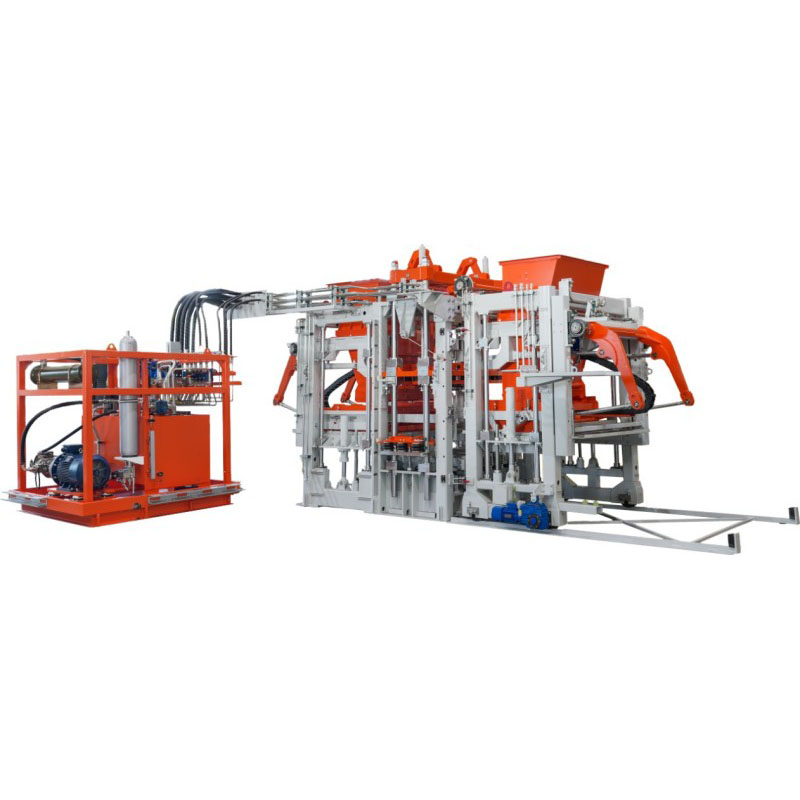
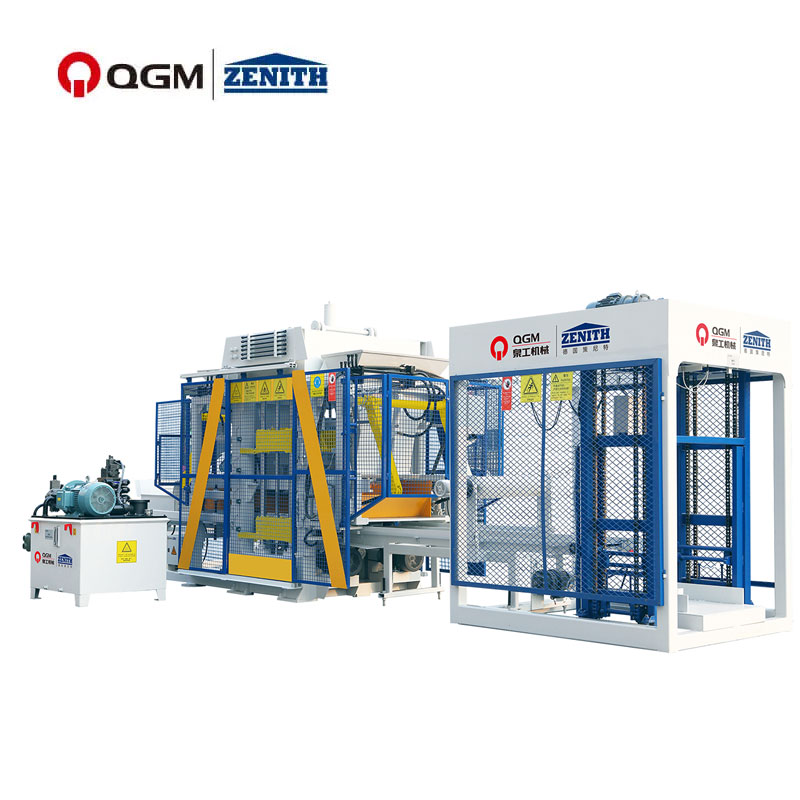
Block Production Applications

△Block Production Applications


Frequently Asked Questions

1. Is there one concrete mix that works for every block factory?

No. The ideal mix depends on local raw materials, finished product requirements, production equipment, and operating conditions. Most manufacturers adjust their mix according to actual production data.


2. Can stronger concrete blocks be produced without increasing cement consumption?

Yes. Better aggregate grading, controlled moisture content, efficient compaction, and stable production parameters often improve block strength more effectively than simply adding extra cement.


3. Why is machine performance important when optimizing mix design?

A well-designed concrete mix reaches its full potential only when the machine delivers consistent vibration, stable hydraulic pressure, and repeatable forming performance. QGM integrates these systems to maximize production efficiency and product quality.


4. How frequently should manufacturers review their concrete mix?

The mix should be evaluated whenever raw material quality, weather conditions, product specifications, or production performance changes. Periodic testing helps maintain stable quality and minimize production variation.


5. Which production factors have the greatest influence on finished block quality?

Material grading, water control, mixing consistency, mould condition, compaction efficiency, hydraulic stability, and automated process control all work together to determine the final strength, dimensional accuracy, and durability of concrete blocks.

Related News
Leave me a message
X
We use cookies to offer you a better browsing experience, analyze site traffic and personalize content. By using this site, you agree to our use of cookies.Privacy Policy
RejectAccept