ZENITH Maschinenfabrik GmbH

Cement-to-Aggregate Ratio: The Key to Stronger Concrete Blocks and More Efficient Production

2026-08-07 0 Leave me a message

Many manufacturers believe that improving block quality starts with purchasing a more advanced machine. In reality, the performance of any paving block machine depends heavily on one fundamental factor—the concrete mix.

An optimized cement-to-aggregate ratio determines not only compressive strength but also block density, dimensional stability, curing performance, and production efficiency. Even with advanced equipment, an unbalanced mix can result in inconsistent products, unnecessary material consumption, and higher production costs.


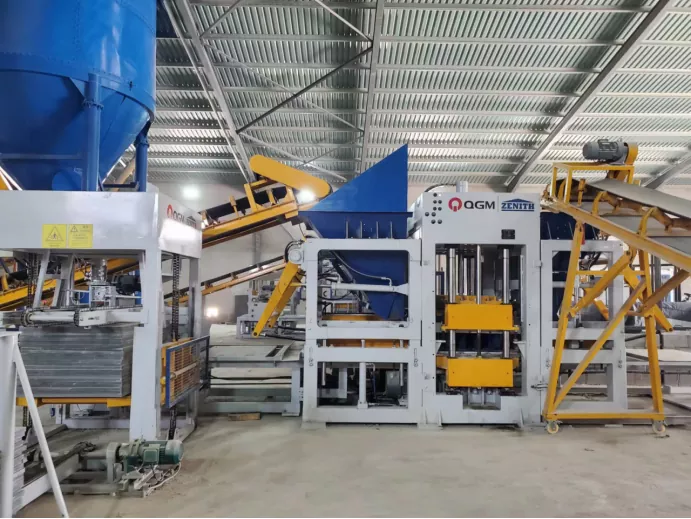
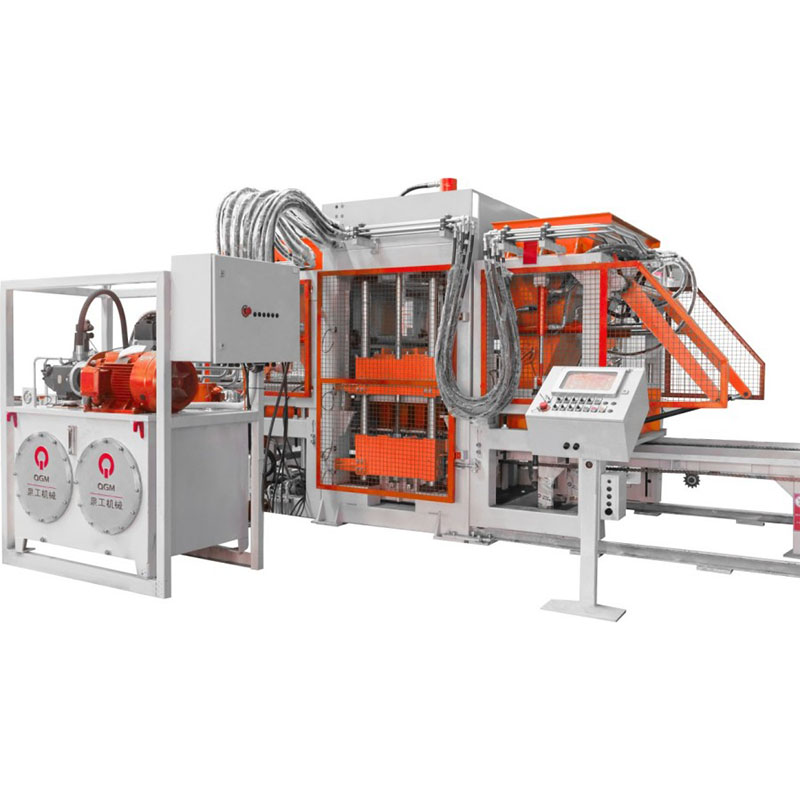
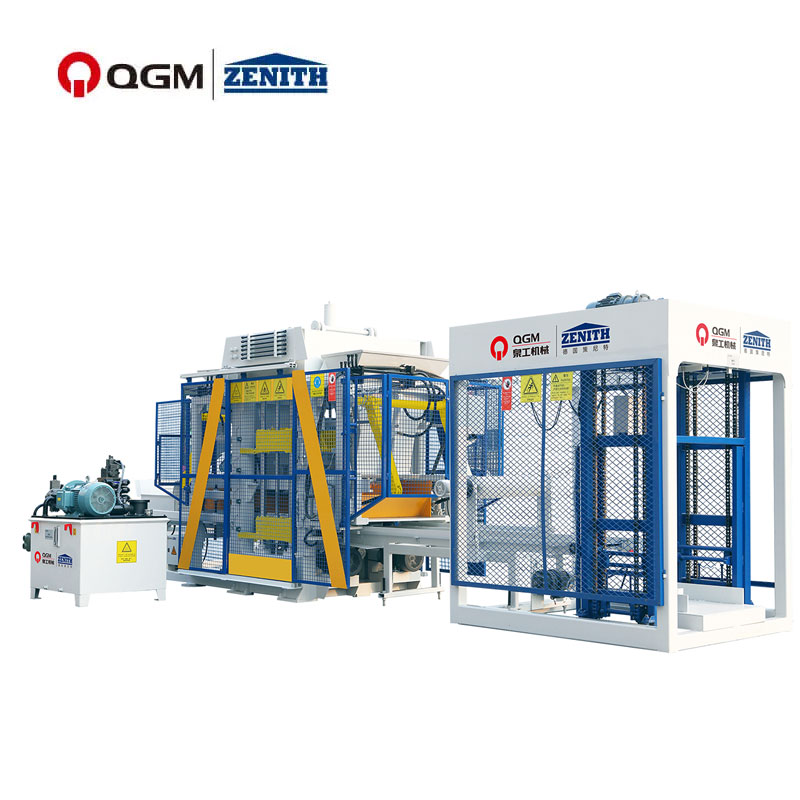
QGM Fully Automatic Block Making Machine

△QGM Fully Automatic Block Making Machine for High-Efficiency Concrete Block Production


The most successful concrete producers understand that material optimization and machine technology must work together as one integrated system.


Quick Guide: How Mix Proportion Influences Finished Block Quality

Mix Design Factor

Production Impact

Business Benefit

Cement dosage

Bonding performance

Higher strength without excessive cost

Aggregate grading

Particle packing density

Better compaction and lower void ratio

Moisture control

Workability and curing

Stable production quality

Machine compaction

Internal density

Improved durability

Hydraulic consistency

Uniform material distribution

Reduced production variation

Precision moulds

Accurate shaping

Lower rejection rate


Material Balance Matters More Than Material Quantity

Using more cement does not automatically produce better blocks.

In fact, excessive cement may increase:

●Production cost

●Drying shrinkage

●Surface cracking

●Heat generation during curing

Instead, manufacturers should focus on creating a balanced particle structure where cement efficiently fills and bonds the aggregate matrix.

Factories producing blocks with a concrete paving block machine generally achieve better long-term performance through optimized material distribution rather than simply increasing cement content.


Production Insight

Efficient particle packing often delivers higher compressive strength while simultaneously reducing overall cement consumption.


Aggregate Quality Builds the Internal Structure

Aggregates form the structural framework of every concrete block.

Their particle size distribution directly influences:

✔ Internal density

✔ Load-bearing capacity

✔ Surface appearance

✔ Long-term durability

Poorly graded aggregates leave excessive internal voids, requiring additional cement to compensate for lost strength.

Manufacturers operating a cement paving block machine should regularly evaluate aggregate grading to maintain consistent production quality.


Moisture Control Is Just as Important as Mix Proportion

Even a well-designed material ratio can fail if water content varies throughout production.

Excess moisture commonly results in:

●Reduced compressive strength

●Increased porosity

●Longer curing time

●Higher reject rates


Recommended practices include:

●Measuring aggregate moisture before batching

●Maintaining a stable water-cement ratio

●Preventing unnecessary water fluctuations during mixing

Consistent moisture control supports repeatable production regardless of seasonal weather changes.


Efficient Compaction Unlocks the Full Potential of the Mix

Raw materials alone cannot determine final block quality.

Proper compaction transforms an optimized mix into a dense and durable finished product.

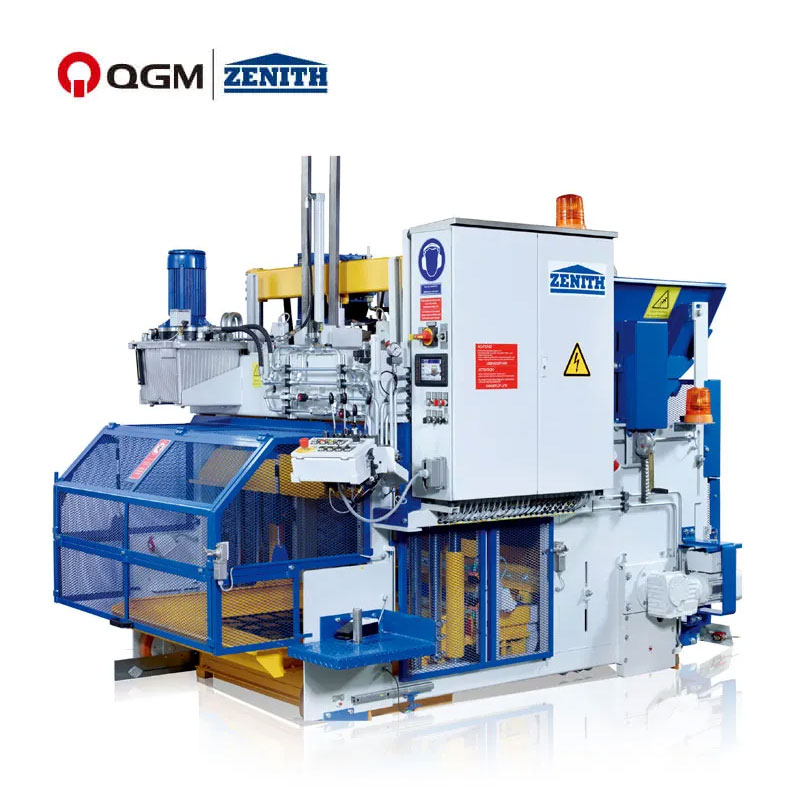
QGM integrates the Zenith Ultra Dynamic Vibration System, engineered to maximize vibration efficiency while minimizing unnecessary energy loss.


Main production advantages include:

✅ Faster particle consolidation

✅ Uniform density across every block

✅ Improved compressive strength

✅ Reduced cement consumption

✅ Stable production cycles

Manufacturers using a paving block making machine benefit from more consistent block quality and improved production efficiency through optimized vibration technology.


Stable Hydraulic Performance Supports Uniform Forming

Consistent forming pressure is essential for converting a balanced concrete mix into high-quality finished products.

QGM hydraulic systems combine precision proportional control technology with premium hydraulic pumps, providing:

●Stable mould movement

●Accurate pressing pressure

●Smooth machine synchronization

●Reliable long-term operation

Uniform hydraulic performance helps minimize density variation throughout continuous production.


Intelligent Process Control Keeps Every Batch Consistent

Modern concrete manufacturing depends on data-driven process management rather than manual experience alone.


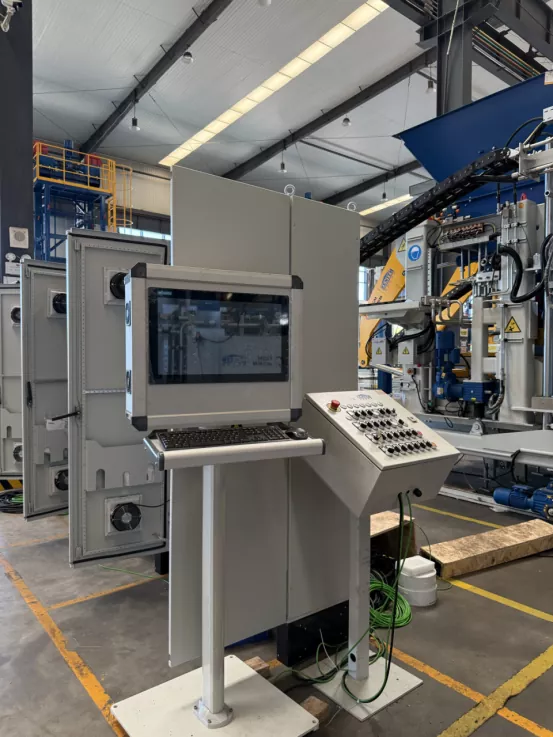
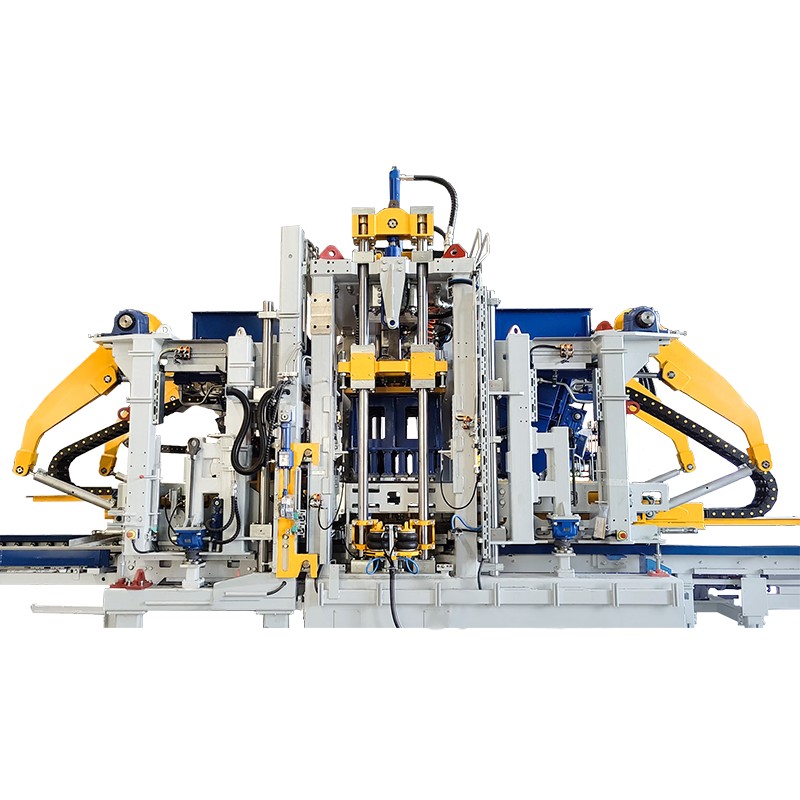
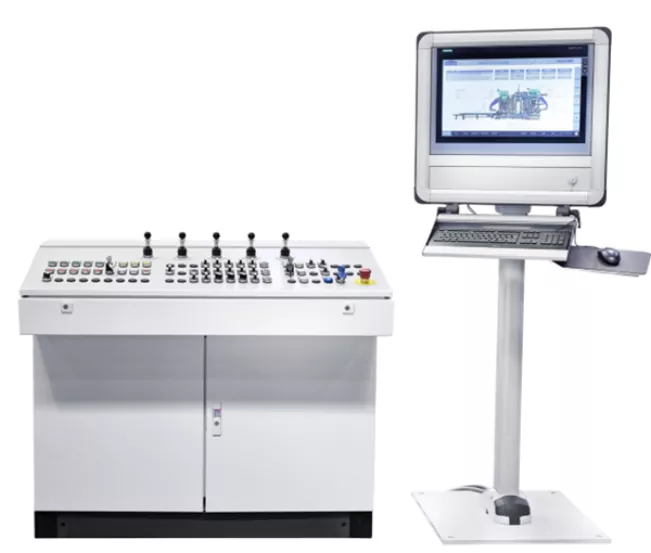
QGM Automatic Block Machine

△QGM Automatic Block Machine Equipped with SIEMENS S7-1500 PLC Intelligent Control System


QGM integrates the SIEMENS S7-1500 PLC , allowing operators to:

●Monitor machine performance in real time

●Store product-specific production parameters

●Fine-tune operating conditions quickly

●Detect production abnormalities before defects occur

For factories operating a concrete paving block making machine, intelligent automation significantly improves production consistency across multiple shifts.


Precision Moulds Protect Product Accuracy

A carefully designed mix can only deliver its full value when paired with high-quality moulds.

QGM manufactures precision-engineered moulds compatible with internationally recognized equipment platforms including MASA, HESS, ZENITH, POYATOS, BESSER, and TIGER.

Each mould undergoes professional heat treatment to improve:

✔ Wear resistance

✔ Dimensional accuracy

✔ Surface finish

✔ Production stability

Regular mould inspection also helps reduce downtime and maintain consistent block quality.


Lower Production Costs Through Scientific Mix Optimization

Improving product quality does not necessarily require higher material costs.

Many manufacturers successfully reduce production expenses by:

Optimization Method

Expected Result

Optimizing aggregate grading

Lower cement consumption

Improving moisture consistency

Reduced batch variation

Using efficient vibration technology

Better compaction with less energy

Maintaining hydraulic stability

More consistent forming pressure

Applying intelligent automation

Reduced operator error


When these improvements work together, manufacturers can produce stronger concrete blocks while maintaining competitive production costs.

Factories using a paver block machine often achieve higher productivity through process optimization instead of increasing raw material usage.


Why QGM Delivers Better Concrete Block Performance

QGM combines advanced equipment design with intelligent production technology to help manufacturers maximize both material efficiency and production consistency.

Integrated QGM Advantages

QGM Technology

Customer Value

Zenith Ultra Dynamic Vibration System

Higher compaction efficiency and lower cement consumption

Precision hydraulic system

Stable forming pressure and smoother production

SIEMENS S7-1500 PLC automation

Intelligent process management and repeatable quality

Heat-treated precision moulds

Longer service life and improved dimensional accuracy

Complete production solutions

Better coordination between materials, machinery and production management


Whether manufacturing hollow blocks, kerbstones or paving products with a cement paving block making machine, QGM solutions help convert optimized mix designs into consistent, high-quality finished products.


Conclusion: High-Quality Blocks Begin with Smart Material Engineering

Concrete block quality is determined by much more than machine performance alone.

An optimized cement-to-aggregate ratio, combined with stable moisture control, efficient compaction, intelligent automation, and precision mould technology, creates a production system capable of delivering consistent strength, durability, and cost efficiency.

QGM delivers an integrated production ecosystem by combining the Zenith Ultra Dynamic Vibration System, a high-precision hydraulic system, the SIEMENS S7-1500 PLC control platform, precision-engineered moulds, and the QGM Intelligent Cloud Service Platform. Through real-time equipment monitoring, remote diagnostics, production data analysis, and predictive maintenance support, manufacturers can optimize material utilization, maintain stable production performance, and improve product consistency across every production cycle.

As competition across Southeast Asia and international construction markets continues to grow, manufacturers that combine scientific mix optimization with intelligent production management will achieve greater operational efficiency, stronger concrete products, and long-term market competitiveness.

Ultimately, the best concrete blocks are not produced by adding more cement—they are produced by achieving the perfect balance between materials, machinery, and manufacturing discipline.


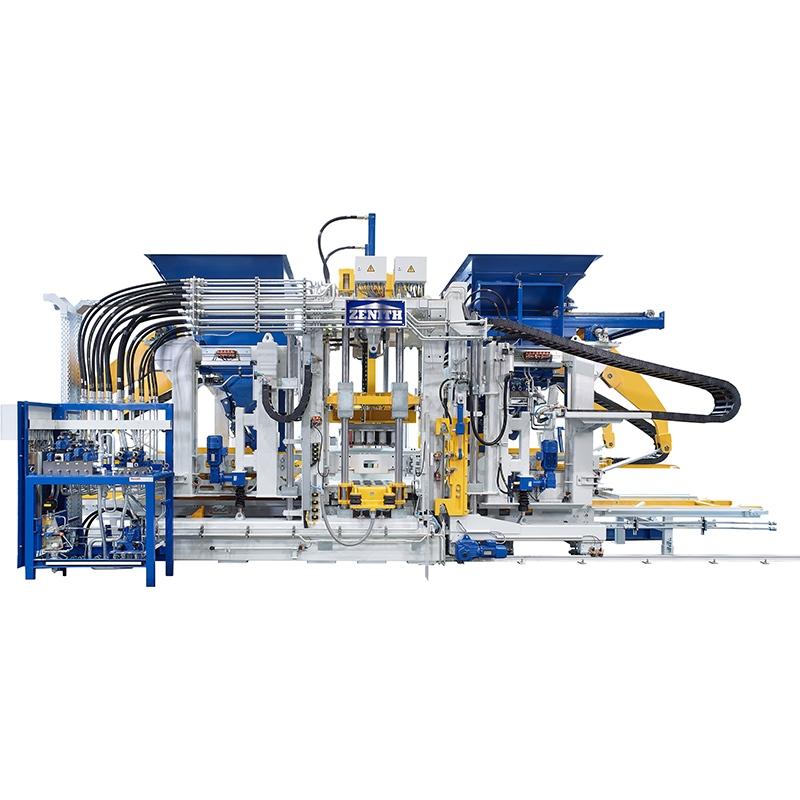
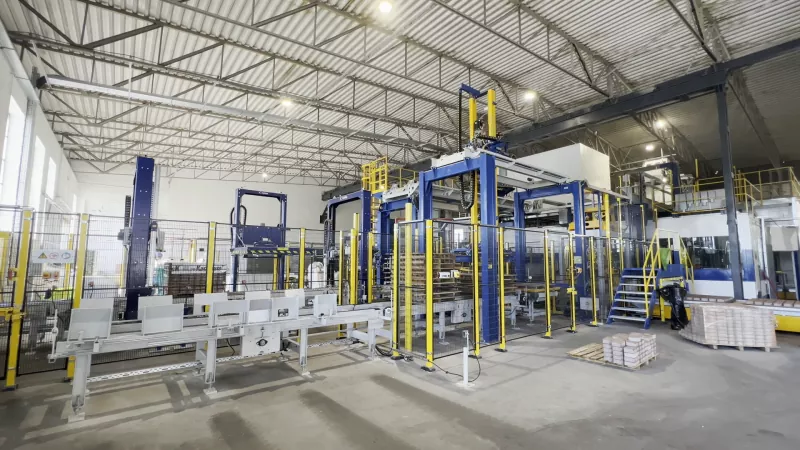
QGM Intelligent Cloud Service Platform

△QGM Intelligent Cloud Service Platform for Digital Concrete Block Production Management


FAQ: Concrete Block Mix Design and Material Proportions

1. What cement-to-aggregate ratio is recommended for concrete block production?

There is no universal mix ratio for every application. The optimal proportion depends on the aggregate grading, cement quality, moisture content, and the required block strength. A well-balanced mix design typically delivers better performance than simply increasing the cement dosage.


2. Is it possible to lower cement consumption while maintaining block quality?

Yes. With proper aggregate grading, optimized moisture control, and efficient compaction, manufacturers can reduce cement usage without sacrificing compressive strength, density, or product durability. An optimized mix design often improves both production efficiency and operating costs.


3. Why does the block making machine influence mix design performance?

Even a well-designed concrete mix requires stable production conditions. Consistent vibration, accurate hydraulic pressure, and intelligent process control help distribute materials evenly, improve compaction, and ensure every block meets the intended quality specifications throughout continuous production.

Related News
Leave me a message
X
We use cookies to offer you a better browsing experience, analyze site traffic and personalize content. By using this site, you agree to our use of cookies.Privacy Policy
RejectAccept