ZENITH Maschinenfabrik GmbH

How Block Making Machines Are Driving the Building Materials Industry

2026-11-05 0 Leave me a message
The building materials industry is undergoing a significant transformation. Growing urban populations, infrastructure investment, changing construction requirements, and increasing attention to resource efficiency are reshaping how construction materials are manufactured. For concrete product manufacturers, these changes create both opportunities and new operational challenges.

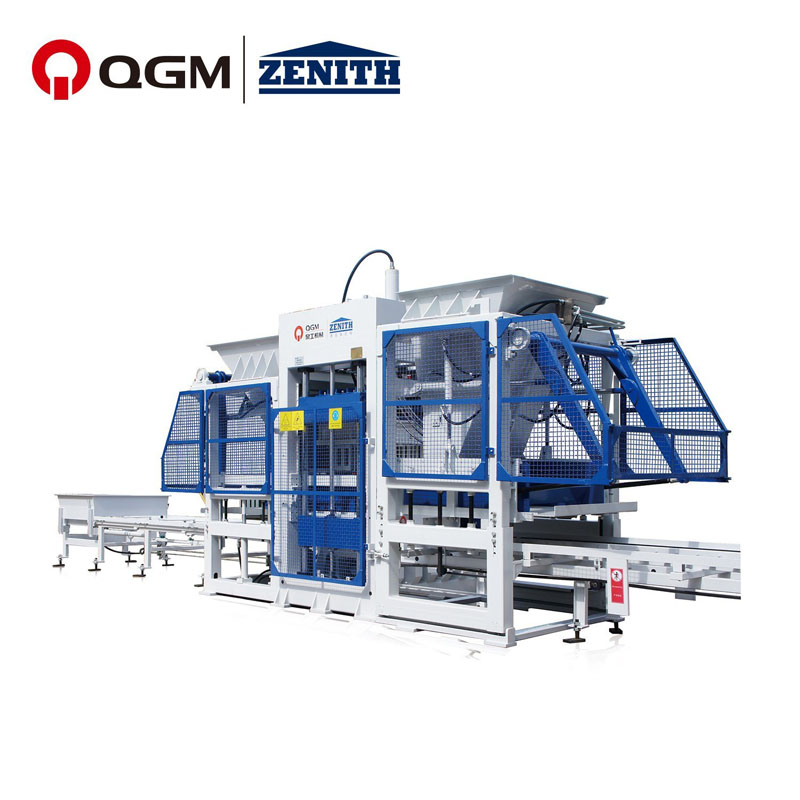
block making machine

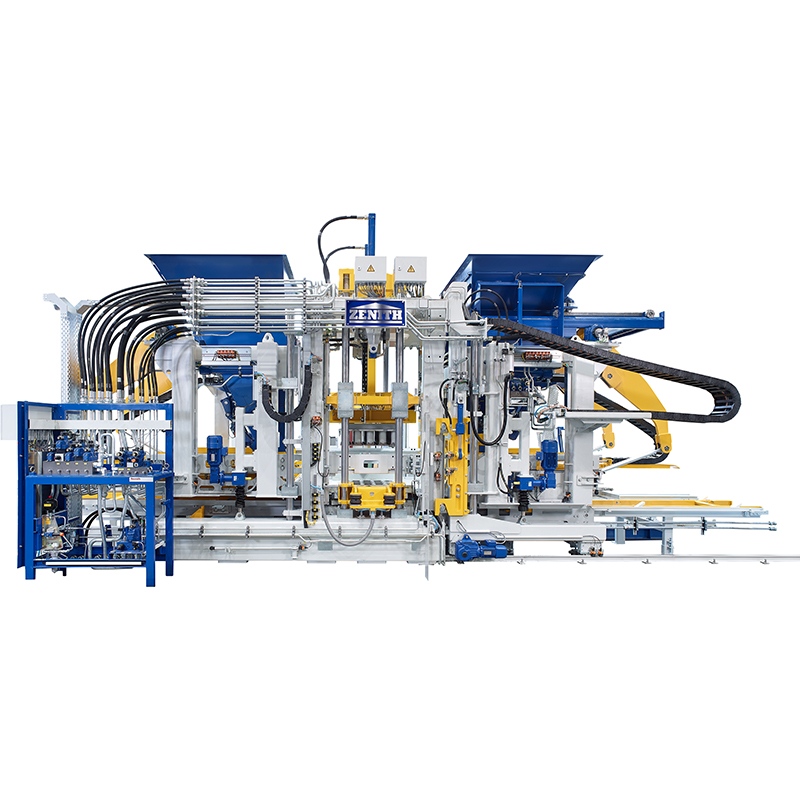
Against this backdrop, the block making machine has become an important part of modern building materials manufacturing. By combining automated forming technology, controlled vibration, flexible mold configurations, and integrated production systems, modern machines enable manufacturers to produce a wider range of concrete products with more consistent quality and improved production efficiency.


But their influence goes beyond simply making concrete blocks faster. They are changing how manufacturers manage production, utilize raw materials, respond to market demand, and plan long-term investments.


So, how exactly do block making machines contribute to the development of the building materials industry? And what should manufacturers consider when choosing equipment for their next stage of growth?


1. Making Building Materials Manufacturing More Efficient

Production efficiency is one of the most direct ways block making machines influence the building materials industry.


Traditional manufacturing methods often involve considerable manual intervention in material handling, forming, product transfer, and stacking. As production requirements increase, relying heavily on manual operations can make it difficult to maintain consistent output and product quality.


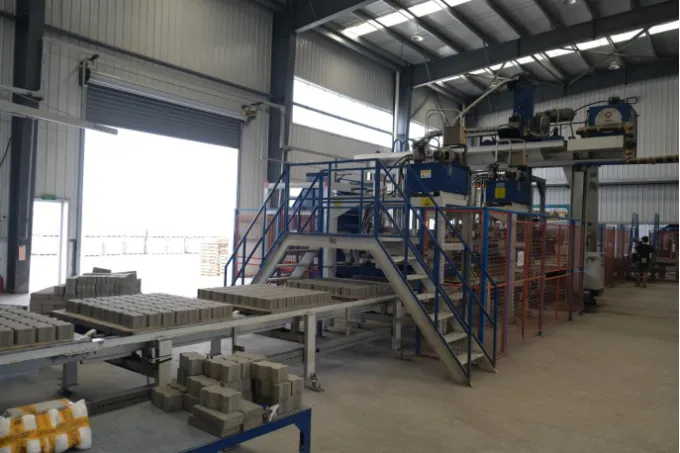
Modern automatic block making machines integrate mechanical systems, hydraulic technology, vibration mechanisms, and electrical controls to automate key forming processes.


Depending on the production line configuration, automation can extend across:

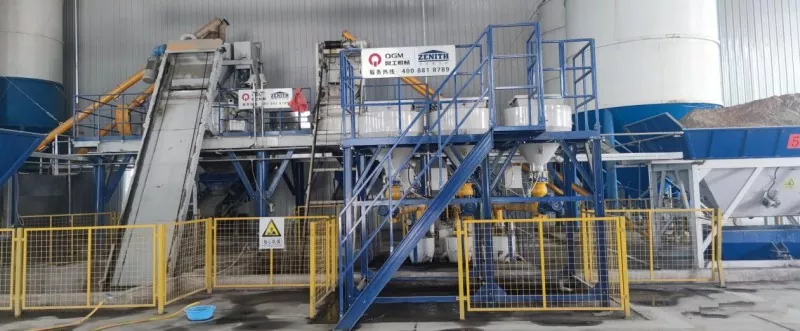
•Raw material batching and mixing.

•Concrete conveying and distribution.

•Mold filling and block forming.

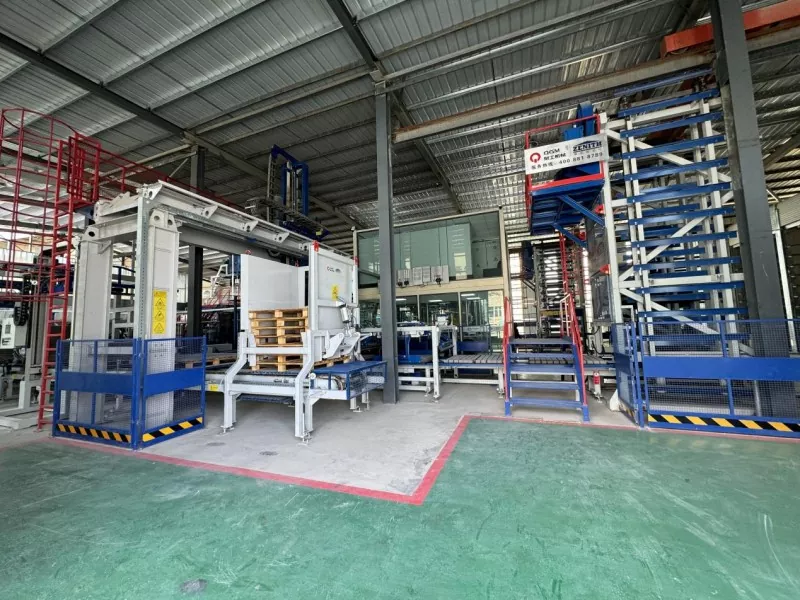
•Pallet feeding and product transfer.

•Curing and pallet circulation.

•Finished-product cubing and packaging.


This integration reduces the need for repetitive manual operations and helps manufacturers organize production more systematically.


However, there is an important distinction: automation does not automatically guarantee higher factory output. The batching system must supply sufficient concrete, the forming machine must operate within its intended cycle, and downstream handling equipment must keep pace with production.


For manufacturers evaluating a fully automatic concrete block making machine, the real objective should be to improve the efficiency of the entire production process rather than focusing exclusively on the speed of the main machine.


2. Improving Product Consistency and Manufacturing Quality

In the building materials market, product quality directly affects a manufacturer's reputation and ability to secure repeat orders.


Concrete blocks used in residential construction, commercial buildings, road projects, and municipal infrastructure must meet the dimensional, strength, and performance requirements applicable to their intended applications.


Maintaining consistent quality across production batches, however, is not always straightforward. Variations in aggregate grading, moisture content, concrete proportions, material distribution, and compaction conditions can all affect the finished product.


Modern concrete block making machines help address these challenges through more controlled forming processes.


Several technologies play an important role:


Controlled vibration

Vibration helps compact the concrete mixture inside the mold. Adjustable vibration parameters allow operators to adapt forming conditions to different product specifications and concrete formulations.


Hydraulic pressing and mechanical coordination

Coordinated pressing and vibration support the forming process, helping produce blocks with consistent dimensions and compaction characteristics.


Controlled material feeding

A well-designed feeding system distributes concrete throughout the mold cavities. More uniform filling helps reduce variations caused by uneven material distribution.


Precision mold configuration

The mold determines the product's shape and dimensions. Suitable mold design and maintenance are essential for maintaining dimensional consistency and achieving the intended surface finish.


These technologies work together rather than independently. Even advanced machinery cannot compensate for an unsuitable mix design or poorly maintained molds.


For manufacturers, the practical benefit is greater control over production conditions and a more repeatable manufacturing process.


3. Expanding Product Portfolios to Meet Changing Market Demand

The building materials industry is no longer driven by demand for standard masonry products alone.


Infrastructure development, urban landscaping, road construction, drainage projects, and architectural design have created demand for a broader range of concrete products.


Manufacturers may need to supply:

•Hollow concrete blocks.

•Solid concrete blocks.

•Concrete paving blocks.

•Curbstones and kerbstones.

•Grass pavers and permeable paving products.

•Slope protection blocks.

•Decorative and stone-look concrete products.


This changing demand makes production flexibility increasingly important.


A modern multi-product block making machine can support different product categories through compatible molds and adjustable production parameters.


Instead of investing in a separate molding machine for every product type, manufacturers may be able to produce several products on one machine platform, provided that the dimensions, mold configurations, and machine operating range are compatible.


This creates more opportunities to respond to local construction demand.


For example, a manufacturer supplying residential construction projects may focus on hollow and solid blocks, while a company serving municipal infrastructure projects may need paving blocks, curbstones, and permeable products.


The ability to adjust production to market demand can help manufacturers diversify their business and reduce dependence on a single product category.


When comparing equipment, buyers should therefore ask: Can this machine support the products we manufacture today, and can it accommodate the products we may want to introduce in the future?


4. Supporting Resource Efficiency and the Utilization of Secondary Materials

Resource efficiency has become an increasingly important consideration in building materials manufacturing.


Traditional concrete production relies on natural aggregates, cement, and other resources. Meanwhile, industrial production and construction activities generate substantial quantities of secondary materials that may have potential applications in construction products.


Depending on their physical and chemical properties, certain materials can be considered for use in concrete block manufacturing. Examples include:

•Fly ash.

•Steel slag.

•Coal gangue.

•Mining residues and tailings.

•Construction and demolition waste.

•Other suitable industrial by-products.


The potential use of these materials creates opportunities to reduce dependence on selected natural resources and develop alternative product formulations.


However, not all recycled materials are suitable for direct use in concrete products. Their composition, particle size, moisture content, potential contaminants, and performance characteristics must be evaluated before determining an appropriate mix design.


This is where equipment adaptability becomes important.


A suitably configured concrete block production line for recycled materials can incorporate appropriate batching, mixing, feeding, and forming arrangements to process selected secondary materials.


Manufacturers should also evaluate whether the resulting products meet the relevant technical standards and customer requirements.


In other words, using recycled materials is not simply a matter of adding waste to a concrete mixture. It requires material assessment, mix optimization, and a production process capable of handling the selected feedstocks.


5. Reducing Labor Dependence and Improving Factory Management

Labor availability and operating costs remain important concerns for concrete product manufacturers, particularly in markets where industrial labor is becoming more expensive or difficult to recruit.


Manual handling can also introduce variations in production procedures and make it harder to maintain a consistent manufacturing rhythm.


Automation helps address these issues by taking over selected repetitive and physically demanding tasks.


For example, automated pallet handling, product transfer, curing systems, and cubing equipment can reduce the amount of manual intervention required throughout the production process.


At the same time, modern equipment increasingly incorporates PLC control systems, industrial touch panels, and production monitoring functions.


These technologies allow operators to manage equipment settings, review operating conditions, and coordinate different production stages through integrated control interfaces.


Digital equipment management can further support:

•Production status monitoring.

•Operating parameter management.

•Equipment alarm and fault information.

•Maintenance planning.

•Production data analysis.


For manufacturers considering an automated concrete block production line, the objective is not necessarily to eliminate all manual work. It is to allocate labor more effectively, reduce unnecessary handling, and improve control over the production process.


The appropriate automation level should reflect the factory's production targets, workforce conditions, and investment budget.


6. Helping Manufacturers Adapt to Different Construction Markets

Construction demand varies significantly between regions.In some markets, standard hollow blocks and masonry products account for a large share of demand. In others, infrastructure development creates opportunities for paving blocks, curbstones, drainage products, and landscaping materials.


Climate, local building practices, raw material availability, construction standards, and transportation conditions also influence product requirements.


A machine configuration that works well in one market may not be the most suitable option for another.


This is why production flexibility and equipment adaptability matter when manufacturers plan to enter new markets or expand their existing customer base.


For example:

•Manufacturers in regions with substantial road and municipal infrastructure projects may prioritize paving blocks and curbstone production.

•Areas with growing residential construction demand may require a stable supply of hollow and solid concrete blocks.

•Markets promoting sustainable urban drainage may create opportunities for permeable paving products and grass pavers.

•Regions with suitable industrial by-products may explore concrete formulations incorporating selected secondary materials.


A flexible concrete block manufacturing solution allows manufacturers to evaluate different product opportunities without redesigning the entire production process every time market demand changes.


That said, equipment selection should always be based on actual market research rather than assumptions about future demand.


7. What Should Buyers Consider When Investing in a Block Making Machine?

The development of block making technology creates more choices for manufacturers. But more advanced equipment does not necessarily mean a better investment for every factory.


The right machine is the one that matches the manufacturer's production objectives, available resources, and long-term business plans.


Before purchasing a concrete block making machine, buyers should evaluate several important factors.


7.1 Product Range and Mold Compatibility

Confirm the machine's maximum and minimum product heights, molding area, pallet dimensions, and available mold configurations.


If you plan to expand into paving blocks, curbstones, or specialized concrete products, check whether the machine can accommodate the required molds and production processes.


7.2 Production Capacity and Actual Operating Output

Manufacturers should compare production capacity using clearly defined product specifications.


Important information includes:

•Number of products per mold.

•Machine cycle time.

•Expected output per shift.

•Required operating hours.

•Concrete supply capacity.

•Downstream handling capacity.


Be careful when comparing advertised output figures. A machine's theoretical capacity and a complete production line's actual operating output are not necessarily the same.


7.3 Automation and Factory Configuration

Consider whether your project requires a semi-automatic or fully automatic production line.


Evaluate the level of automation across batching, mixing, forming, pallet handling, curing, and finished-product handling.


The factory layout, available floor space, building height, and material transportation routes should also be considered before confirming the equipment configuration.


7.4 Raw Material Adaptability

If you intend to use recycled materials or alternative aggregates, discuss their characteristics with the equipment supplier.


The supplier should understand the material handling requirements, feeding conditions, and forming process before recommending a configuration.


7.5 Maintenance and Technical Support

A machine is expected to operate over many production cycles. Its long-term performance depends not only on the original equipment design but also on maintenance accessibility, spare parts availability, technical documentation, and service support.


Buyers should understand the supplier's installation, commissioning, operator training, and after-sales service arrangements before making an investment decision.


A well-informed purchasing decision considers the complete production system, not just the initial machine price.


8. How QGM Contributes to the Development of Modern Block Manufacturing

As the building materials industry moves toward more automated, flexible, and resource-efficient manufacturing, equipment suppliers play an important role in helping producers adapt to these changes.


With more than 40 years of experience in concrete products machinery manufacturing, QGM (Quangong Machinery Co., Ltd.) develops block making equipment and production solutions for different manufacturing requirements.


In 2014, QGM fully acquired Germany's Zenith Maschinenfabrik GmbH, which had more than 60 years of industry experience at the time, and established a technology research and development center in Germany. This acquisition brought German engineering expertise and technological heritage into QGM's equipment development capabilities.


Rather than focusing on one type of concrete product or production method, QGM offers several equipment series to serve different manufacturing applications.


8.1 Flexible Block Making Machine Solutions for Different Production Requirements

QGM offers a comprehensive portfolio of concrete block manufacturing equipment, including the ZN, T, and ZENITH series, as well as Auxiliary Block Machines. Each product range is developed to address different production requirements, product specifications, and factory configurations, helping manufacturers select suitable block making machine solutions for their operations.


ZN Series: Servo-Driven Technology for Automated Block Production

The ZN Series integrates servo-driven vibration technology with intelligent control systems to achieve precise vibration management and consistent concrete block forming. Its flexible production configurations allow manufacturers to adjust molding parameters according to different product specifications and production requirements.


Designed for automated concrete block manufacturing, the ZN Series is suitable for producers seeking flexible production capabilities, reliable forming performance, and efficient equipment operation.


T Series: Versatile Solutions for Multi-Product Concrete Forming

The T Series is designed for manufacturers requiring versatile concrete block production capabilities. Its adaptable machine configurations and adjustable forming parameters support the production of various concrete products, including concrete blocks, paving blocks, grass pavers, and other precast concrete units.


Depending on the selected machine configuration and material suitability, the T Series can also accommodate production processes involving selected industrial by-products and recycled materials, supporting the resource-efficient utilization of alternative raw materials.


ZENITH Series: German Engineering and Multilayer Concrete Production Technology

Building on the German engineering expertise of Zenith, following QGM's acquisition of the company in 2014, the ZENITH Series combines established manufacturing technology with advanced concrete product manufacturing solutions.


The ZENITH 940, for example, features a mobile multilayer production concept that enables the manufacture of different concrete products, including paving blocks, hollow blocks, masonry blocks, grass pavers, and curbstones. This production approach is suitable for manufacturers seeking versatile product capabilities and efficient multilayer concrete production.


QGM Auxiliary Block Machine: Complementary Equipment for Concrete Block Production

In addition to its main block molding machines, QGM offers a range of auxiliary equipment designed to support various concrete block processing and finishing requirements. This equipment portfolio includes shot blasting machines, concrete block polishing machines, long-board equipment, and other specialized machinery for different production applications.


Each type of auxiliary equipment serves a specific role in the concrete block manufacturing process. Shot blasting machines and polishing machines support different surface treatment requirements, while other auxiliary equipment helps complement the production workflow according to specific product specifications and factory configurations.


By integrating suitable auxiliary machinery with the main block making machine, manufacturers can expand their concrete product processing capabilities and establish a more complete production setup. QGM provides flexible equipment combinations to accommodate different concrete product types, surface finishing requirements, and manufacturing needs.


Choosing the Right Block Making Machine for Your Production Needs

Each QGM product series serves different manufacturing requirements. Selecting the right concrete block making machine or production line involves evaluating several factors, including finished product specifications, target production capacity, raw material availability, automation requirements, and existing factory conditions.


With its range of ZN, T, ZENITH, and Auxiliary Block Machine solutions, QGM provides manufacturers with flexible equipment options for different concrete block production applications.


8.2 Combining Equipment Technology with Digital Management

The development of modern block manufacturing is not limited to mechanical improvements.


QGM's Intelligent Equipment Cloud Service Platform provides digital management functions that can support equipment monitoring and maintenance activities.


Depending on the integration and configuration, its functions include online equipment monitoring, remote software upgrades, fault prediction and diagnosis, equipment health assessments, and operating status reports.


These capabilities give manufacturers access to equipment operating information and support more systematic maintenance management.


For production facilities seeking to improve equipment visibility, digital tools can complement automated forming and material handling systems.


8.3 Supporting More Resource-Efficient Concrete Product Manufacturing

The use of selected industrial and construction waste materials is another area of interest in modern concrete product manufacturing.


QGM's T Series and related equipment configurations can support production applications involving suitable secondary materials, including fly ash, coal gangue, steel slag, tailings, and construction waste.


The feasibility of each application depends on material characteristics, mix design, product requirements, and the selected equipment configuration.


QGM has also been developing equipment and solutions related to carbon curing and carbon utilization, including carbon curing kilns, CCUS-related technologies, and carbon-based concrete product manufacturing equipment.


These developments reflect the company's involvement in exploring lower-carbon manufacturing approaches and the resource utilization of suitable solid waste materials.


For manufacturers evaluating such technologies, the key consideration remains whether the proposed process can meet their material, product, operational, and economic requirements.


9. Conclusion: Block Making Technology Is Reshaping Building Materials Manufacturing

Block making machines are contributing to the development of the building materials industry in several important ways.


They help manufacturers improve production efficiency, maintain more consistent product quality, expand product portfolios, explore suitable secondary raw materials, and introduce higher levels of factory automation.


At the same time, the value of modern equipment depends on how well it matches the manufacturer's actual production requirements.


For companies planning to establish a new factory, upgrade existing machinery, or explore new concrete product markets, choosing the right production configuration is an important step toward long-term competitiveness.


With its ZN, T, QT, and ZENITH equipment series, QGM provides different concrete block manufacturing options for manufacturers serving diverse applications and markets.


Looking for a block making machine that matches your production requirements? Contact QGM to discuss your target products, raw materials, production capacity, and factory configuration. Our team can help you evaluate suitable equipment options for your concrete block manufacturing project.


FAQs

1. How do block making machines contribute to the development of the building materials industry?

Block making machines support the development of the building materials industry by improving production automation, forming consistency, and manufacturing flexibility. They also allow manufacturers to produce different concrete products and explore the use of suitable recycled and industrial by-product materials.


2. What types of products can modern concrete block making machines manufacture?

Depending on the machine model and mold configuration, modern concrete block making machines can produce hollow blocks, solid blocks, paving blocks, curbstones, grass pavers, permeable pavers, slope protection blocks, and other precast concrete products.


3. Can automatic block making machines use recycled materials?

Yes, selected recycled and industrial by-product materials, such as fly ash, steel slag, coal gangue, and construction waste, may be used in suitable concrete formulations. Their feasibility depends on material properties, mix design, product requirements, and equipment configuration.


4. What should manufacturers consider when choosing a concrete block making machine?

Manufacturers should evaluate the intended product range, mold compatibility, production capacity, automation level, raw material characteristics, factory layout, maintenance requirements, and technical support. The equipment should match both current production needs and realistic future development plans.


5. Which QGM block making machine series is suitable for different production requirements?

QGM offers several equipment series, including ZN, T, QT, and ZENITH. Each series serves different manufacturing applications and production configurations. The appropriate choice depends on target products, required output, mold specifications, raw materials, and factory conditions.

Related News
Leave me a message
X
We use cookies to offer you a better browsing experience, analyze site traffic and personalize content. By using this site, you agree to our use of cookies. Privacy Policy
RejectAccept