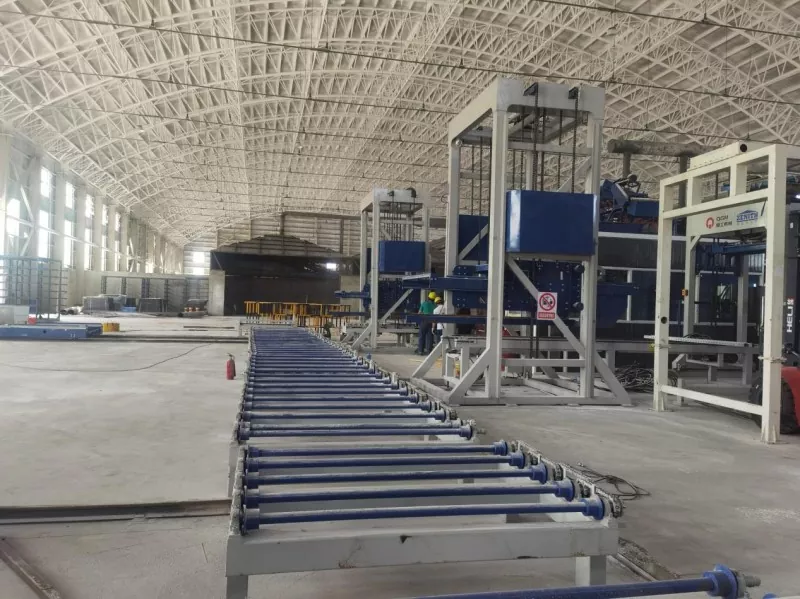
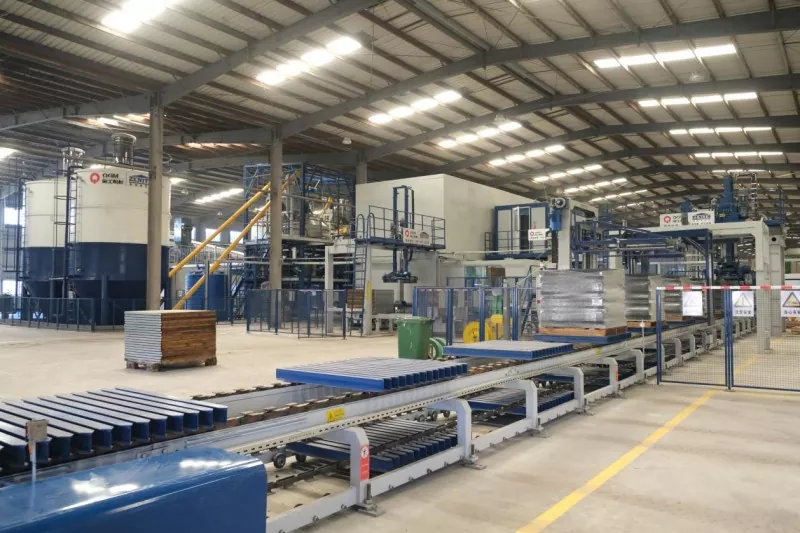
Long-term operation places repeated demands on the hydraulic system, vibration system, material feeding system, and automatic control system. As operating hours increase, problems that are difficult to identify during initial commissioning may begin to affect forming quality, material handling, production continuity, and maintenance.
For block plants, evaluating a smart block making machine therefore requires a closer look at the systems that directly influence daily production—not just the machine's initial cycle speed or automation configuration.
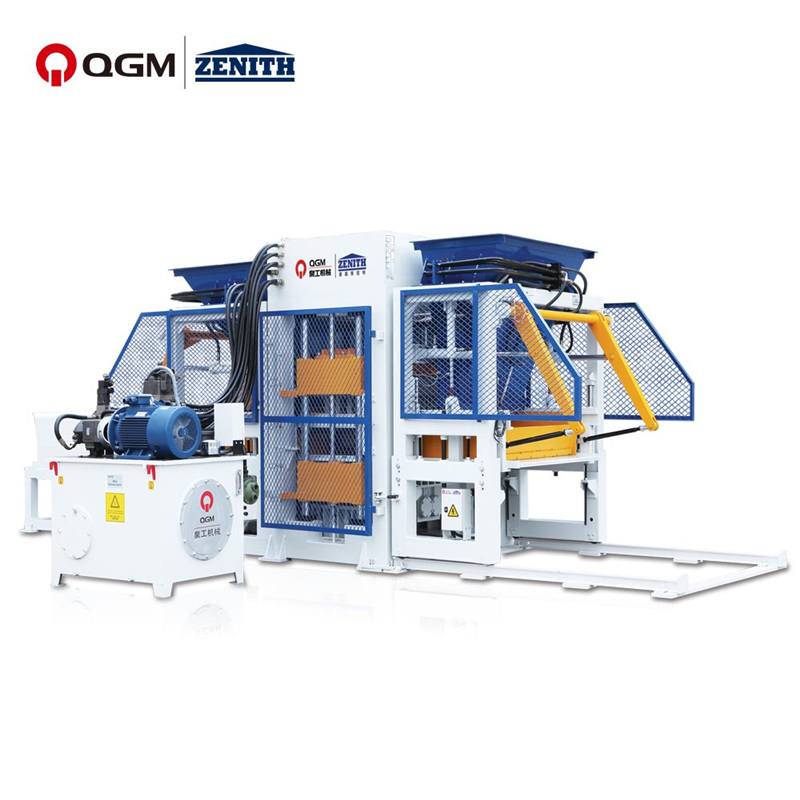
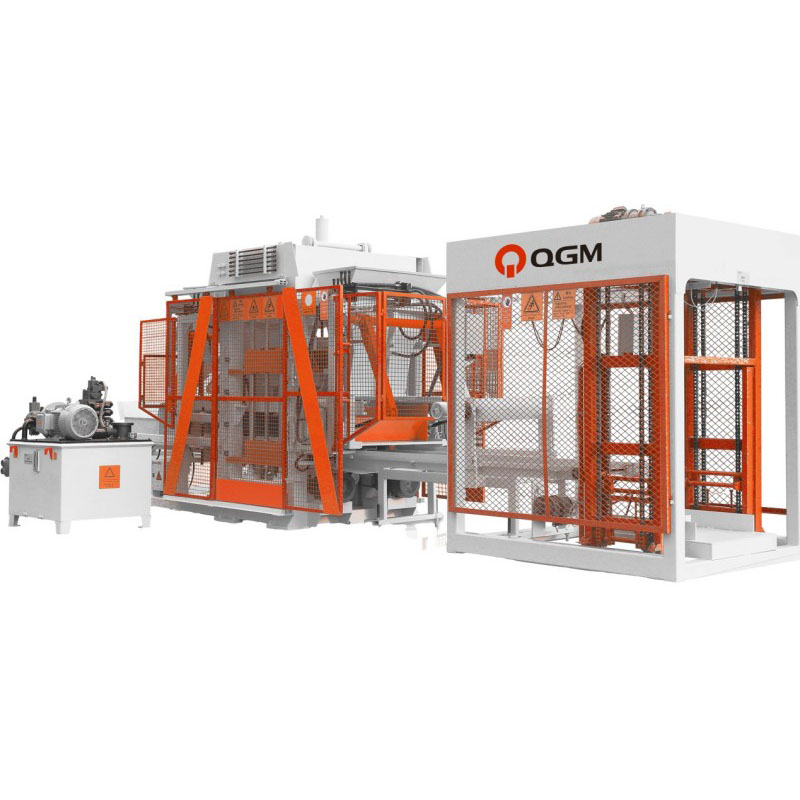
△QGM Automatic Block Making Machine for Long-Term Production Reliability
The forming process directly affects the consistency and quality of finished concrete products.
Modern block plants are increasingly adopting automated equipment, but adding a PLC or touchscreen does not by itself make a machine intelligent. The hydraulic system, vibration system, material feeding mechanism, and forming controls must operate in coordination to maintain consistent results over time.
When these systems are not properly matched, forming quality may gradually become less consistent as the machine accumulates operating hours.
Small chips along block edges or variations in compaction may appear after extended use. Such defects are not always obvious immediately after demolding. They can become more noticeable during curing, stacking, or transportation, increasing product rejection and material losses.
For manufacturers producing concrete blocks, paving blocks, and other precast concrete products, stable forming performance is therefore an important consideration when selecting a block making machine.
Raw materials are rarely identical from one production cycle to another.Sand and aggregate moisture can fluctuate, while particle size and grading may also change. Some plants additionally incorporate fly ash, steel slag, construction waste, and other solid waste materials into their production processes.
These variations can influence the entire production sequence, including mixing, conveying, feeding, and block forming.
A highly automated machine may operate smoothly under standard material conditions but encounter feeding difficulties when wet lumps or oversized particles enter the system. Repeated blockages can interrupt the production sequence and require operators to clear the material before the line can resume normal operation.
The impact extends beyond the forming machine itself. Upstream and downstream equipment may also have to wait, while production parameters may need to be checked again after restarting.
For plants using variable or complex raw materials, raw material adaptability should therefore be considered alongside automation when evaluating a smart block making machine.
The condition of the material entering the mold is closely connected to forming performance.
Mixing does more than combine different raw materials. Moisture content, particle grading, and material distribution also need to remain sufficiently consistent as the material moves toward the forming machine.
Production lines may therefore use continuous mixing, controlled conveying, and uniform material feeding to improve consistency before forming.
This is particularly relevant for high-volume concrete block production lines. When daily production increases, even relatively small variations in reject rates or material consumption can have a noticeable effect on manufacturing costs.
A stable material preparation and feeding process provides the forming machine with more consistent conditions, helping maintain product quality throughout production.
PLC systems, touchscreens, and automated operating programs have become common features in modern automatic block making machines.
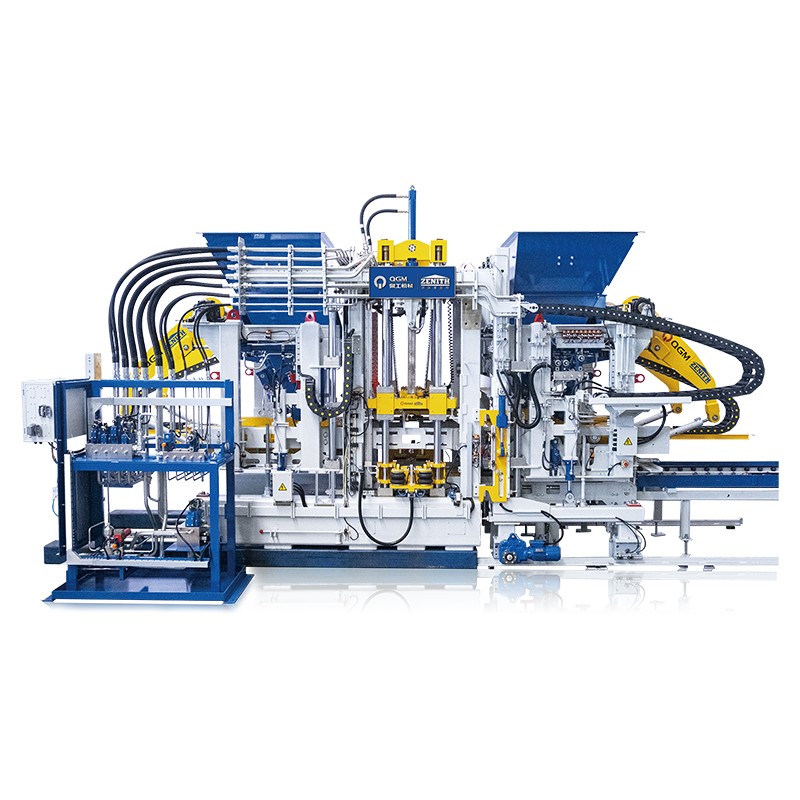
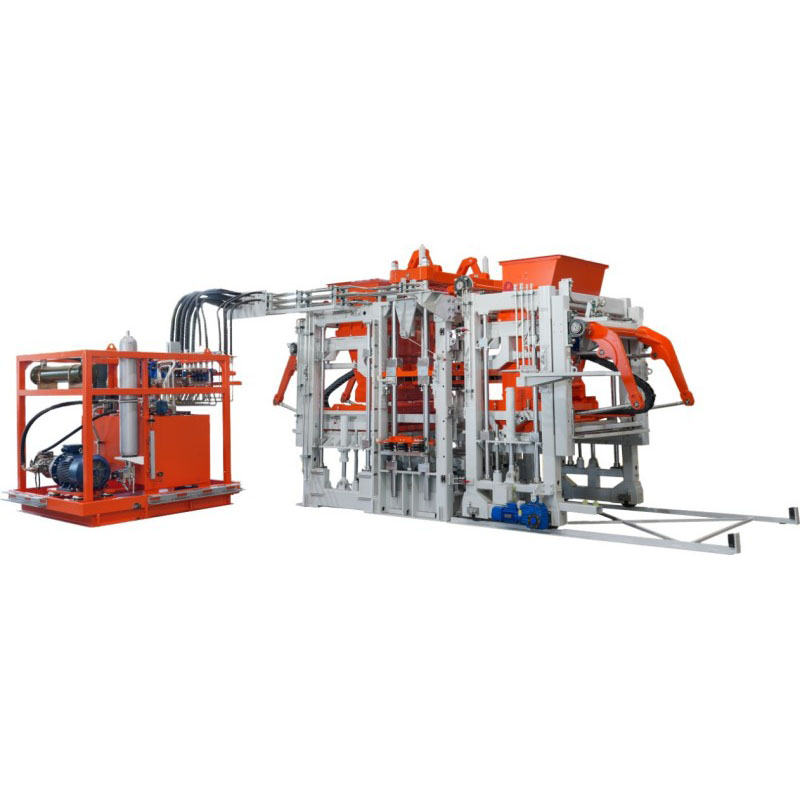
△QGM Automatic Block Making Machines with Advanced Siemens PLC Control
The practical role of intelligent control, however, goes beyond replacing manual commands.
A well-designed control system should help operators monitor production conditions and respond when material or equipment parameters change.
* Adjusting production parameters when raw material conditions change
* Issuing alarms when forming pressure or vibration parameters become abnormal
* Recalling stored parameters when switching between different products
* Monitoring equipment operating conditions during production
These functions can be particularly useful when raw material conditions fluctuate.
During one production-site visit, a change in the raw material batch did not require an extended shutdown. The relevant production parameters were adjusted to accommodate the new material conditions, allowing the line to continue operating with limited disruption.
For a smart block making machine, this type of responsive control becomes increasingly important as operating time and production requirements increase.
Automation can reduce manual intervention, but it does not eliminate the need for trained operators.
Personnel operating an automated block making machine still need to understand the equipment's basic operating logic, interpret alarms, and carry out routine inspection and maintenance.
This becomes even more important on larger production lines, where the control system manages more operating parameters and production processes.
The effectiveness of intelligent equipment therefore depends on both the control system and the ability of operators to use it correctly.
Continuous block production places sustained demands on hydraulic systems, vibration mechanisms, material feeding equipment, and conveyors.
As equipment accumulates operating hours, component service life, maintenance intervals, spare parts availability, and technical support become increasingly relevant to production continuity.
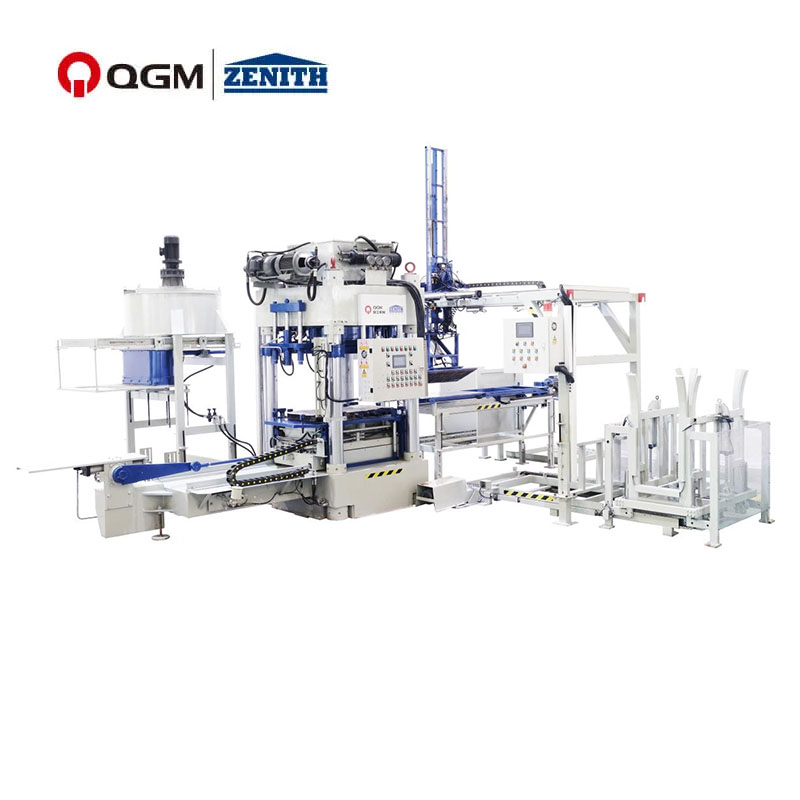
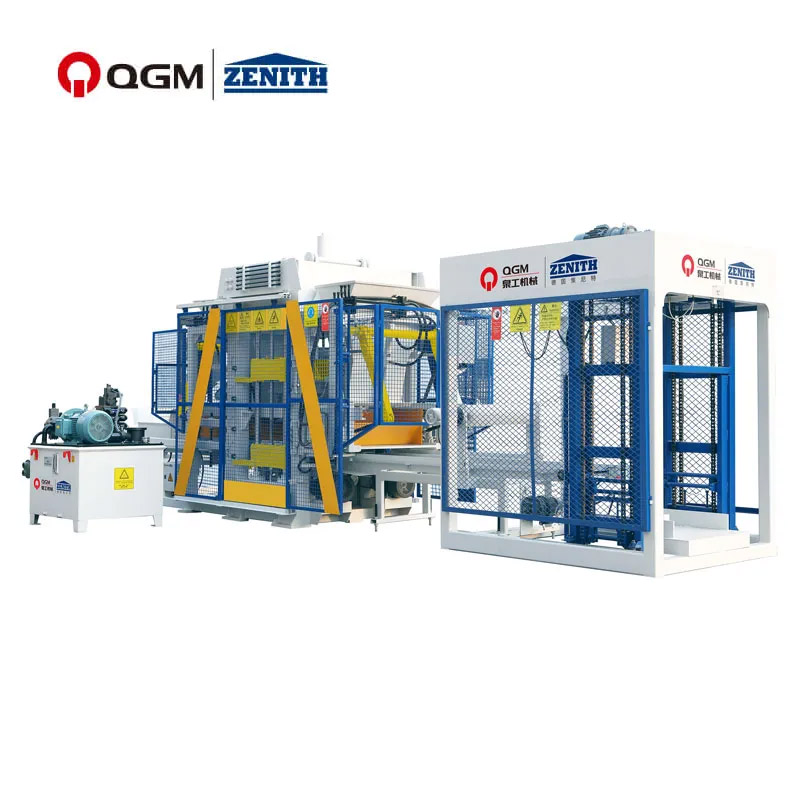
△QGM AR Technology for Block Machine Maintenance and Technical Support
When comparing a block making machine manufacturer, buyers should consider several practical service factors:
* Availability of commonly required spare parts
* Response time for technical support
* Installation and commissioning services
* Operator training
* Troubleshooting and repair procedures
These service capabilities can influence how quickly a production line can respond to equipment problems and resume normal operation.
A forming machine is only one part of a complete concrete block production line.
Mixing, material feeding, conveying, forming, stacking, and curing need to work together. If one stage becomes a bottleneck, the actual output of the complete production line may fall below the theoretical capacity of the main block making machine.
Production line planning should therefore consider the complete manufacturing process, including:
* Raw material characteristics
* Product types
* Required daily output
* Available plant space
* Desired level of automation
This approach allows the production line configuration to better match the actual operating conditions of the block plant.
Not every block plant has the same production requirements.
Small block plants may place greater emphasis on equipment investment, ease of operation, and routine maintenance.
Large concrete products manufacturers may require higher production efficiency, greater automation, and stable operation during continuous production.
Mining operations and construction waste processing facilities can have different priorities, particularly when the production process involves solid waste recycling, variable raw materials, and large-scale block manufacturing.
For this reason, equipment specifications should be evaluated against the actual application rather than treated as a simple measure of suitability.
A new machine can demonstrate its basic operating performance during a short production test, but this does not necessarily reveal its condition after extended use.
When possible, prospective buyers should visit block plants where the equipment has already been operating for one or more years.
Several points are worth observing:
* Whether forming quality remains consistent
* Whether the machine operates smoothly after extended use
* How the system responds to changes in raw materials
* Whether material feeding problems occur regularly
* How easily routine maintenance can be performed
* Whether spare parts and technical support are readily available
Actual operating sites can provide useful information about long-term equipment performance that may not be visible during a short demonstration.
The performance of a modern smart block making machine depends on more than its forming speed or automation functions.
For continuous concrete block production, forming stability, raw material adaptability, material feeding consistency, production line coordination, maintenance, and technical support all influence the way the equipment performs in daily operation.
These considerations become particularly important for plants working with variable raw materials or implementing solid waste recycling and block production processes.
Before selecting a block making machine, manufacturers should evaluate their raw materials, products, required output, plant conditions, and automation requirements together.
The most useful evaluation is not simply how fast a new machine runs during a demonstration, but whether the equipment can maintain consistent forming and reliable operation as production hours accumulate.
Inconsistent compaction can be related to poor coordination between the hydraulic system, vibration system, material feeding system, and forming parameters. If these systems do not work together properly, block density and edge quality may become less consistent over time.
The consistency of material entering the mold directly affects the forming process. Variations in moisture content, particle grading, or material distribution can lead to differences in block quality. Controlled conveying and uniform feeding help provide more consistent material conditions for forming.
A practical intelligent control system should monitor operating conditions, provide alarms for abnormal parameters, support parameter adjustment when raw materials change, and allow production settings to be recalled when switching products. Its purpose is to help operators manage changing production conditions more effectively.
A short demonstration of a new machine cannot fully reveal its performance after extended production. Visiting an operating block plant allows buyers to observe actual forming quality, machine stability, material feeding, maintenance requirements, and technical support under real production conditions.
Not necessarily. Equipment requirements depend on production scale, product types, raw materials, plant conditions, and automation needs. Small block plants may prioritize ease of operation and investment, while large manufacturers or solid waste recycling projects may require higher production capacity, automation, and raw material adaptability.