For concrete product manufacturers, this changing market environment brings a practical challenge: how to increase production capacity while maintaining consistent product quality and controlling labor and operating costs.
As a result, automatic block making machines, concrete block molding machines, and complete concrete block production lines are becoming increasingly relevant to manufacturers looking to modernize their production operations and establish more efficient manufacturing processes.
With long-term experience in concrete product machinery and automated production technology, QGM develops equipment solutions according to different raw materials, operating conditions, and production requirements, supporting manufacturers seeking scalable concrete product production in South America.
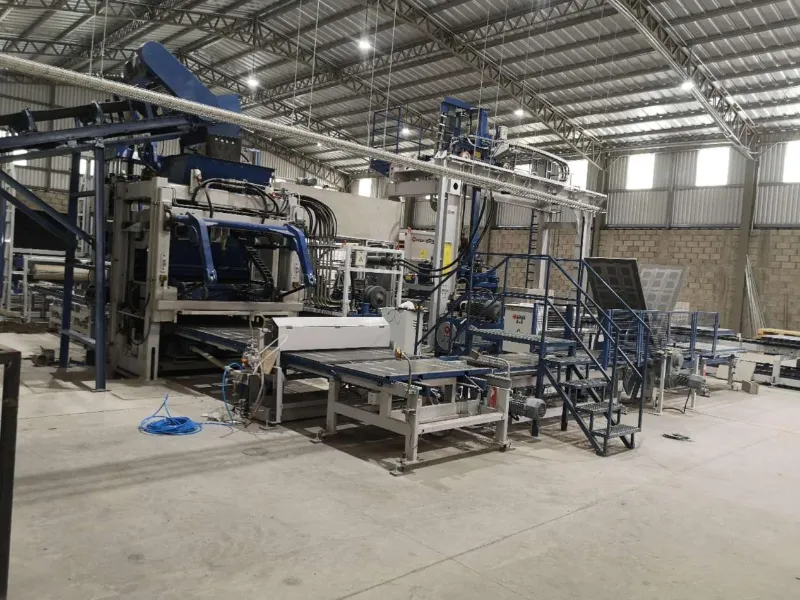
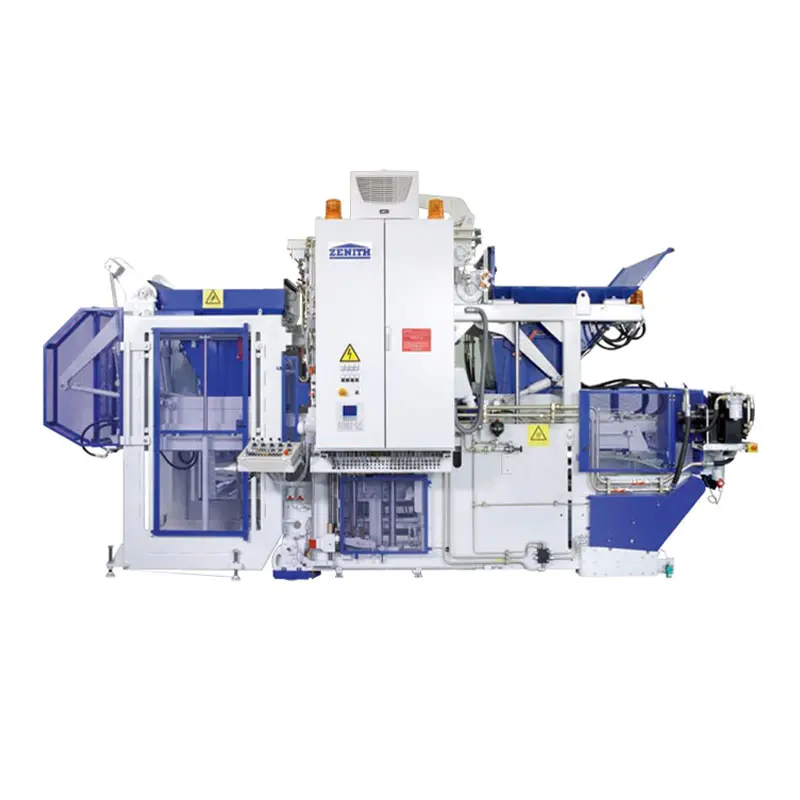
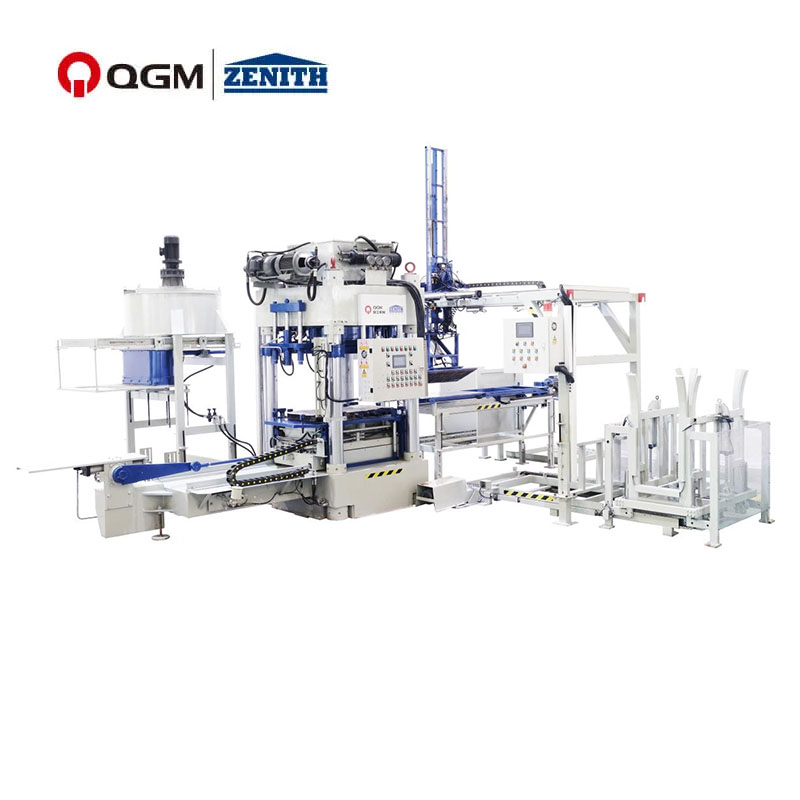
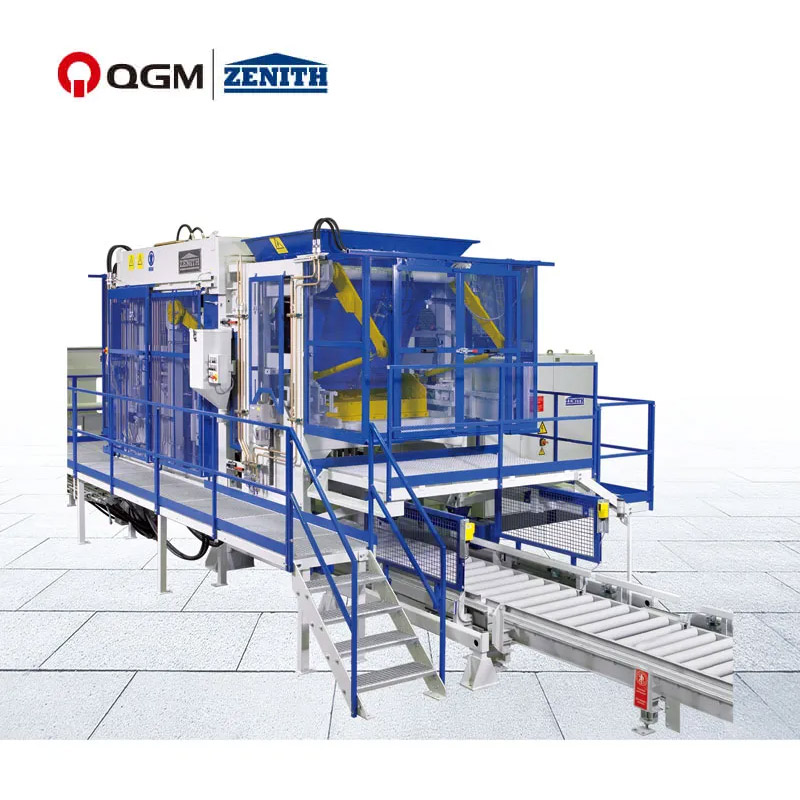
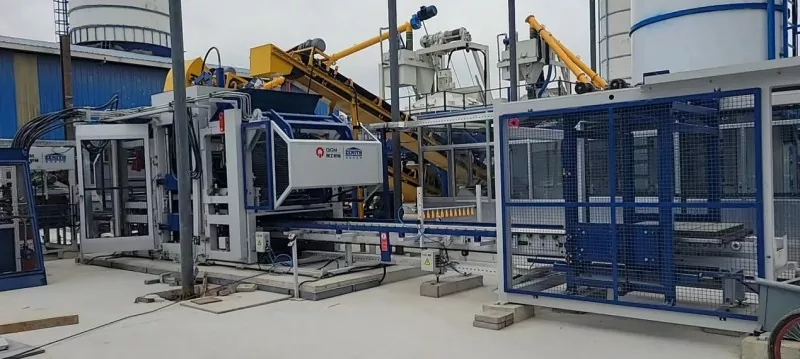
△ QGM Intelligent Automatic Block Making Machine in South America
South America is a resource-driven emerging market with Brazil, Chile, Peru, Argentina, and Colombia representing some of its major markets.
The region's demand for concrete products is closely connected with several important economic sectors. Mining activities involving iron ore, copper, lithium, and other mineral resources continue to generate infrastructure investment. At the same time, urban development, road construction, port projects, and agricultural engineering are creating additional requirements for concrete products.
For block manufacturers, increasing demand means more than simply selling additional products. Production facilities must also be able to respond with sufficient capacity, reliable equipment performance, and consistent product quality.
Manual and semi-automatic production methods can become increasingly difficult to manage when production volumes rise. Labor availability, inconsistent production cycles, and variations between operators may affect overall output and product uniformity.
This is where an automated concrete block production line can provide a more structured approach to production, helping manufacturers coordinate different processes and improve overall operating efficiency.
Although South America is often considered a single regional market, operating conditions can vary considerably from one country to another.
Economic conditions, infrastructure development, regulatory requirements, equipment certification, and market competition all influence how manufacturers evaluate production equipment.
International equipment brands remain influential in large-scale mining and high-end construction machinery, while Chinese manufacturers are increasingly competitive through their manufacturing supply chains and overall value proposition. Used equipment also remains an important part of several local markets.
Country-specific conditions should also be considered. Chile and Peru generally present relatively stable market environments, while Argentina has experienced prolonged foreign-exchange challenges. In Brazil, manufacturers and equipment buyers need to take into account import tariffs as well as relevant requirements such as INMETRO and NR regulations.
The physical operating environment presents another layer of complexity.
Production facilities in tropical regions may have to deal with high temperatures, high humidity, and corrosive conditions. Plants located in the Andes can face high-altitude and low-oxygen environments, as well as transportation challenges. In some areas, prolonged exposure to dust can also place additional demands on equipment.
For this reason, selecting an automatic block making machine should involve more than comparing rated output. Hydraulic systems, electrical controls, machine structure, wear-resistant components, and environmental adaptability should all be considered as part of the equipment evaluation.
Production capacity and finished-product quality are closely connected in modern concrete manufacturing.
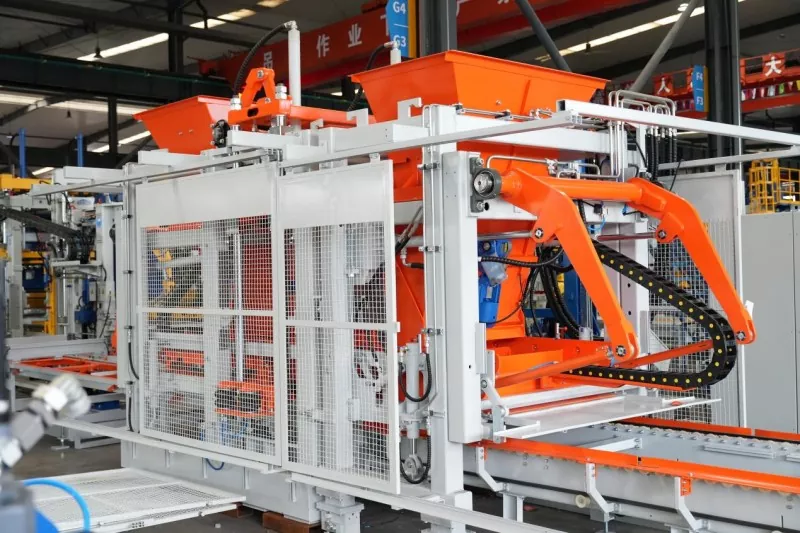
A concrete block molding machine must maintain stable material feeding, vibration, and molding performance throughout repeated production cycles. Consistency at the molding stage can directly influence block density, dimensional accuracy, and overall product uniformity.
QGM continues to develop concrete product manufacturing equipment by incorporating technologies such as automated control, servo-driven systems, and intelligent equipment monitoring.
These technologies allow important machine operating parameters to be managed in a coordinated manner. By reducing variations caused by manual operation, manufacturers can establish a more standardized production process.
For plants producing concrete blocks, paving blocks, kerbstones, and other concrete products on a continuous basis, stable molding performance is an important part of maintaining product quality while managing production costs.
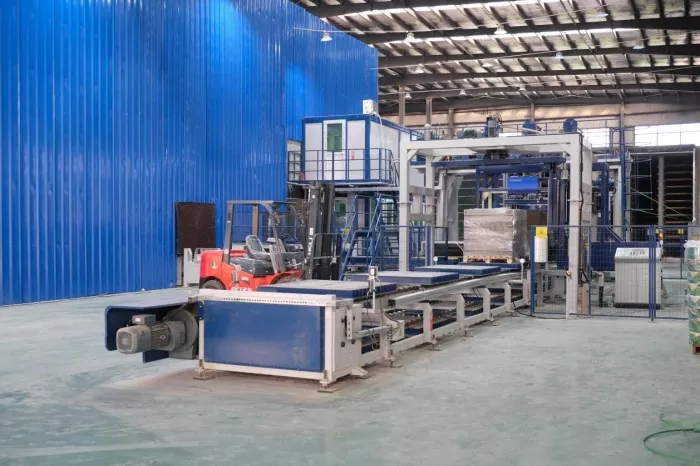
Automation in concrete product manufacturing is no longer limited to the molding machine itself.
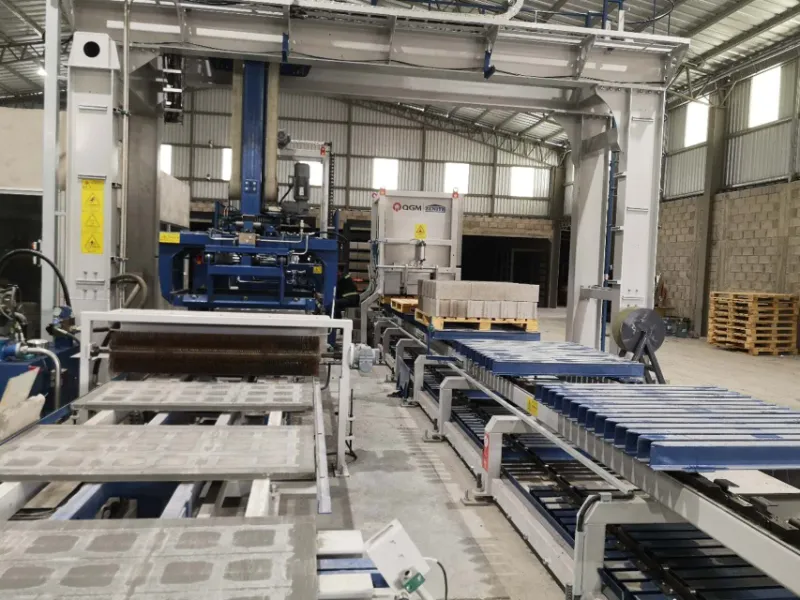
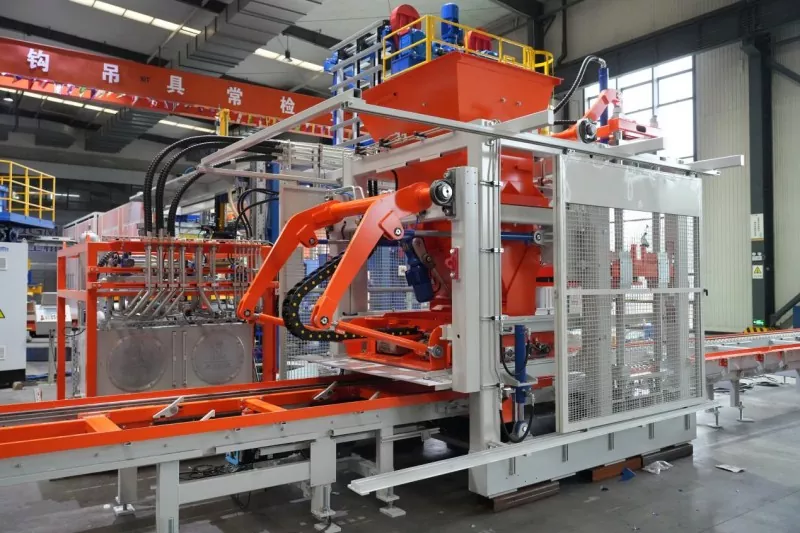
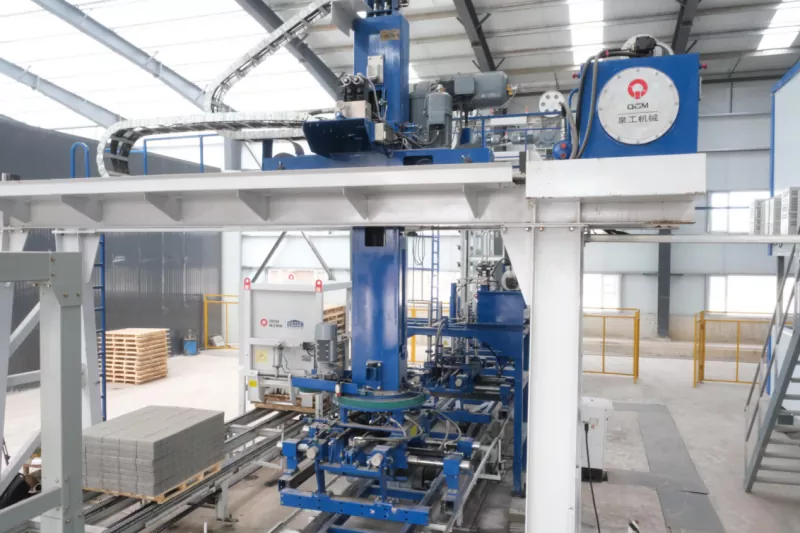
A complete automatic block production line can connect several stages of the manufacturing process, including:
● Raw material batching
● Mixing
● Material feeding
● Vibration molding
● Demolding
● Conveying
● Palletizing
● Curing
The relationship between these processes is critical. A block making machine may have a high rated production capacity, but bottlenecks before or after the molding process can prevent the entire plant from achieving that output in actual operation.
Modern production systems therefore place greater emphasis on coordination between individual processes rather than simply increasing the operating speed of one machine.
By reducing manual intervention and improving production-cycle consistency, automation can provide South American manufacturers with a more reliable foundation for expanding production and transitioning from traditional manufacturing methods toward modern concrete product plants.
Raw material conditions are not identical across South America. Local sand, aggregates, and other materials may differ in particle size, moisture content, grading, and overall characteristics.
These variations can influence material feeding, molding performance, and the quality of finished concrete products. For this reason, the design of a concrete block production line should take local raw material conditions into account from the beginning.
Batching, mixing, and molding processes may need to be configured according to the materials available at the production site. Proper adaptation can help manufacturers maintain more stable production performance when raw material characteristics change.
At the same time, the availability of construction waste, industrial by-products, and other suitable solid waste materials creates opportunities for alternative raw material utilization.
Where product performance requirements can be satisfied, incorporating suitable recycled or solid waste materials into concrete products can reduce reliance on certain conventional aggregates and improve resource utilization.
QGM continues to develop technologies and equipment solutions for solid waste recycling and green building material production, providing additional options for manufacturers working with different raw material conditions.
For an overseas concrete product plant, installing the equipment is only one stage of establishing production.
Installation and commissioning, operator training, preventive maintenance, troubleshooting, spare-parts supply, and ongoing technical assistance can all influence the long-term performance of a block making machine and its supporting production line.
This is particularly relevant in South American areas where high altitude, difficult transportation conditions, or long distances can make technical intervention more complicated.
When evaluating an international block making machine supplier, manufacturers should therefore consider practical service capabilities such as:
● Installation and commissioning
● Operator training
● Remote technical support
● Equipment troubleshooting
● Spare-parts supply
● Maintenance guidance
● Long-term technical service
QGM continues to strengthen its international technical support and service capabilities to provide equipment-related assistance for customers across different countries and regions.
For manufacturers planning long-term concrete product production, a comprehensive service system can help reduce maintenance challenges and minimize the potential impact of unexpected equipment downtime.
Selecting a block making machine for the South American market should not be reduced to comparing the purchase price or rated capacity of individual machines.
The more practical approach is to evaluate the complete production requirement.
Manufacturers should first define the products they intend to manufacture, such as concrete blocks, hollow blocks, solid blocks, paving blocks, or kerbstones. Equipment configuration can then be determined according to local raw materials, available plant conditions, expected production volume, and product requirements.
Automation level, energy consumption, maintenance requirements, and technical support should also be considered before finalizing the production-line configuration.
A properly planned concrete block production line should allow raw materials, equipment, production processes, labor, and technical support to operate as one coordinated system.
This integrated approach helps manufacturers move beyond theoretical machine specifications and achieve more stable production performance in real operating conditions.
South America's infrastructure development, resource-based industries, and urbanization continue to create opportunities for concrete product manufacturers. At the same time, differences between individual countries and challenging operating environments require greater attention to equipment reliability, automation, material adaptability, and technical support.
For manufacturers operating or planning to establish concrete product plants in the region, the right automatic block making machine should be evaluated not only by its rated production capacity, but also by how well it fits local materials, operating conditions, production requirements, and long-term service needs.
QGM will continue developing automatic block making machines, concrete block molding machines, and automated concrete product production lines for different market requirements. Through automated control, intelligent technologies, and technical service capabilities, QGM aims to support South American manufacturers in improving production efficiency and maintaining consistent concrete product quality.
For companies entering the South American concrete products market or upgrading an existing plant, a production-oriented equipment strategy can provide a stronger foundation for building a stable, efficient, and scalable concrete manufacturing operation.
South America's urbanization, infrastructure development, mining activities, port construction, and industrial investment are driving growing demand for concrete blocks, paving blocks, kerbstones, and other concrete products. This is creating opportunities for manufacturers to upgrade their production capacity with automatic block making machines.
Manufacturers should consider local market conditions, raw material characteristics, target production capacity, plant conditions, automation requirements, energy consumption, equipment durability, and after-sales technical support. Country-specific regulations and operating environments should also be taken into account.
Yes. A properly configured concrete block production line can be adapted to different local materials. Particle size, moisture content, aggregate grading, and the use of recycled or industrial solid waste should be evaluated when configuring the batching, mixing, feeding, and molding processes.
An automated block production line can coordinate batching, mixing, material feeding, vibration molding, demolding, conveying, palletizing, and curing. By reducing manual intervention and improving production-cycle consistency, automation can help manufacturers increase efficiency and maintain more stable product quality.
Installation and commissioning, operator training, remote technical support, troubleshooting, spare-parts supply, maintenance guidance, and long-term technical service are important for overseas concrete block plants. Reliable technical support can help reduce maintenance difficulties and the risk of unplanned downtime.
-