In the construction industry, compressive strength is one of the most important indicators of concrete paving block performance. However, the strongest paver block is not always the best paver block. The real objective is to achieve the right strength level for the intended application while maintaining production efficiency, material economy, and long-term durability.
Whether producing blocks for residential housing, commercial structures, or infrastructure projects, manufacturers must balance engineering requirements with cost-effectiveness. This is where modern production technology and process control become critical.
1. Why Compressive Strength Matters
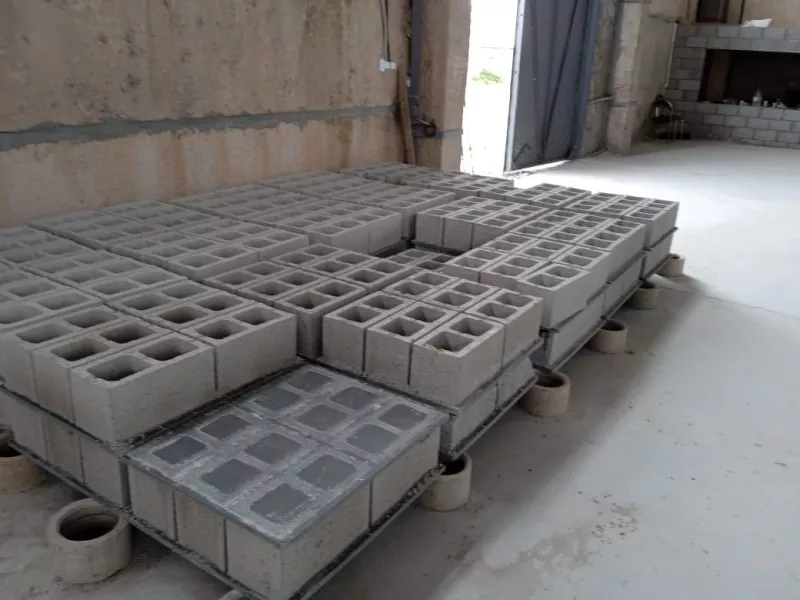
Compressive strength measures a concrete block's ability to resist crushing forces under load. Expressed in megapascals (MPa), it serves as a key benchmark for evaluating structural performance.
A block with insufficient strength may experience cracking, deformation, or premature failure. Conversely, producing blocks with unnecessarily high strength can increase cement consumption and manufacturing costs without providing meaningful project benefits.
The final strength of a concrete block is influenced by several interconnected factors:
●Aggregate quality and grading
●Cement content and water-cement ratio
●Compaction effectiveness
●Curing environment and duration
●Production consistency
Industry Insight: Reliable and repeatable strength performance is often more valuable than occasional peak test results.
2. Recommended Strength Levels for Different Applications
There is no single "ideal" compressive strength for every type of concrete block. The required performance varies according to project demands.
(1)Partition and Non-Structural Blocks
Designed primarily for space division rather than load support.
Typical Range: 3.5–7.5 MPa
Primary objectives include:
●Lower material costs
●Reduced weight
●Improved thermal performance
●Easier handling during installation
●Structural Masonry Blocks
(2)Used in walls and building components that carry significant loads.
Typical Range: 7.5–15 MPa
Key requirements include:
●Reliable load-bearing capacity
●Long-term durability
●Structural safety
●Resistance to weathering
(3)Heavy-Duty and Infrastructure Blocks
Commonly used in industrial facilities, retaining structures, municipal projects, and high-stress environments.
Typical Range: 15–25 MPa and above
Performance priorities include:
●High compressive resistance
●Superior wear resistance
●Extended service life
●Enhanced durability under demanding conditions
The takeaway is straightforward: the target strength should always match the intended application rather than pursuing the highest possible value.
3. What Determines Block Strength?
Producing blocks with consistent strength requires careful management of every stage of production.
Material Proportioning and Mix Design
The concrete mix forms the foundation of block quality.
A properly balanced mix ensures:
●Adequate bonding between particles
●Efficient cement utilization
●Reduced segregation
●Consistent curing behavior
Overusing cement can increase production costs significantly, while insufficient binder content can weaken the finished product.
Compaction Quality and Density Formation
Many strength issues originate during the forming stage.
When air voids remain trapped inside the block, the internal structure becomes weaker and more susceptible to cracking.
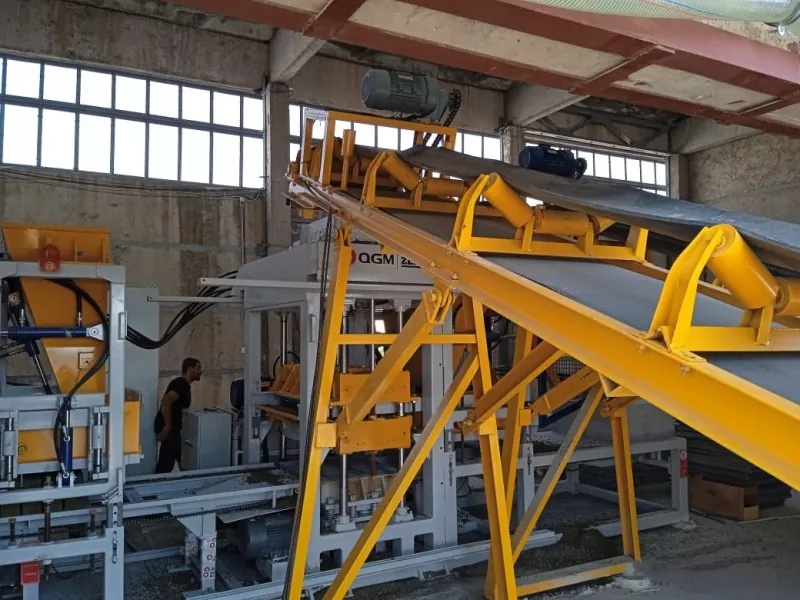
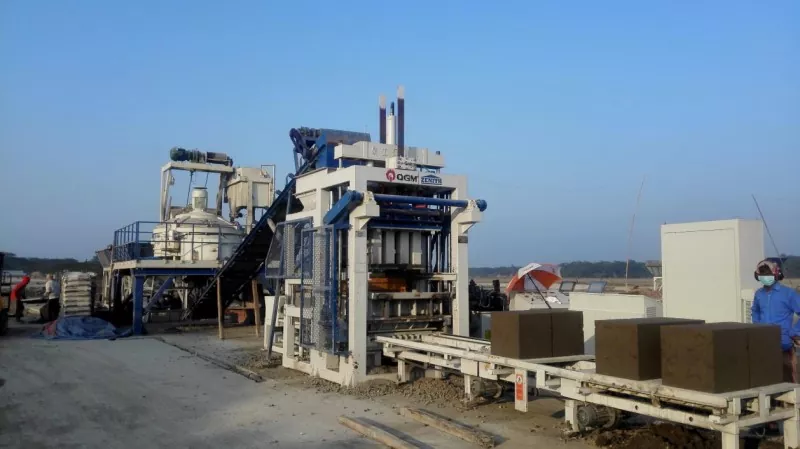
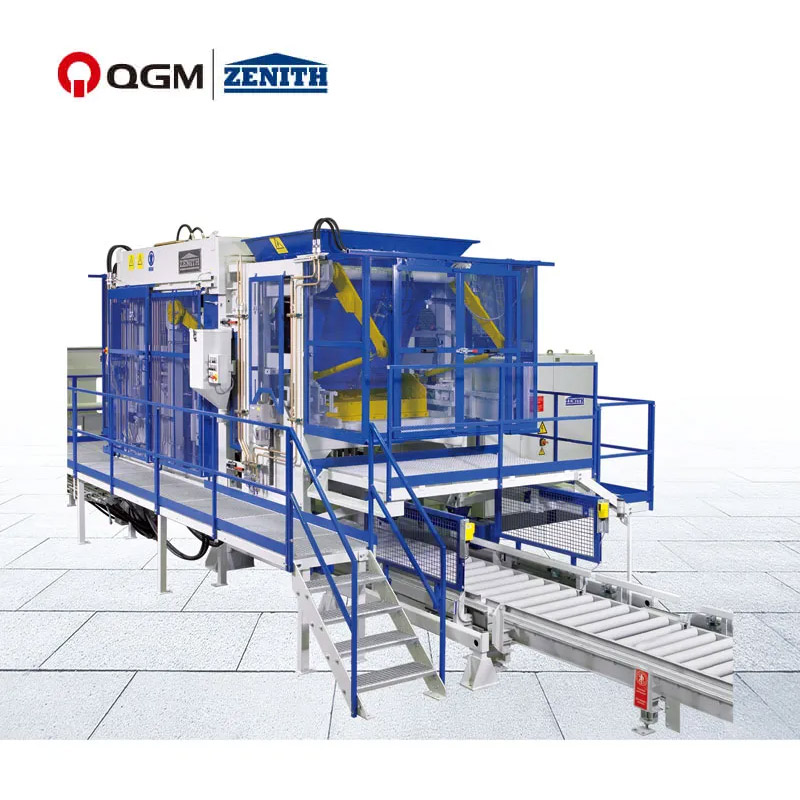
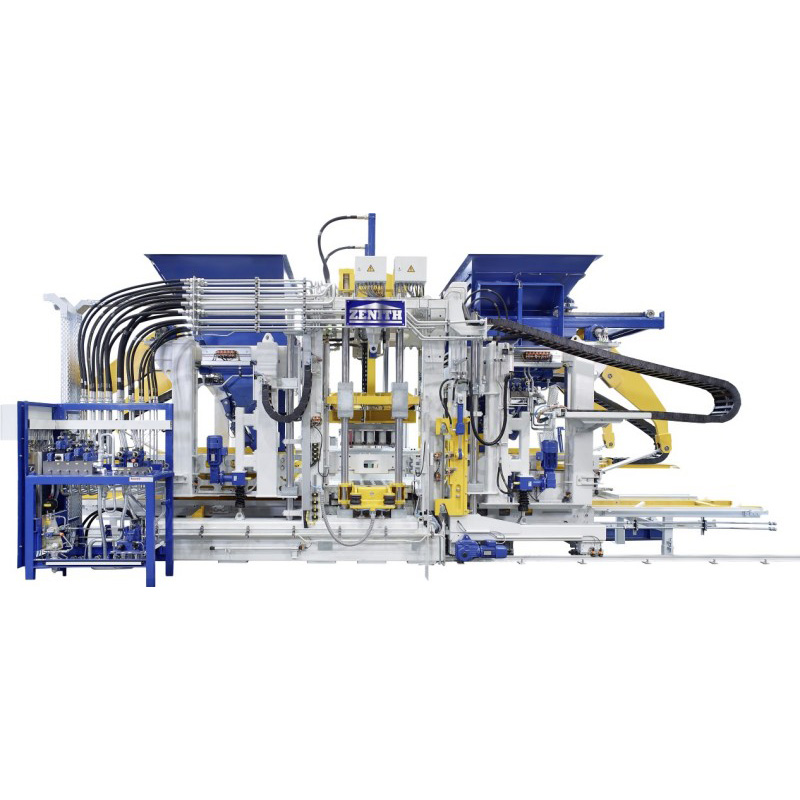
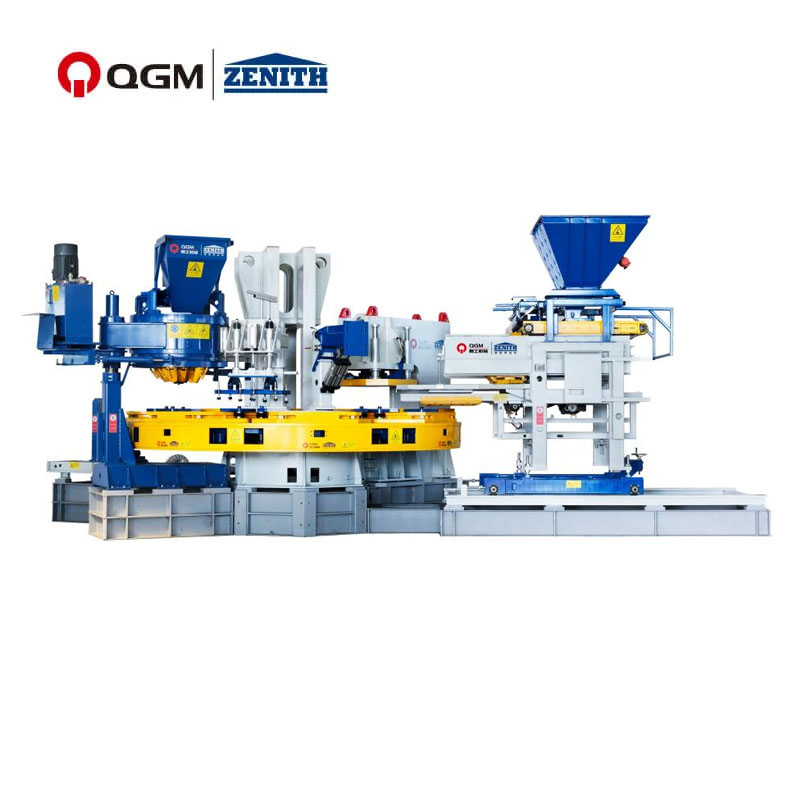
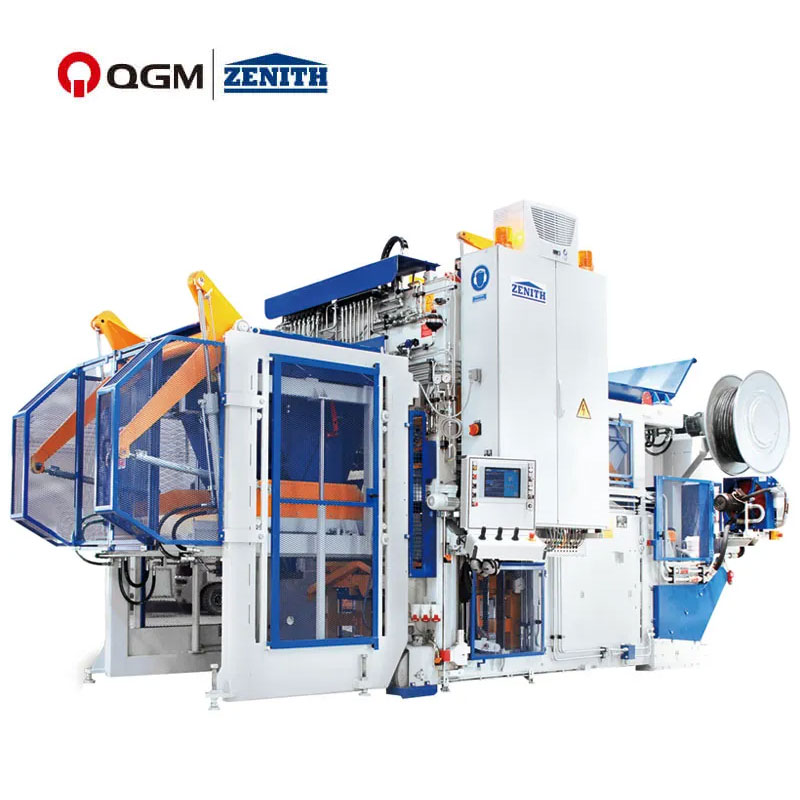
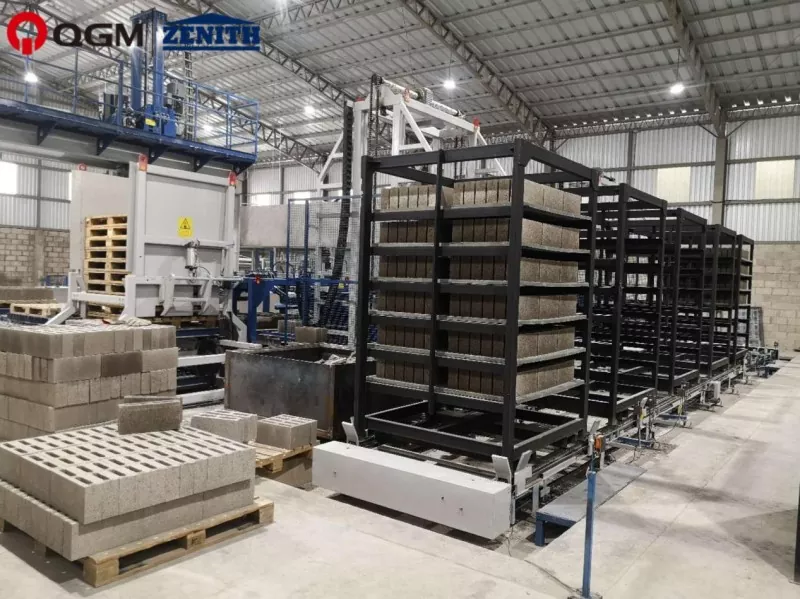
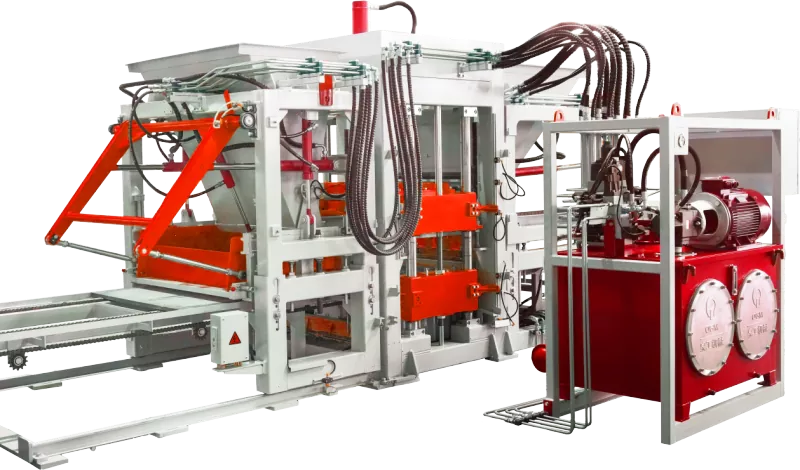
QGM incorporates the advanced Zenith dynamic vibration technology, enabling vibration forces to be distributed evenly across the mold cavity. This results in improved concrete densification, enhanced product consistency, and more efficient cement utilization throughout the production process.
Benefits include:
●Higher density
●Improved compressive strength
●Reduced internal defects
●More consistent production results
Forming Pressure Consistency
Uniform pressure application is essential for achieving stable strength values across production batches.
QGM hydraulic systems combine precision-engineered proportional and directional valves from Japan with high-performance hydraulic pumps from the United States. This configuration provides:
●Stable forming pressure
●Accurate movement control
●Smooth machine operation
●Consistent product density
When pressure fluctuations are minimized, strength variations are reduced as well.
4. Intelligent Production Management
Modern concrete block manufacturing increasingly depends on automation to maintain quality standards.
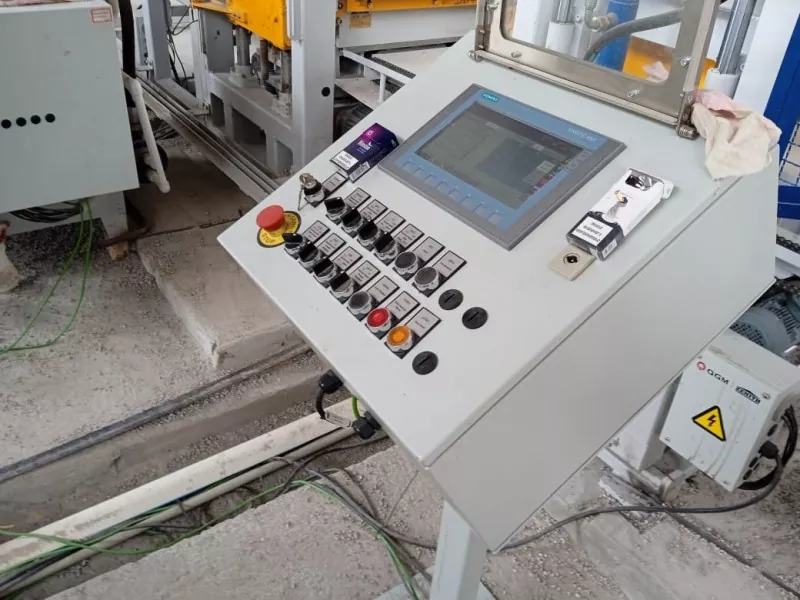
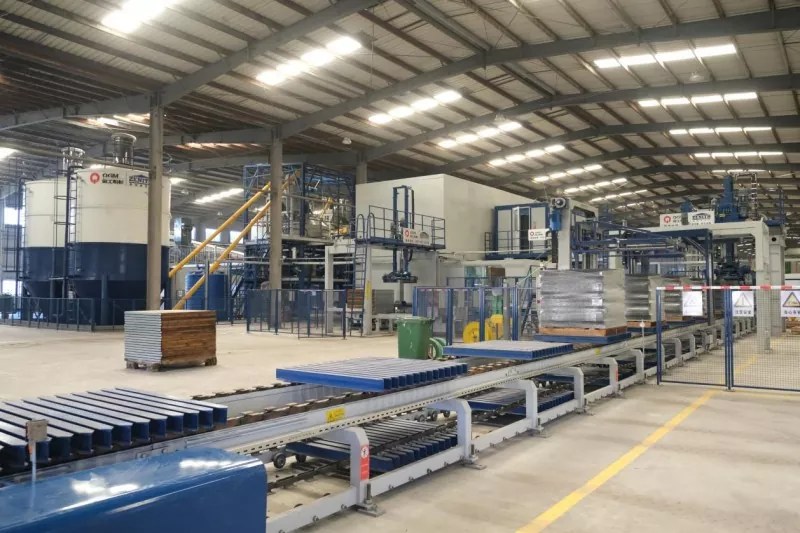
QGM integrates a SIEMENS S7-1500 PLC control platform with a user-friendly operating interface and remote monitoring functionality.
This enables operators to:
●Monitor production parameters in real time
●Optimize machine settings quickly
●Reduce operator-dependent variability
●Maintain consistent block quality throughout extended production runs
In large-scale manufacturing environments, consistency often becomes the defining factor separating premium products from average ones.
5. Mold Accuracy and Tooling Performance
Even an excellent concrete mix cannot compensate for worn or inaccurate molds.
Precision molds help ensure:
●Consistent block dimensions
●Uniform compaction behavior
●Smooth demolding
●Stable strength performance
QGM manufactures molds compatible with major international brands including MASA, HESS, ZENITH, POYATOS, BESSER, and TIGER. Heat-treatment processes improve wear resistance and extend operational lifespan while maintaining dimensional precision.
6. The Importance of Strength Optimization
The goal of block production should be strength optimization rather than strength maximization.
Consider the trade-off
Higher Strength
Lower Strength
Greater cement consumption
Lower production cost
Increased manufacturing expense
Potential durability concerns
Higher structural capacity
Reduced safety margins in demanding applications
The most profitable operation typically produces blocks that consistently meet specifications without excessive material usage.
This balance is achieved through precise control of:
●Mix design
●Vibration performance
●Hydraulic pressure
●Mold condition
●Curing practices
How Advanced Block Machines Improve Strength Consistency
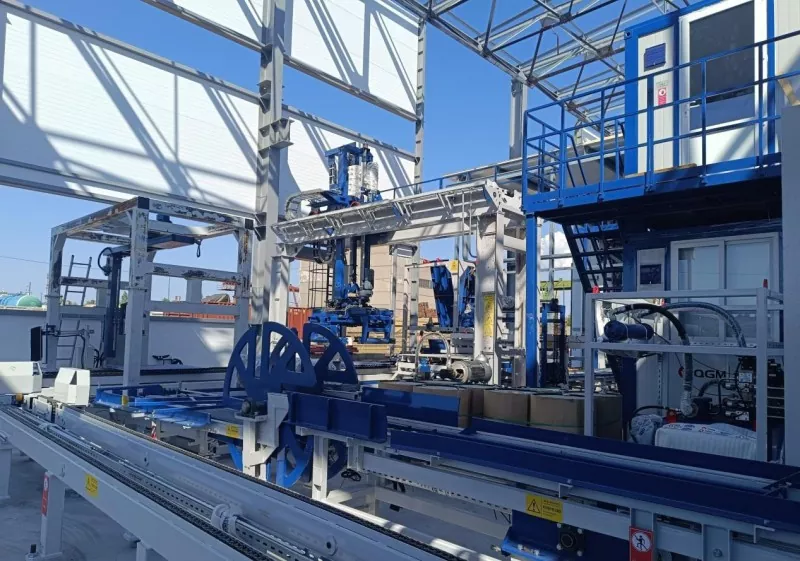
Advanced automation allows manufacturers to achieve:
●Repeatable compaction cycles
●Uniform pressure application
●Reduced human error
●Stable production conditions
●Predictable product performance
By integrating intelligent controls, optimized vibration technology, precision hydraulics, and high-quality molds, QGM helps manufacturers maintain tight quality tolerances across every production batch.
Final Thoughts
There is no single ideal compressive strength for every concrete block. The right target depends on project requirements, durability expectations, and production efficiency.
With advanced vibration technology, intelligent controls, and precision hydraulics, QGM helps manufacturers achieve consistent strength while reducing material consumption and operating costs. Whether using a paving block machine, a paving block making machine, or a concrete paving block machine, producers can maintain reliable quality and meet evolving construction standards.
Frequently Asked Questions About Concrete Block Strength
1. What compressive strength should a concrete block have?
The required strength varies based on its intended use. Blocks for non-structural walls generally need a minimum strength of around 3.5 MPa, while structural or load-bearing applications typically require 7.5 MPa or more.
2. Does a stronger concrete block always mean better performance?
Not necessarily. Increasing strength beyond project requirements can raise cement consumption and production costs without delivering meaningful practical benefits. The most effective solution is achieving the appropriate strength for the specific application.
3. What helps maintain uniform block strength during production?
Consistent results depend on accurate mix design, effective compaction, stable forming pressure, proper curing practices, and the use of automated production equipment with precise process control.
4. Why is vibration important in concrete block manufacturing?
Vibration helps eliminate air pockets and improves material distribution inside the mold. Better compaction produces denser blocks with improved structural performance and more reliable compressive strength.
5. Can the type of block machine affect final block strength?
Absolutely. Advanced block machines equipped with optimized vibration systems, reliable hydraulic technology, and intelligent automation contribute significantly to producing concrete blocks with stable and repeatable strength characteristics.
We use cookies to offer you a better browsing experience, analyze site traffic and personalize content. By using this site, you agree to our use of cookies.Privacy Policy