Global concrete product manufacturers need production equipment that can deliver consistent molding quality, reliable operation, and the flexibility to handle different product requirements. Whether supplying residential construction, infrastructure projects, commercial developments, or landscaping applications, manufacturers must balance production efficiency with equipment investment, operating requirements, and long-term maintenance.
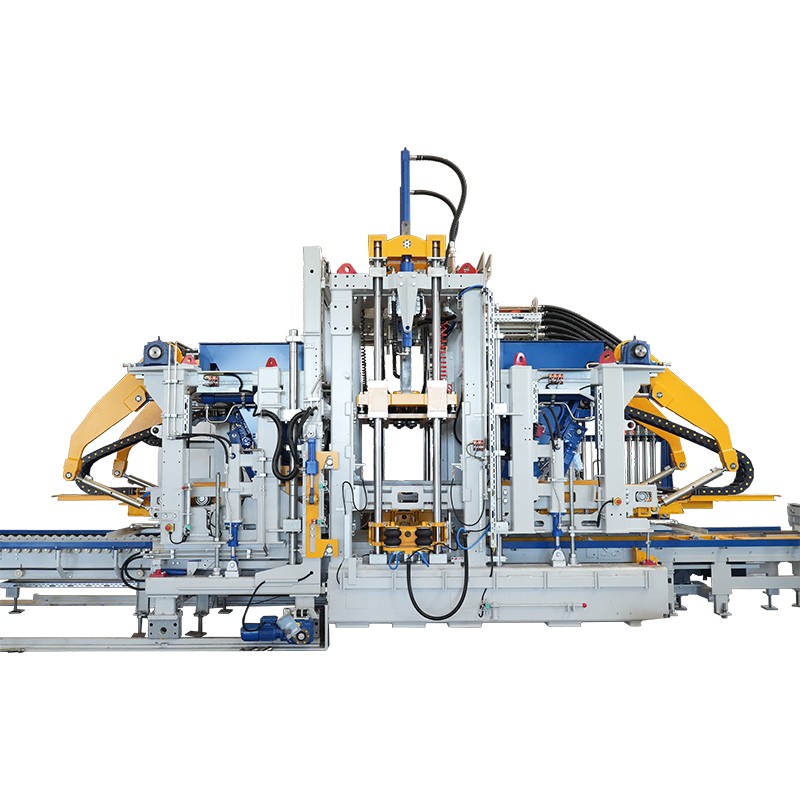
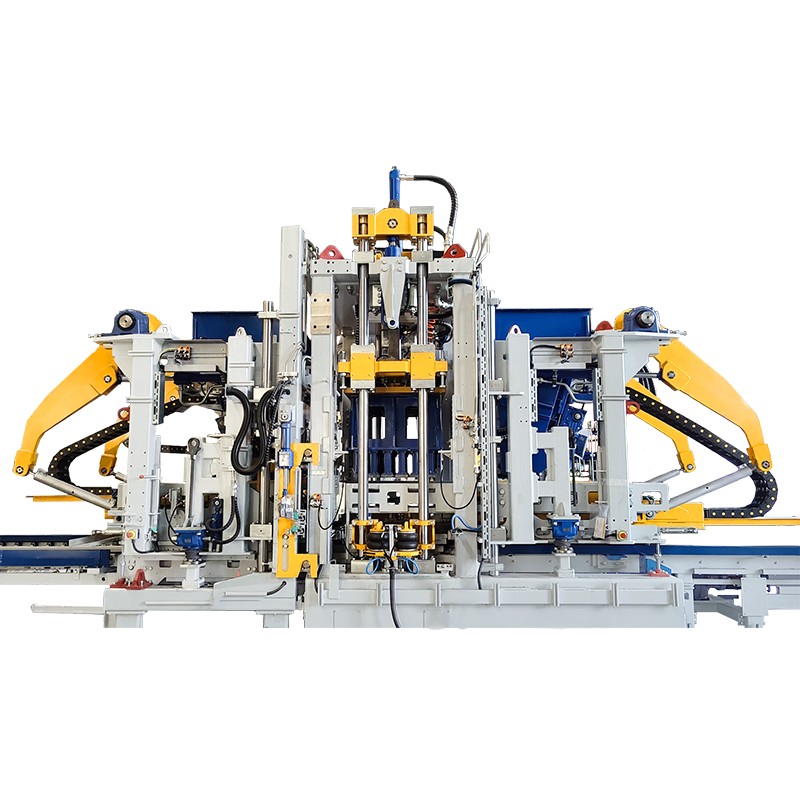
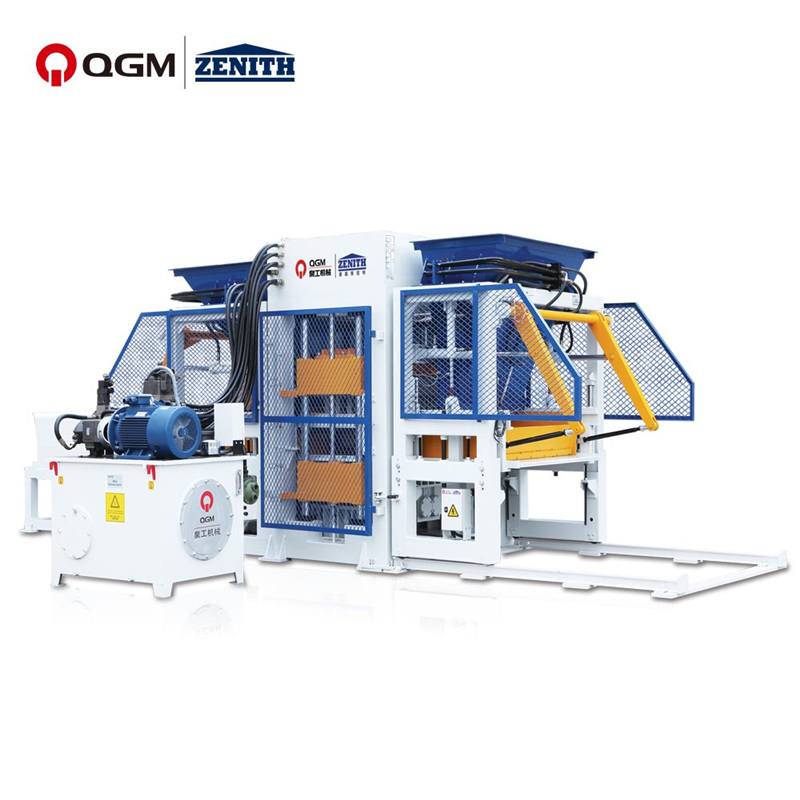
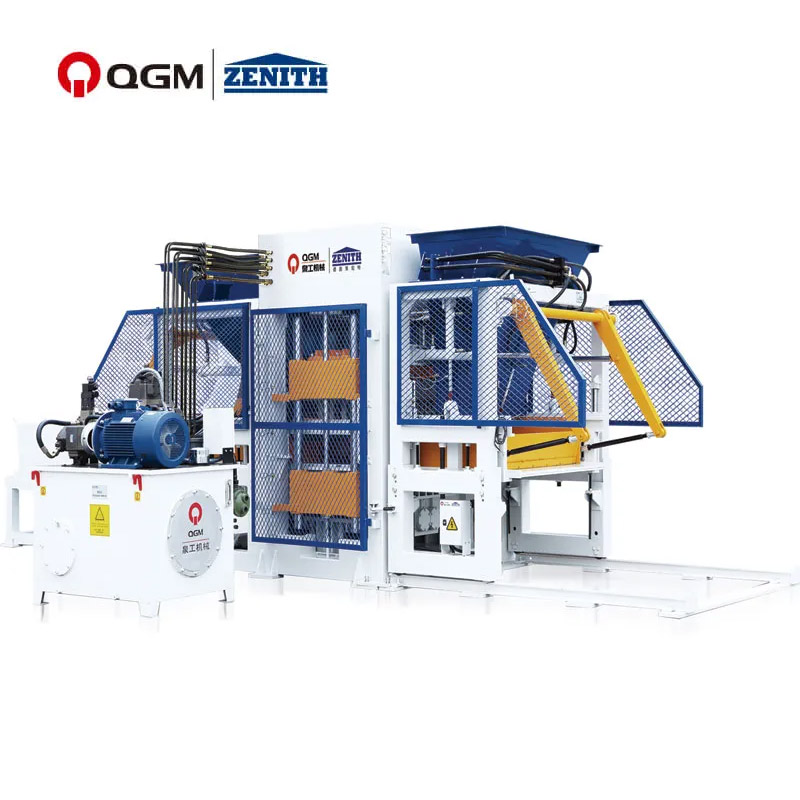
An advanced automatic block making machine addresses these needs through the integration of mechanical engineering, vibration technology, hydraulic systems, and intelligent control. Combining German engineering experience with China's established manufacturing capabilities offers another important advantage: the ability to bring proven equipment technologies together with efficient manufacturing and competitive production solutions.
For buyers, however, the real question is not simply where a machine is designed or manufactured. It is how its technology translates into better production management, consistent concrete products, and a more practical investment.
1. Engineering Design That Supports Stable Production
Concrete block molding involves several coordinated operations. Material feeding, mold filling, vibration, pressing, and product release must work together within a controlled production cycle.
If one stage is inconsistent, the impact can extend beyond a single product. It may affect product dimensions, surface quality, production continuity, and the amount of material that needs to be reworked.
This is why equipment design matters.
German engineering experience has contributed to the development of concrete block molding technology in areas such as mechanical structures, vibration systems, hydraulic control, and automated production processes.
For manufacturers evaluating an industrial block making machine, these technical foundations deserve closer attention.
Vibration Technology for Different Product Requirements
Vibration is one of the key processes in concrete block manufacturing. It helps compact the concrete mixture inside the mold and contributes to the formation of the finished product.
Different products do not necessarily require identical molding parameters. Hollow blocks, solid concrete blocks, and paving products vary in geometry, dimensions, and mixture requirements.
Modern molding machines can incorporate servo-driven vibration systems, depending on the model and configuration. These systems allow vibration parameters to be adjusted according to production requirements.
For buyers, the important consideration is whether the vibration technology can be matched to the intended product range and concrete mixture. A suitable configuration helps establish a more controlled molding process rather than relying on a single fixed setting for every product.
Hydraulic Systems and Intelligent Control
Hydraulic systems provide the driving force for key machine movements, while the electrical control system coordinates the production sequence.
PLC-based control technology allows machine operations and production parameters to be managed through programmed procedures. When the mechanical, hydraulic, and electrical systems are properly integrated, operators can manage the molding process through a coordinated control interface.
This is particularly relevant for manufacturers upgrading from conventional equipment to an automatic concrete block making machine, where consistent operation and process coordination become increasingly important.
2. Chinese Manufacturing: Making Advanced Equipment More Accessible
Engineering design establishes the technical foundation of a machine, but manufacturing capability determines how effectively that design can be translated into finished equipment.
China's established industrial supply chain, component manufacturing capacity, and equipment production infrastructure provide a strong foundation for manufacturing machinery for international markets.
For concrete block manufacturers, this can bring practical benefits in equipment production, configuration flexibility, and investment planning.
A mature manufacturing system supports several important aspects:
•Component processing: Coordinated manufacturing procedures help maintain consistency across equipment components.
•Mechanical and electrical assembly: Systematic assembly supports the integration of machine structures, hydraulic systems, and electrical controls.
•Production line configuration: Equipment can be planned according to product specifications, target output, and available factory space.
•Supply chain coordination: Established manufacturing networks support component sourcing and equipment production.
These capabilities help create a balance between technical configuration and investment requirements.
When comparing the concrete block machine price, buyers should look beyond the initial equipment quotation. The scope of supply, mold requirements, auxiliary systems, installation arrangements, and maintenance considerations all contribute to the overall investment.
A machine with a lower purchase price may not include the equipment needed for a complete production process. On the other hand, not every manufacturer needs the most advanced or highly automated configuration.
The right choice depends on the production requirements and the value of the equipment package as a whole.
3. Automation That Improves Production Coordination
Automation has become an important consideration for concrete product manufacturers worldwide. As production volumes increase and product requirements become more varied, relying entirely on manual operations can make it difficult to maintain consistent workflow and production management.
A properly configured automatic block making machine can coordinate several important production stages, helping reduce repetitive manual tasks and establish a more organized manufacturing process.
Material Feeding and Molding
Consistent mold filling is essential to producing concrete blocks with uniform dimensions and quality.
An appropriate feeding system distributes the concrete mixture into the mold cavities before the vibration and pressing process begins. The molding machine then applies the required vibration and pressure to form the concrete products.
The effectiveness of this process depends on more than the machine itself. Mix design, aggregate characteristics, moisture content, mold condition, and operating parameters also influence the final result.
For manufacturers, the advantage of automation lies in coordinating these operations and making production procedures more repeatable.
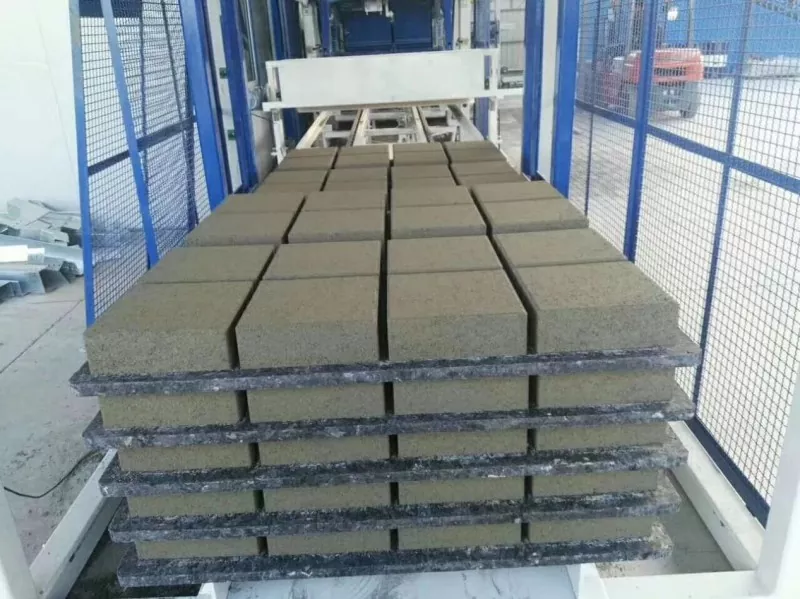
Automated Handling and Product Transfer
Once products are molded, they must be transferred for subsequent curing, handling, and storage.
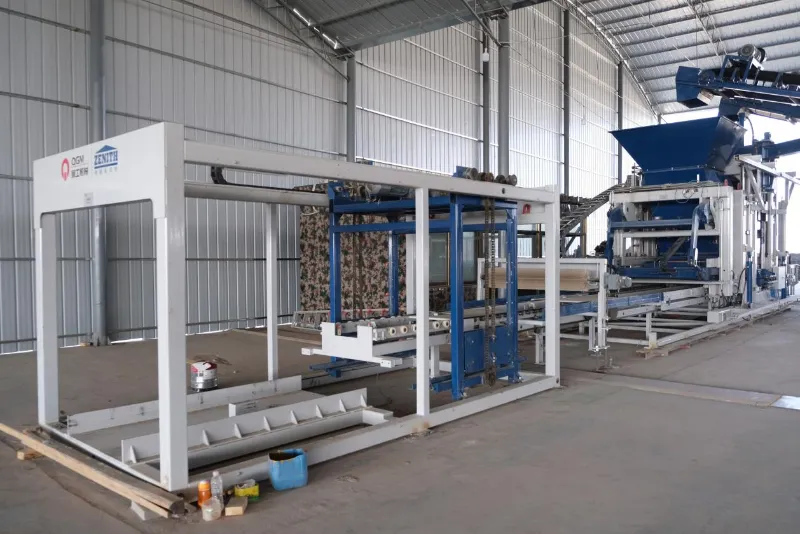
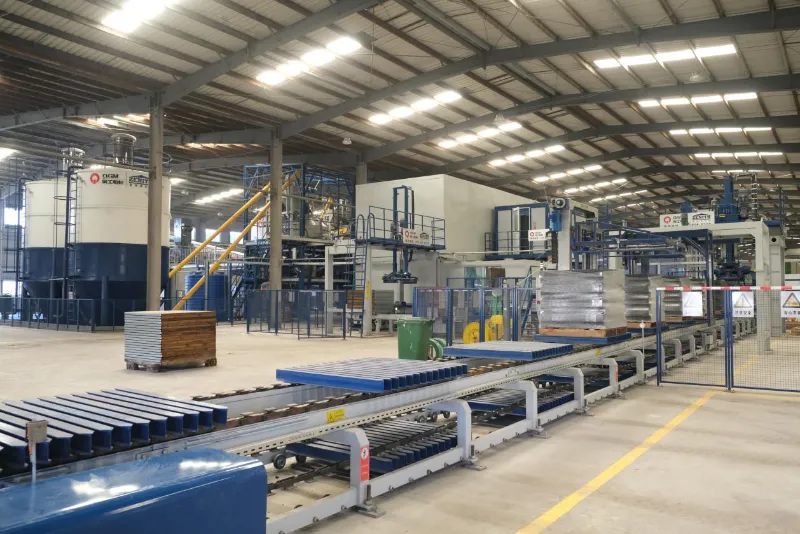
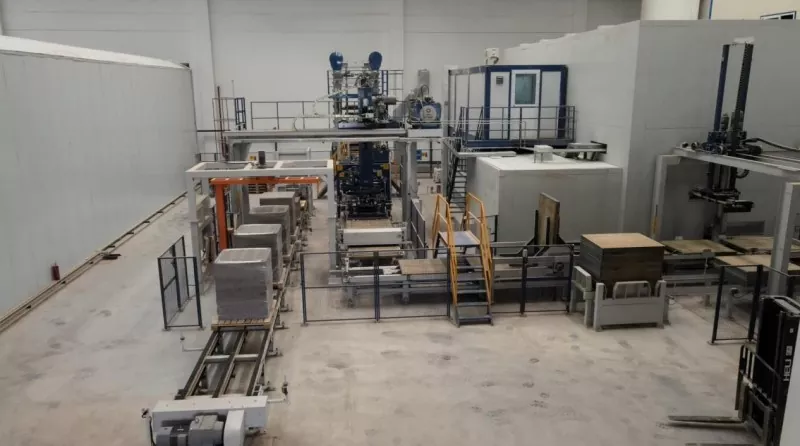
Depending on the production line configuration, automated pallet handling and block cubing systems can help organize product movement and reduce repeated manual handling.
This is an area that buyers sometimes overlook when comparing machines. The molding equipment may have sufficient production capacity, but if pallet circulation or downstream handling cannot keep pace, the entire production line can become constrained.
For this reason, it is worth evaluating the complete concrete block production line, rather than considering the molding machine as an isolated piece of equipment.
More Consistent Production Management
Intelligent control systems also help operators manage machine functions and production parameters in a more structured way.
Depending on the machine configuration, production settings can be managed through the control interface, supporting coordinated machine operation and standardized procedures.
This is particularly useful for factories producing different concrete products or managing multiple production requirements.
4. Flexible Manufacturing for a Wider Range of Concrete Products
A concrete block manufacturer's market is rarely limited to one product category forever.
Residential construction creates demand for hollow and solid blocks. Road and municipal projects require paving products and curbstones. Commercial developments and landscaping projects may call for decorative or specialized concrete units.
The ability to manufacture different products can therefore provide greater flexibility when responding to changing customer requirements.
Depending on the machine model, mold design, and selected configuration, an automatic concrete block making machine can be used to produce:
•Hollow concrete blocks: Commonly used in residential and commercial wall construction.
•Solid concrete blocks: Suitable for various masonry applications.
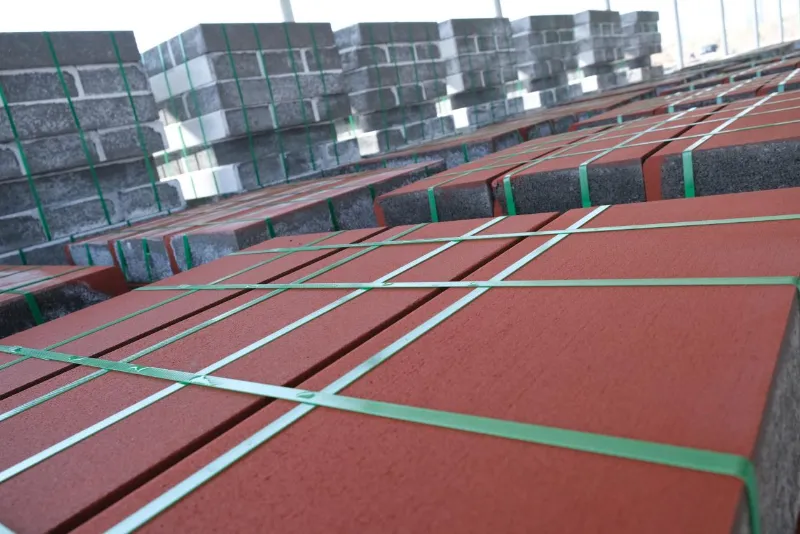
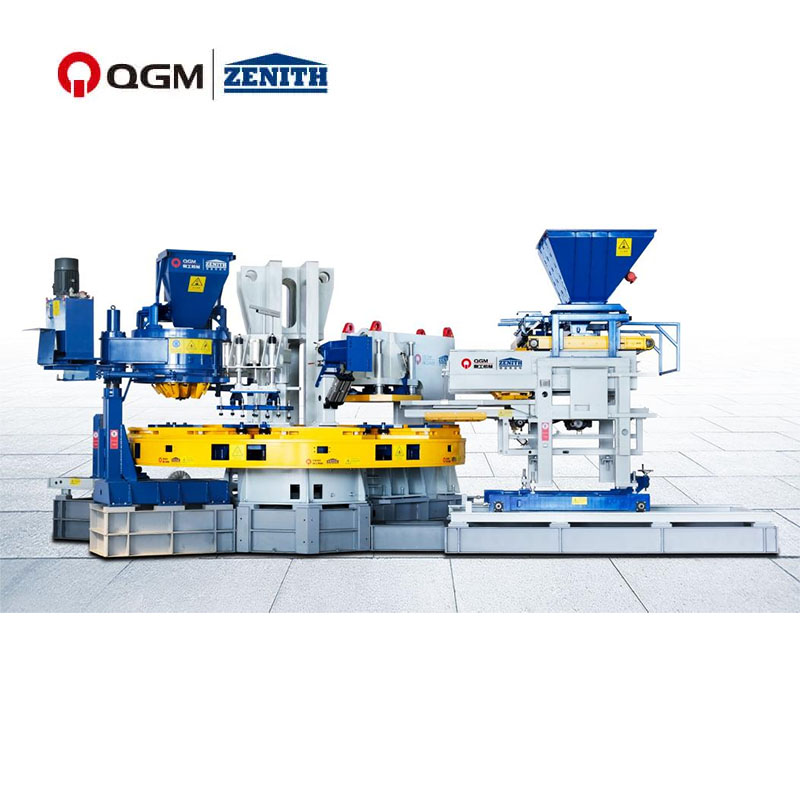
•Concrete paving blocks: Used in walkways, roads, parking areas, and outdoor spaces.
•Interlocking pavers: Applied in paved surfaces, pedestrian areas, and landscaping.
•Permeable paving blocks: Designed for applications requiring water infiltration, subject to product design and applicable standards.
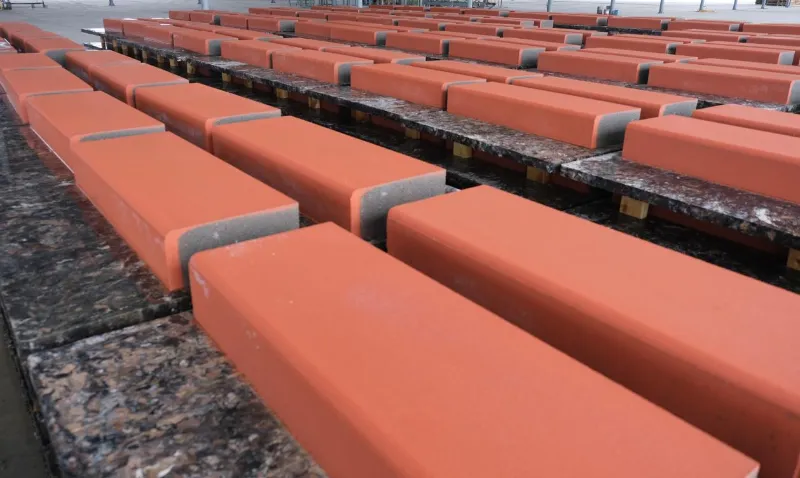
•Concrete curbstones: Used in road construction and landscape boundaries.
For manufacturers, this flexibility can help expand the range of products they offer without necessarily investing in a completely separate molding system for every product category.
However, buyers should verify mold compatibility, product dimensions, pallet specifications, and the machine's applicable configurations before purchasing.
Sustainability is becoming an increasingly important consideration in the global building materials industry. Manufacturers are exploring ways to improve resource efficiency and incorporate suitable recycled or industrial materials into concrete products.
Potential materials include fly ash, processed construction and demolition waste, mine tailings, and industrial slag.
Their use depends on material characteristics and the technical requirements of the finished products. Particle size, moisture content, chemical composition, and mix compatibility all need to be evaluated before production.
An appropriate batching and mixing process is essential to maintaining the required concrete mixture. The molding equipment then needs to operate with parameters suited to the selected material formulation.
A suitable concrete block manufacturing machine can form part of a production system designed for different concrete mixtures. However, the final product quality and performance depend on material testing, mix design, production control, and compliance with relevant local standards.
For manufacturers interested in resource recovery, equipment selection should therefore be considered alongside raw material evaluation and product testing.
6. Why QGM Combines German Engineering Experience with Chinese Manufacturing
The relationship between equipment technology and manufacturing capability is an important part of QGM's development.
QGM (Quangong Machinery Co., Ltd.) has more than 40 years of experience in concrete block manufacturing equipment.
In 2014, QGM acquired the German Zenith machinery business, which had more than 60 years of industry history, and established a technology research and development center in Germany.
This acquisition brought together QGM's manufacturing capabilities and Zenith's accumulated experience in concrete block molding technology, strengthening the company's engineering and product development foundation.
Today, QGM offers different equipment series and production configurations for manufacturers with varying product ranges and production requirements. The ZN Series, for example, provides automatic block molding solutions with configuration options for different concrete products and manufacturing needs.
Equipment Selection Based on Production Requirements
There is no single production configuration suitable for every factory.
A manufacturer focused on hollow blocks may prioritize output per shift and consistent molding. A producer supplying paving products may place greater emphasis on mold flexibility and product changeovers. A large production facility may also need to consider pallet handling, block cubing, and other auxiliary systems.
When evaluating an automatic block production line, buyers should consider:
•Required product types and dimensions.
•Target production capacity per shift.
•Machine and mold compatibility.
•Factory layout and installation conditions.
•Required level of automation.
•Material feeding and finished-product handling.
•Initial investment and future expansion plans.
Defining these requirements early helps clarify the appropriate machine model and the equipment that should be included in the production line.
Technical Support Throughout Equipment Operation
The purchase of a production line is only the beginning of a manufacturing investment. Installation, commissioning, operator training, maintenance planning, and spare parts availability all matter to the equipment's ongoing operation.
Before placing an order, buyers should clarify the scope of installation and commissioning support, operator training arrangements, recommended maintenance procedures, and the process for obtaining technical assistance and replacement parts.
QGM also provides an Intelligent Equipment Cloud Service Platform to support equipment data monitoring and related technical service functions, subject to the applicable equipment configuration and service arrangement.
For international customers, clear communication about these arrangements helps establish realistic expectations and supports preparation for equipment installation and production.
Conclusion: Engineering Experience Meets Global Manufacturing Needs
For concrete product manufacturers worldwide, selecting an automatic block making machine involves more than comparing production figures or purchase prices.
The equipment needs to match the intended product range, provide suitable molding technology, coordinate production operations, and fit the factory's actual operating requirements.
The combination of German engineering experience and China's established manufacturing capabilities provides a foundation for developing concrete block production equipment that balances technology, manufacturing efficiency, and investment considerations.
With more than 40 years of industry experience and the engineering heritage of Zenith, QGM continues to develop equipment and production solutions for different concrete product applications.
Whether you are establishing a new factory, upgrading existing machinery, or expanding into additional concrete product categories, the first step is to define your product specifications, target output, and production requirements.
Contact QGM to discuss your manufacturing needs and explore a suitable automatic concrete block production solution for your business.
FAQs
1. What should I consider when choosing an automatic block making machine?
Consider your required product types, output per shift, mold compatibility, vibration technology, automation level, factory layout, maintenance requirements, and supplier support. The right machine should match your actual production needs rather than simply offer the highest advertised output.
Some machine models can manufacture hollow blocks, solid blocks, paving blocks, interlocking pavers, and other concrete products by using suitable molds and configurations. Buyers should confirm the applicable product dimensions and machine compatibility with the manufacturer.
3. How much does an automatic concrete block making machine cost?
The price depends on the machine model, production capacity, automation level, mold requirements, auxiliary equipment, and overall production line scope. Providing product specifications and target output helps the manufacturer prepare a more relevant quotation.
4. Can concrete block making machines use recycled materials?
Depending on their characteristics and the required product standards, fly ash, processed construction waste, mine tailings, and industrial slag may be considered as raw materials. Material testing and mix design adjustments are necessary to determine suitability and maintain product quality.
5. What support should I expect from a concrete block machine manufacturer?
Buyers should clarify the supplier's arrangements for installation, commissioning, operator training, maintenance guidance, spare parts, and technical assistance. The specific support scope should be confirmed in the equipment proposal and service agreement.
Wir verwenden Cookies und ähnliche Technologien, um die Funktionalität unserer Website sicherzustellen und –
mit Ihrer Einwilligung – die Nutzung unserer Website zu analysieren, Inhalte zu personalisieren und Ihnen
relevante Angebote zu zeigen.
Sie können selbst entscheiden, welche Cookies Sie zulassen möchten. Notwendige Cookies sind für den Betrieb
der Website erforderlich. Weitere Cookies werden nur mit Ihrer Einwilligung verwendet.
Weitere Informationen zur Verarbeitung Ihrer personenbezogenen Daten finden Sie in unserer Datenschutzerklärung.
Datenschutzhinweise für Kontakt- und Anfrageformulare
Mit dem Absenden dieses Formulars werden Ihre Angaben zur Bearbeitung Ihrer Anfrage und für mögliche
Rückfragen verarbeitet. Weitere Informationen zur Verarbeitung Ihrer personenbezogenen Daten finden Sie
in unserer Datenschutzerklärung.
Die Angabe Ihrer E-Mail-Adresse ist für die Bearbeitung einer Anfrage erforderlich. Weitere Angaben sind
grundsätzlich freiwillig, soweit sie nicht im Einzelfall benötigt werden. Erforderliche
Einwilligungs-Checkboxen sind nicht vorausgewählt.
Datenschutzerklärung
Entwurf zur Prüfung und Abstimmung. Angaben in eckigen Klammern müssen ergänzt oder
überprüft werden.
1. Verantwortlicher
Verantwortlicher ist Zenith Maschinenfabrik GmbH. Anschrift, Telefon und offizielle
Kontakt-E-Mail-Adresse werden vor Veröffentlichung ergänzt.
2. Allgemeine Hinweise
Wir verarbeiten personenbezogene Daten vertraulich und entsprechend der DSGVO. Diese Erklärung informiert
über erhobene Daten, Zwecke, Rechtsgrundlagen und Ihre Rechte.
3. Kontaktaufnahme und Anfrageformulare
Wir verarbeiten Ihre Angaben zur Bearbeitung und Beantwortung Ihrer Anfrage. Die E-Mail-Adresse ist
erforderlich; weitere Angaben sind grundsätzlich freiwillig.
4. Cookies und Einwilligungsmanagement
Wir unterscheiden notwendige, funktionale, Analyse- und Marketing-Cookies. Nicht notwendige Technologien
werden nur nach Einwilligung eingesetzt, soweit dies gesetzlich erforderlich ist. Ihre Auswahl können
Sie jederzeit über „Cookie-Einstellungen“ ändern.
5. Analyse, Marketing und externe Dienste
Analyse- und Marketingdienste, Google Maps, YouTube sowie externe Links werden nur in dem Umfang
beschrieben, in dem sie tatsächlich auf ZENITH.DE eingesetzt werden. Anbieter, Speicherdauern und
Drittlandübermittlungen sind vor Veröffentlichung zu prüfen.
6. Ihre Rechte
Sie haben insbesondere Rechte auf Auskunft, Berichtigung, Löschung, Einschränkung, Datenübertragbarkeit,
Widerspruch und Widerruf einer Einwilligung. Außerdem besteht ein Beschwerderecht bei einer
Datenschutzaufsichtsbehörde.
7. Aktualität
Die jeweils aktuelle Fassung wird auf unserer Website veröffentlicht. Letzte Aktualisierung: [Datum nach
Freigabe ergänzen].
Cookie-Einstellungen
Wir verwenden Cookies und ähnliche Technologien, um die grundlegende Funktionalität unserer Website
sicherzustellen und – mit Ihrer Einwilligung – die Nutzung unserer Website zu analysieren, Inhalte zu
personalisieren und unsere Online-Angebote zu verbessern.
Sie können selbst entscheiden, welche Cookies Sie zulassen möchten. Notwendige Cookies sind für den
Betrieb der Website erforderlich. Alle anderen Cookies werden nur mit Ihrer Einwilligung verwendet,
soweit dies gesetzlich erforderlich ist.
We use cookies to offer you a better browsing experience, analyze site traffic and personalize content. By using this site, you agree to our use of cookies. Privacy Policy




 After-Sales Support
 Inquiry