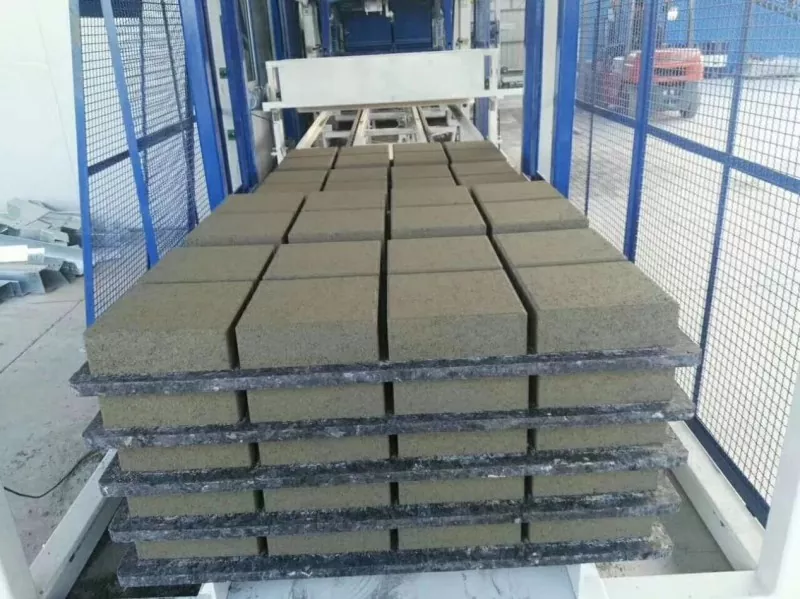
In the concrete products industry, color consistency is often underestimated. However, for architectural blocks, paving stones, decorative concrete products, and premium masonry applications, uneven color can seriously affect customer confidence and market acceptance.
For many manufacturers operating a block machine, brick machine, paving block machine, cement paving block making machine, or fully automatic concrete block production line, inconsistent coloration is a common challenge that directly impacts:
● product appearance
● customer satisfaction
● project approval
● brand reputation
● long-term market competitiveness
In many cases, even structurally strong concrete blocks/ paving block,may still be rejected if the surface color lacks uniformity.
The good news is that uneven block color is rarely random. More often, it is a visible sign of deeper inconsistencies within the production process itself.
Moisture fluctuation is one of the leading causes of uneven concrete block color.
When different production batches contain varying moisture levels, cement hydration develops unevenly, causing visible shade differences after curing.
Typical problems include:
● excessive moisture causing lighter surfaces
● insufficient water creating darker patches
● unstable curing appearance
● inconsistent surface reflection
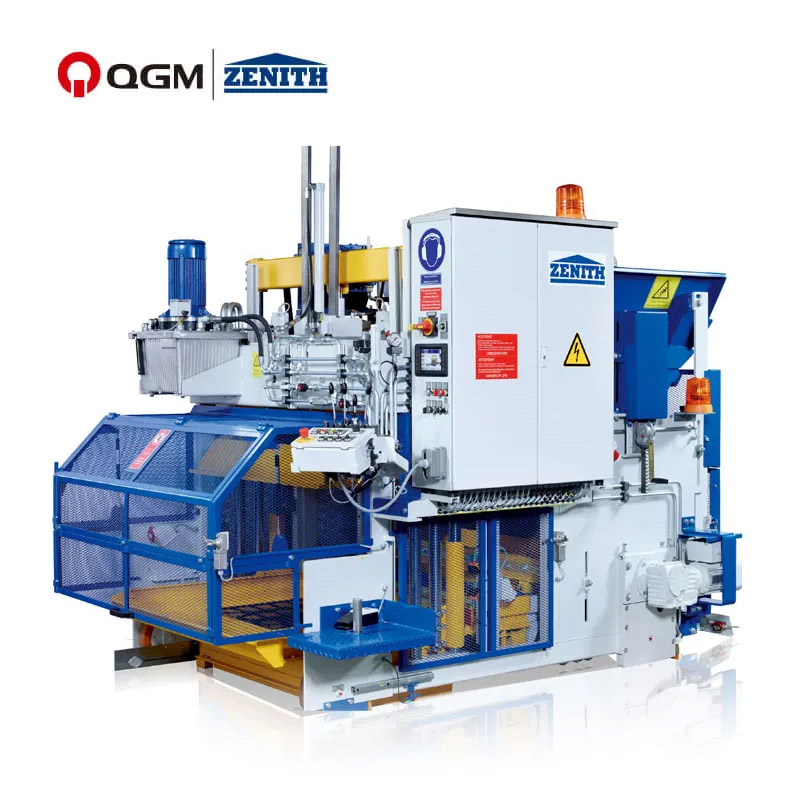
In QGM automated block making machine/cement paving block making machine production lines, moisture instability often originates from fluctuating aggregate humidity rather than incorrect water dosing alone.
Even small changes in aggregate moisture can significantly influence:
● block appearance
● curing performance
● surface texture
● color stability
This issue becomes especially noticeable in:
● colored pavers
● face-mix concrete products
● architectural concrete blocks
Stable moisture management is therefore essential for achieving consistent product appearance.
Concrete block color is strongly affected by cement distribution throughout the mixture.
If mixing time is insufficient or material feeding becomes inconsistent, some blocks may contain higher cement concentration while others expose more aggregate on the surface.
This results in:
● uneven tones
● patchy surfaces
● inconsistent texture
● visible shade variation
The issue is often more obvious in large-scale continuous production where multiple batches are produced throughout the day.
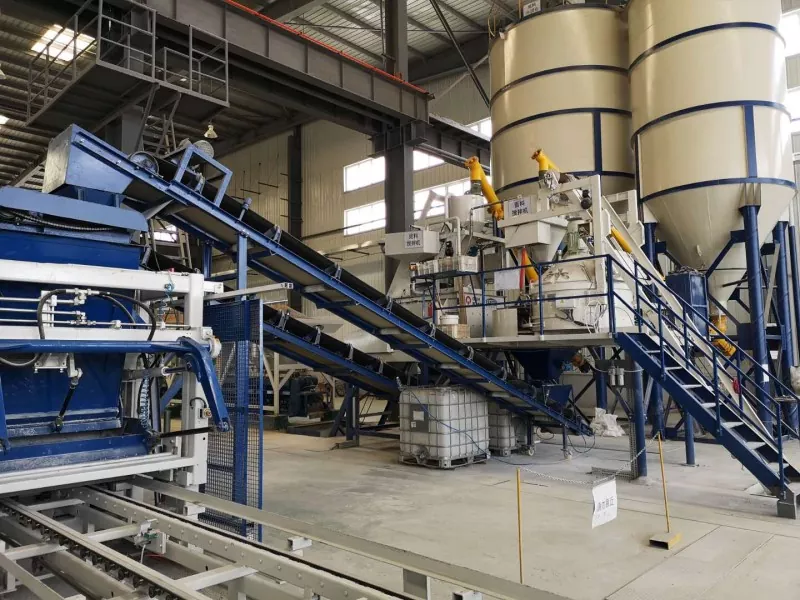
For this reason, high-efficiency mixers and stable feeding systems are essential components of modern QGM concrete block production lines.
Consistent cement dispersion plays a major role in achieving stable block color and surface quality.
In colored concrete block production, pigment control becomes critically important.
Low-quality pigments often contain:
● inconsistent particle size
● unstable mineral composition
● weak UV resistance
● poor color stability
As a result, finished products may fade unevenly or develop inconsistent coloration after curing and long-term outdoor exposure.
In addition, inaccurate dosing systems can create major color differences between production cycles.
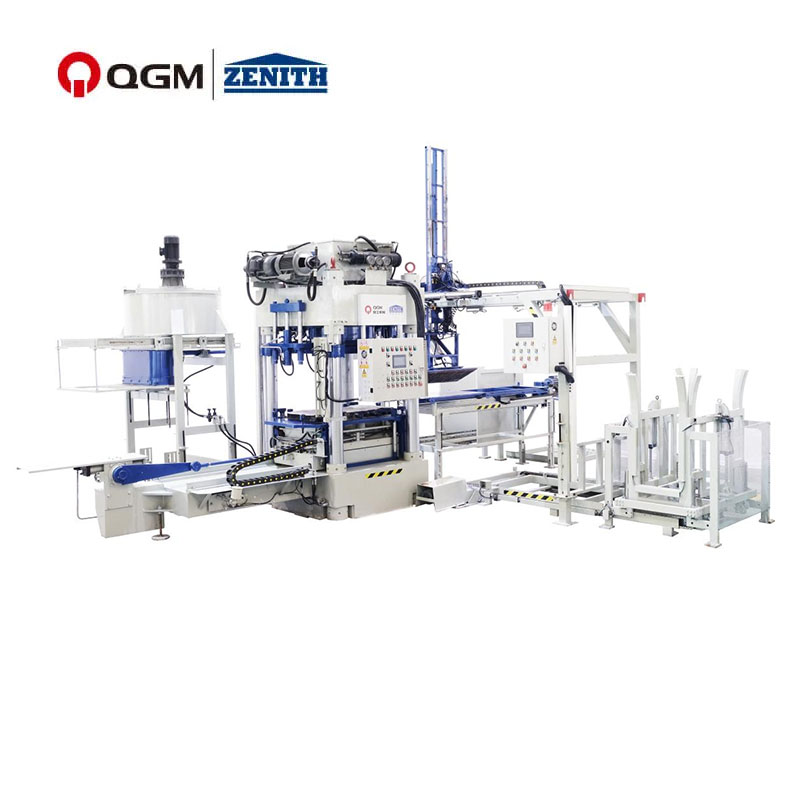
Modern QGM block machine systems integrate intelligent weighing and dosing technology to improve pigment accuracy and reduce manual errors during production.
Consistent block color depends not only on pigment quality itself, but also on:
● precise dosage control
● uniform material dispersion
● stable mixing efficiency
Some manufacturers attempt to increase production capacity by shortening mixing cycles.
However, insufficient mixing often leads to:
● cloud-like patterns
● streaks on block surfaces
● localized discoloration
● inconsistent cement distribution
Without proper homogenization, cement, pigments, water, and aggregates cannot blend evenly throughout the concrete mixture.
In QGM brick making machine production, mixing efficiency should never be sacrificed simply to increase hourly output.
Long-term customer satisfaction depends far more on stable product appearance than short-term production acceleration.
Uneven compaction is another major cause of inconsistent block coloration.
When vibration force is unstable or unevenly distributed, certain areas inside the mould cavity become denser than others. This changes moisture evaporation during curing and affects how light reflects from the block surface.
Advanced vibration technology therefore affects not only compressive strength, but also visual quality.
QGM adopts advanced vibration systems engineered to:
● improve force transmission efficiency
● stabilize vibration performance
● enhance compaction uniformity
● reduce internal density variation
As a result:
● block density becomes more consistent
● surface appearance improves
● shade variation decreases
● overall product quality becomes more stable
Mould condition has a surprisingly large impact on concrete block color consistency.
As moulds gradually wear, pressure distribution during forming becomes uneven. Some areas compact more tightly while others remain looser.
This subtle density difference changes:
● moisture absorption
● curing behavior
● surface texture
● final coloration
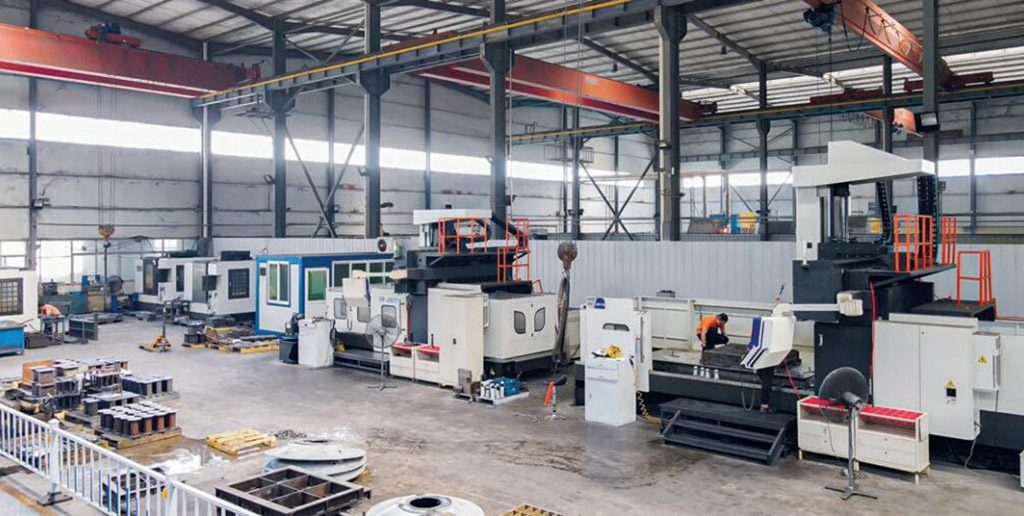
QGM mould systems are manufactured according to high-precision engineering standards to ensure:
● stable vibration transmission
● accurate dimensional control
● smooth demoulding
● consistent surface shaping
QGM moulds undergo professional heat treatment processes, with hardness controlled within the HRC 60–63 range to improve wear resistance and long-term production stability.
In industrial concrete block manufacturing, mould precision directly affects both product appearance and production consistency.
The curing environment plays a critical role in final block appearance.
If concrete blocks cure under:
● uneven temperature
● excessive sunlight
● unstable humidity
● inconsistent airflow
moisture evaporation rates will vary between products, leading to visible shade differences.
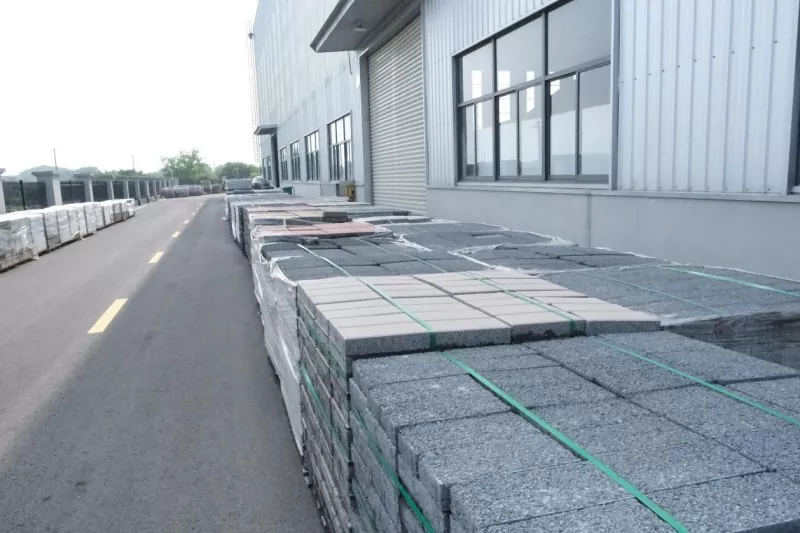
This issue is especially common in outdoor curing environments where blocks receive inconsistent exposure to wind and sunlight.
Even blocks produced from the same concrete mixture may develop different colors under unstable curing conditions.
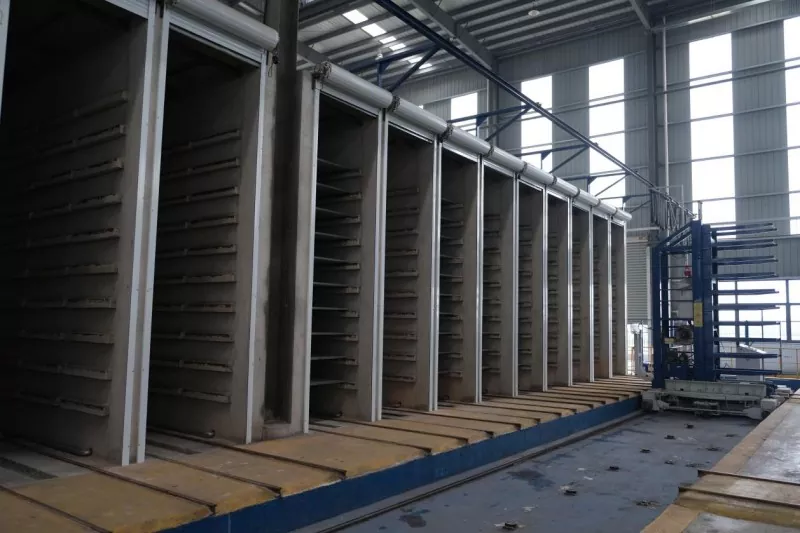
For high-end architectural blocks and decorative paving products, controlled curing management is essential for maintaining premium visual quality.
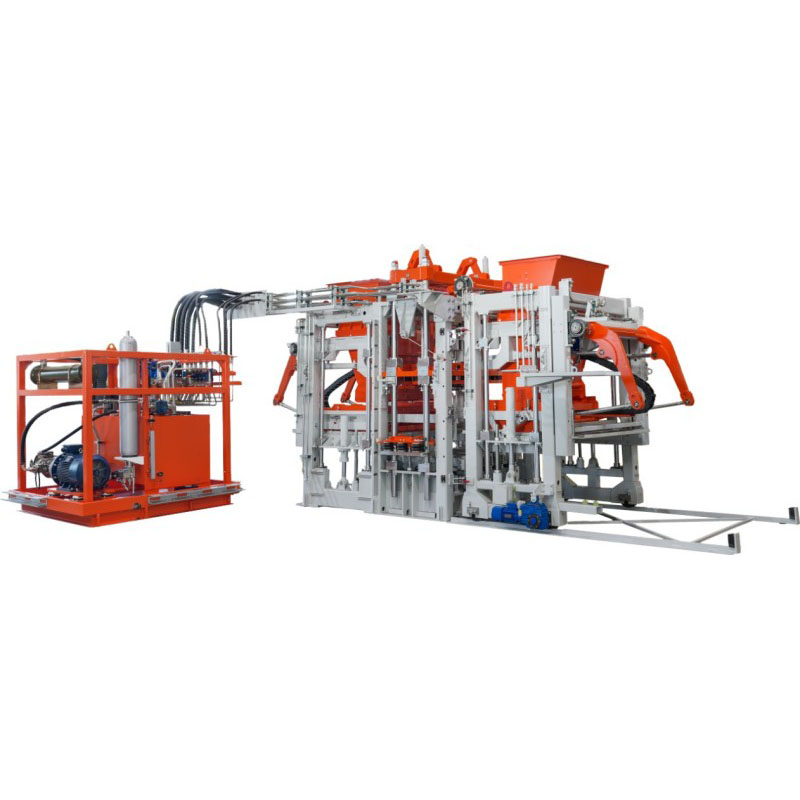
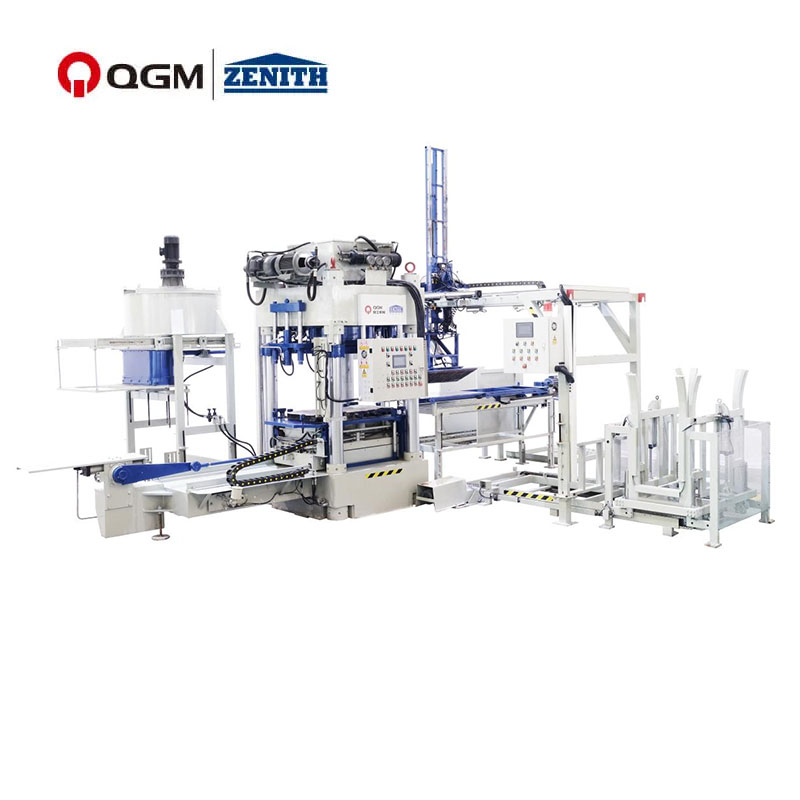
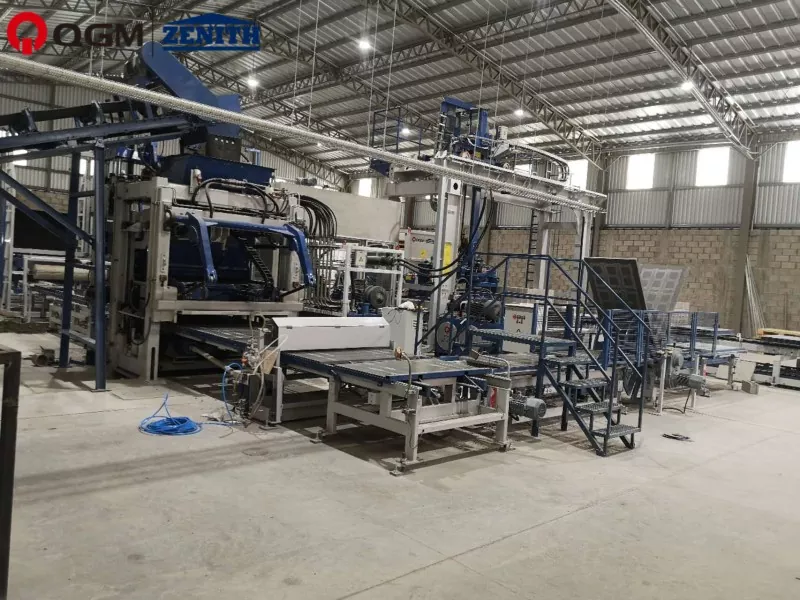
In QGM fully automatic block making machine production lines, operational consistency depends heavily on hydraulic precision and intelligent automation systems.
Pressure fluctuation, unstable feeding intervals, or inconsistent vibration synchronization can all indirectly affect:
● block density
● moisture distribution
● surface texture
● color consistency
QGM hydraulic systems are engineered to provide:
● stable pressure control
● smooth machine coordination
● reliable operational response
● continuous production stability
Meanwhile, QGM intelligent PLC control systems integrate:
● Siemens automation technology
● touch-screen operation
● real-time monitoring
● remote diagnostics
● intelligent parameter adjustment
These intelligent systems allow technicians to optimize production conditions remotely and maintain stable product appearance during continuous manufacturing cycles.
The most common causes include inconsistent moisture content, unstable mixing efficiency, uneven curing conditions, and inconsistent cement distribution.
Yes. Uneven compaction changes surface density and moisture evaporation behavior, which directly affects color uniformity.
Absolutely. Worn moulds create uneven pressure distribution during forming, leading to inconsistent texture and shade variation.
Uneven concrete block coloration is rarely just a surface-level aesthetic issue.
In most cases, it reflects deeper inconsistencies throughout the entire production system.
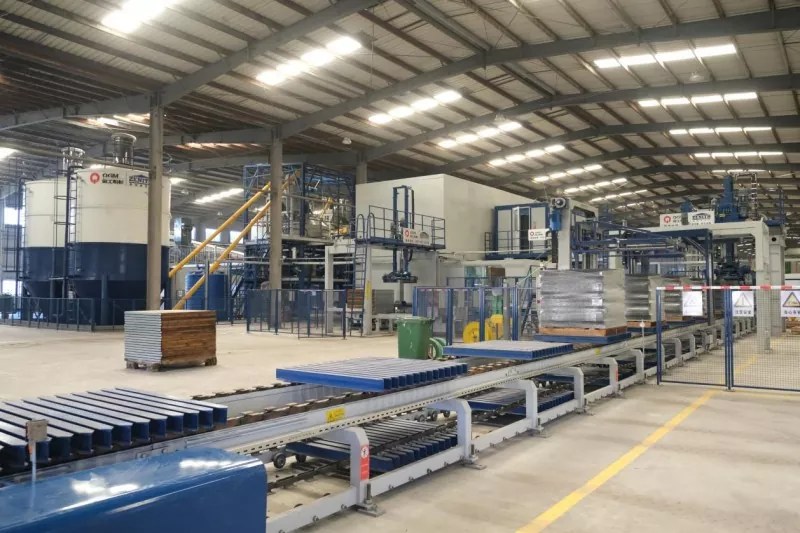
A modern QGM block machine, brick machine, paving block making machine,concrete paving block making machine,or fully automatic concrete block production line must coordinate:
● raw materials
● moisture control
● mixing efficiency
● vibration performance
● hydraulic stability
● mould precision
● curing management
● intelligent automation
with extremely high accuracy.
When these variables remain stable and properly controlled, color consistency naturally becomes a byproduct of disciplined production management.
Ultimately, this reflects an important principle in concrete block/concrete paving block manufacturing: visual uniformity is not created through superficial correction. It is the visible result of a stable, intelligent, and professionally engineered production process.