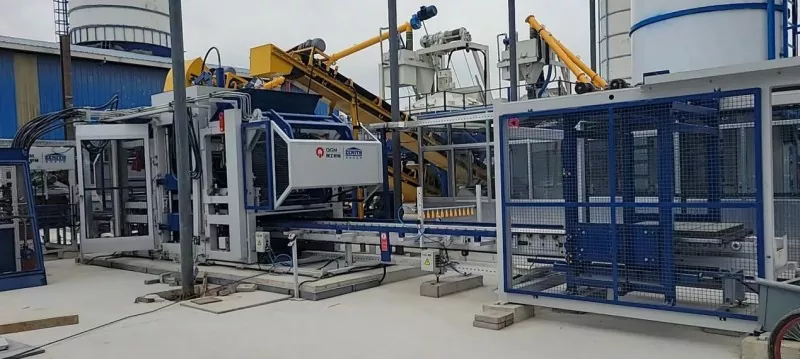
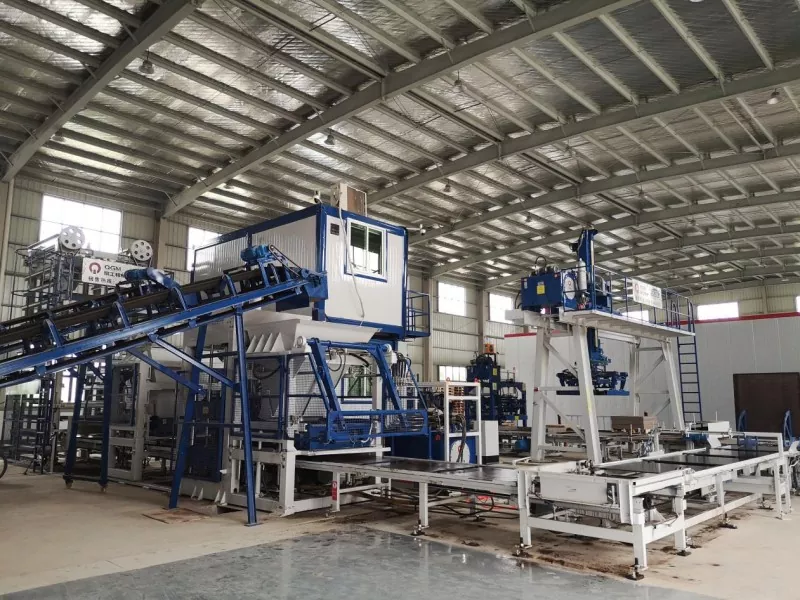
When planning a new concrete products factory, many investors focus on selecting the right block making machine. In reality, even the most advanced equipment cannot achieve maximum productivity without being integrated into a complete production line.
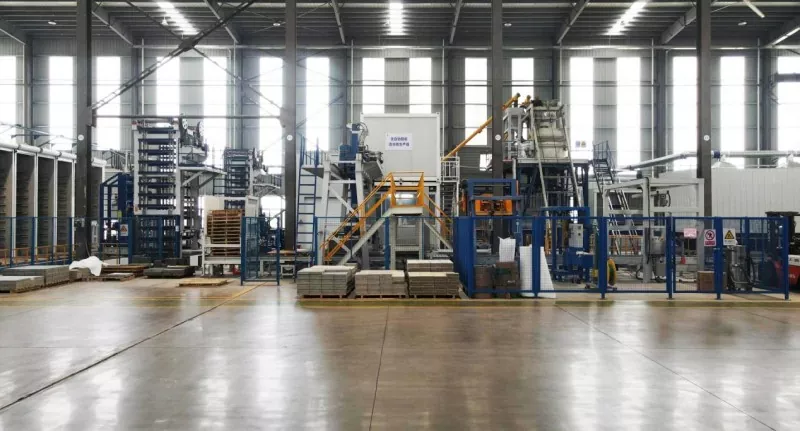
A complete production line combines batching, mixing, conveying, molding, curing, pallet handling and intelligent control into one coordinated manufacturing system.
This guide explains how every stage works together—and why integration is essential for improving production efficiency, product quality and operating costs.
What Is Included in a Complete Block Production Line?
Unlike a standalone machine, a complete production system combines several automated processes.
A typical line includes:
●Raw material storage
●Automatic batching system
●Concrete mixer
●Material feeding system
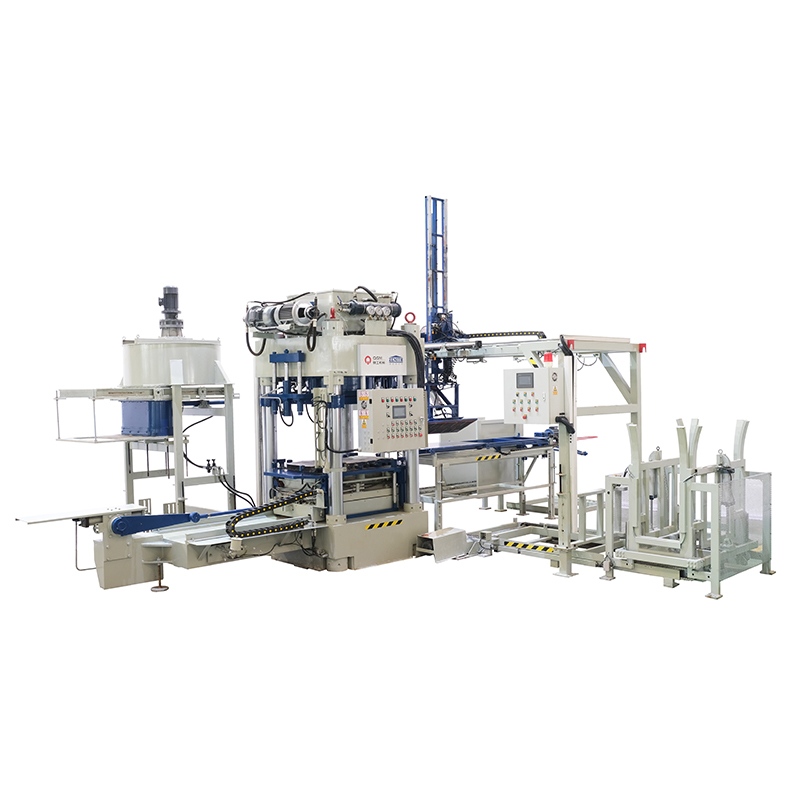
●Block making machine
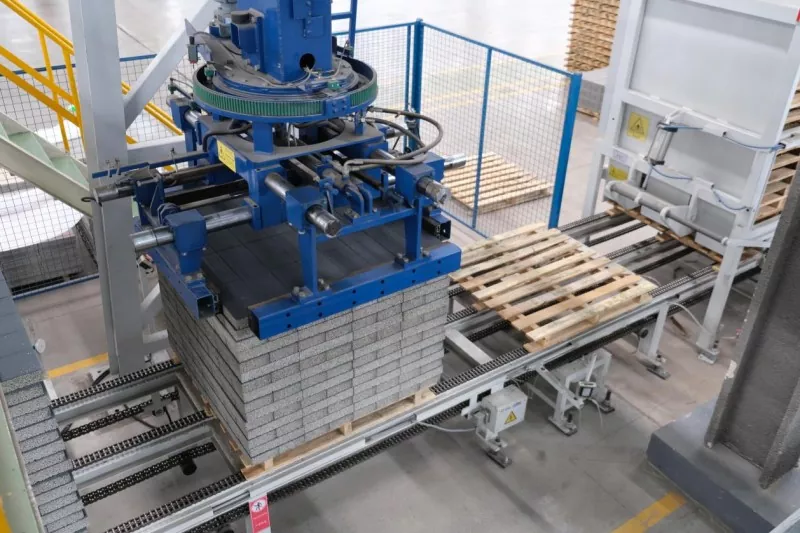
●Pallet conveying system
●Curing area
●Automatic cubing & packing
Every system communicates with the next to create continuous production with minimal interruption.
1. Accurate Raw Material Preparation Improves Product Quality
The production process begins long before concrete enters the mould.
Automatic batching systems accurately measure cement, aggregates, water and recycled materials according to the selected mix design.
Consistent batching helps manufacturers achieve:
●Stable compressive strength
●Better dimensional accuracy
●Reduced material waste
●Improved production consistency
For factories using recycled aggregates or construction waste, precise batching becomes even more important.
2. Uniform Mixing Creates Better Concrete
After batching, materials move into the mixer.
A homogeneous concrete mixture allows vibration energy to be distributed evenly during forming.
If moisture content or aggregate grading varies, even the best block making machine cannot maintain consistent product quality.
That is why integrated production lines continuously coordinate batching and mixing before material reaches the molding station.
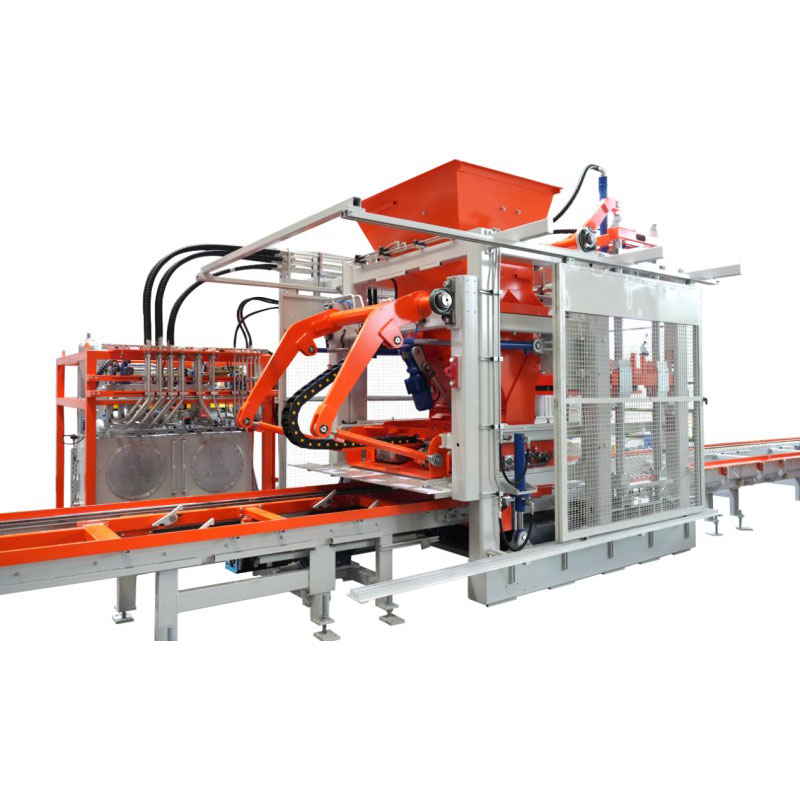
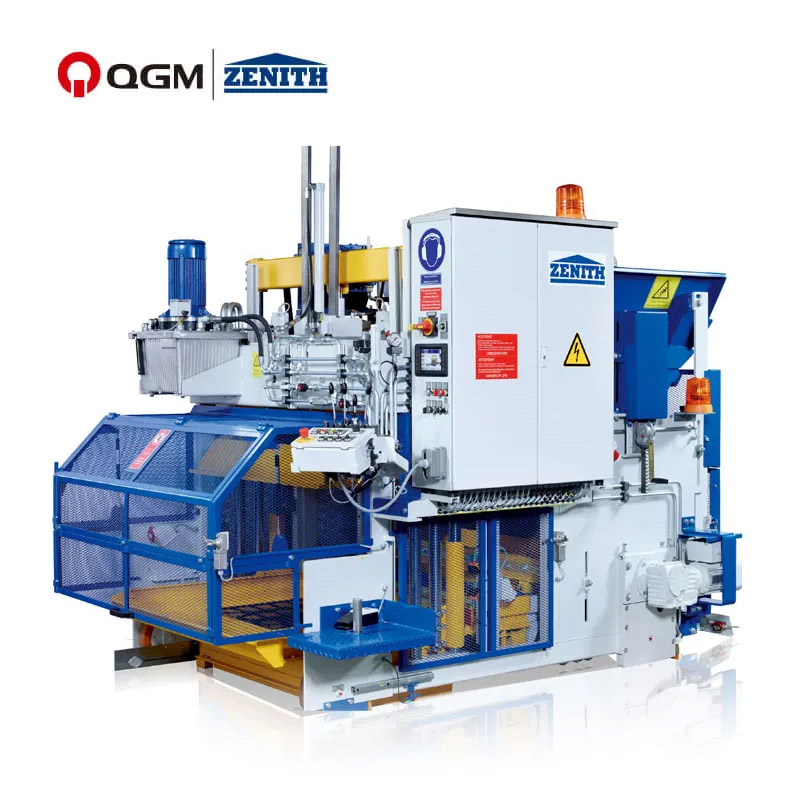
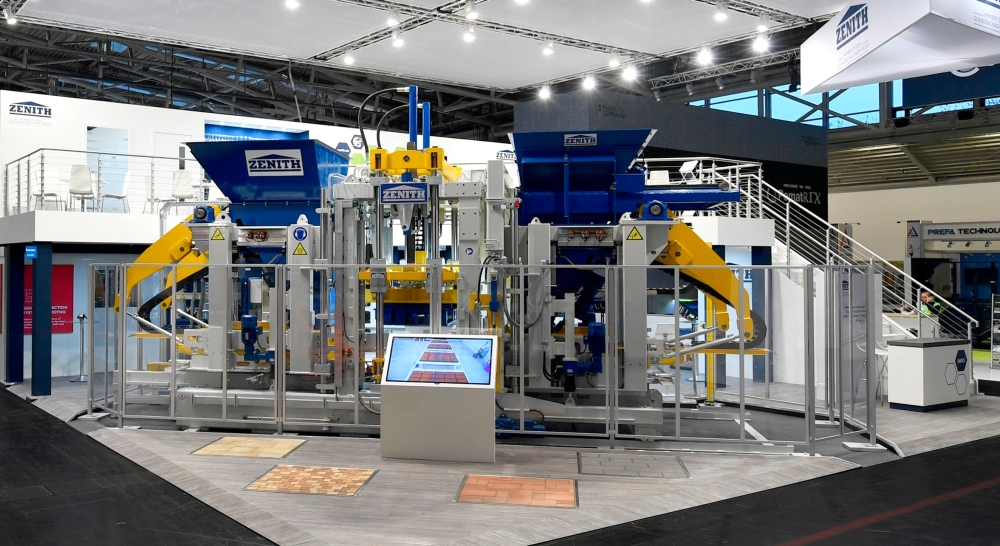
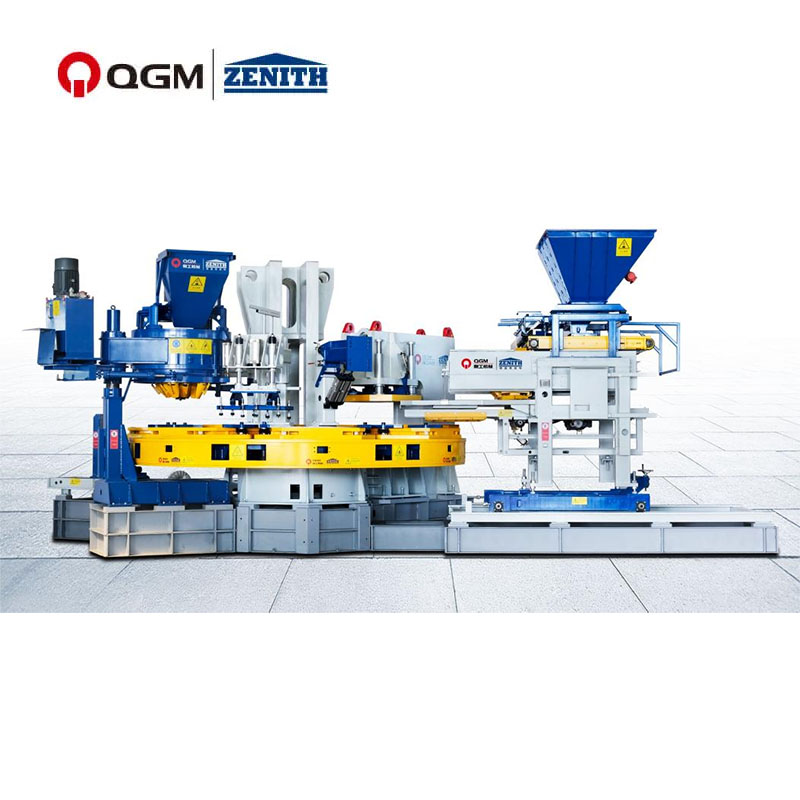
3. The Block Making Machine Is the Center of the Production Line
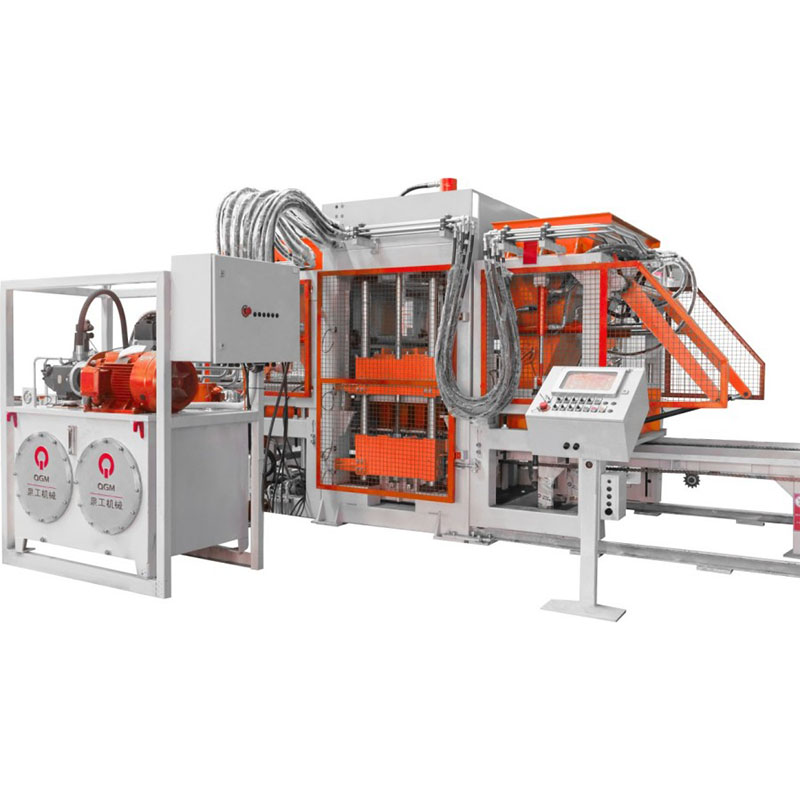
The block making machine is where raw materials become finished concrete products.
QGM equips its production lines with the Zenith ultra dynamic vibration system, which delivers powerful vibration energy with improved transmission efficiency.
Compared with conventional vibration systems, it offers:
●Higher product density
●Better compaction
●Lower cement consumption
●More consistent block strength
●Faster production cycles
The hydraulic system combines internationally recognized components to deliver smooth machine movement, accurate pressure control and reliable long-term performance.
Together, these technologies help manufacturers achieve stable production with lower operating costs.
4. Intelligent Automation Improves Production Stability
Modern factories require more than mechanical performance—they need intelligent production management.
QGM integrates a SIEMENS S7-1500 PLC control system with a user-friendly HMI and remote cloud platform.
Operators can:
●Monitor machine status in real time
●Adjust production parameters
●Download or update machine programs remotely
●Perform remote diagnostics
●Receive predictive maintenance recommendations
Digital management helps reduce unexpected downtime while improving production efficiency.
5. Automated Material Handling Keeps Production Moving
Moving fresh blocks safely is just as important as producing them.
Integrated conveyor systems, elevators, finger cars and pallet handling equipment automatically transfer products between each production stage.
Benefits include:
●Reduced labor requirements
●Less product damage
●Faster production flow
●Better synchronization throughout the line
For large production plants, automated logistics significantly improve daily output.
Its performance depends on how well batching, mixing, molding, curing, handling and automation work together as one integrated system.
By delivering complete production line solutions, QGM enables manufacturers to increase productivity, improve product quality and reduce long-term operating costs—making every production cycle more efficient and every investment more valuable.
Application Scenarios
FAQ: Complete Block Production Lines
1. Why is a complete block production line more efficient than a standalone block making machine?
A complete production line integrates batching, mixing, conveying, molding, curing, and packaging into one automated workflow. This coordinated process minimizes manual handling, reduces downtime, improves product consistency, and maximizes the productivity of the block making machine.
2. How does automation improve the performance of a concrete block production line?
Advanced automation systems, such as the SIEMENS S7-1500 PLC, enable real-time process monitoring, automatic parameter adjustment, remote diagnostics, and production data management. These functions help maintain stable product quality, reduce operator error, and improve overall equipment efficiency.
3. What should manufacturers consider when selecting a complete block production line?
In addition to production capacity, manufacturers should evaluate the integration of raw material handling, vibration technology, hydraulic systems, intelligent controls, curing solutions, and after-sales support. A fully integrated solution from QGM ensures higher productivity, lower operating costs, and greater long-term reliability for concrete block and paving block production.
We use cookies to offer you a better browsing experience, analyze site traffic and personalize content. By using this site, you agree to our use of cookies.Privacy Policy