ZENITH Maschinenfabrik GmbH

QGM ZN2000-2: Intelligent Block Making for Solid Waste Recycling

2026-11-12 0 Leave me a message
Industrial solid waste is increasingly being viewed not simply as material requiring disposal, but as a potential resource for producing new building materials. For manufacturers working with fly ash, slag, mineral residues, and other industrial by-products, the challenge is to turn variable raw materials into consistent, marketable concrete products while maintaining stable production.


A green building materials manufacturer in Xinjiang provides a practical example of this approach. The company uses industrial solid waste together with locally available resources to manufacture hydraulic blocks, municipal paving blocks, wall blocks, and other concrete products. As its production requirements expanded, it needed a more automated and flexible solution capable of supporting large-scale solid waste utilization and multi-product concrete block manufacturing.


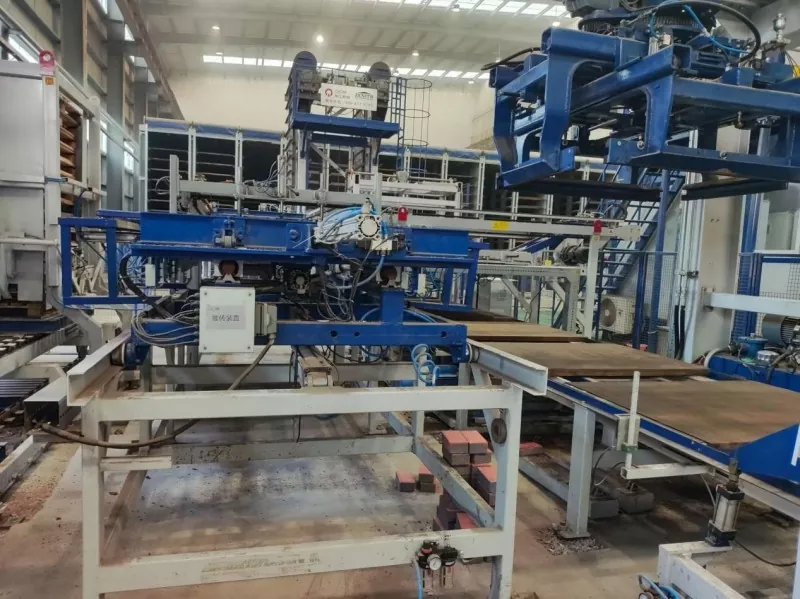
In 2024, the company introduced a QGM ZN2000-2 fully automatic production line with a new-energy rack system. The project is capable of utilizing 200,000–250,000 tonnes of industrial solid waste annually, including fly ash, slag, and mineral residues, and converting these materials into environmentally friendly building products.

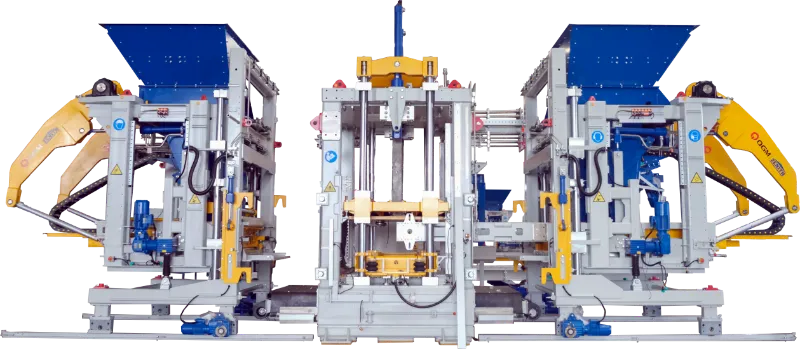
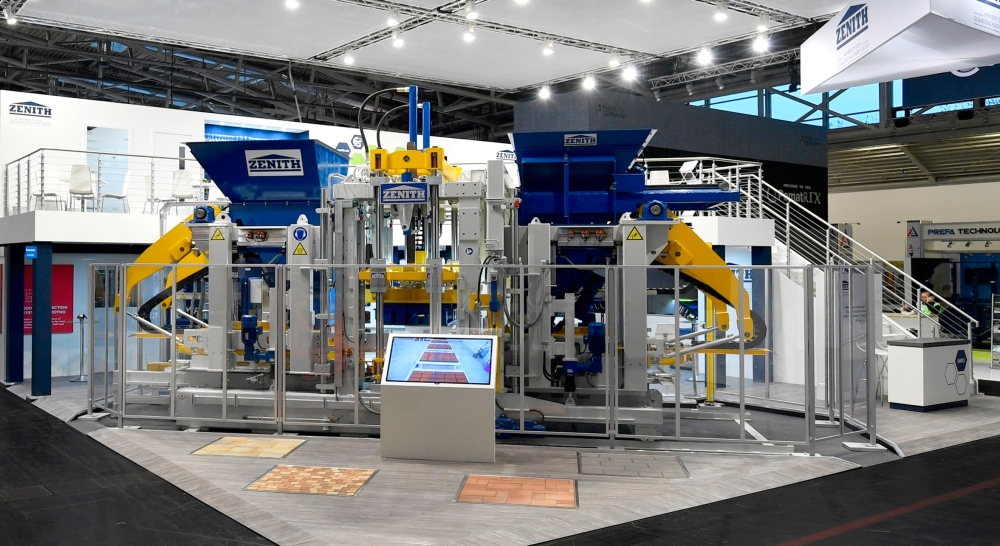
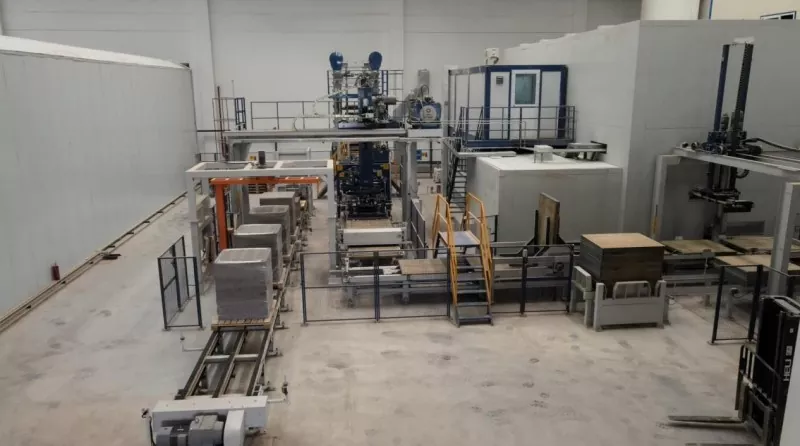
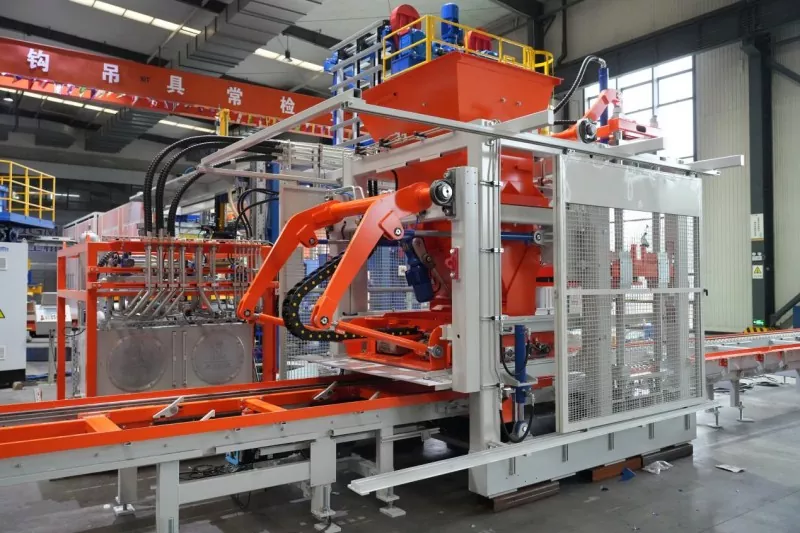
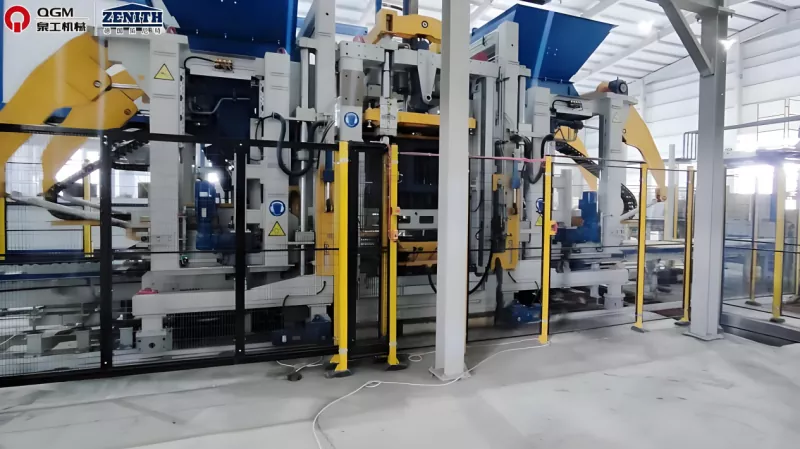
 QGM ZN2000-2 Fully Automatic Production Line for Solid Waste Recycling

△ QGM ZN2000-2 Fully Automatic Production Line for Solid Waste Recycling


Turning Solid Waste into Consistent Concrete Products

The availability of industrial solid waste does not automatically translate into efficient block production. Different materials can behave differently during feeding, mixing, and forming, making stable material distribution and forming control particularly important.


For manufacturers using industrial solid waste as a major raw material, production challenges may include inconsistent material flow, uneven mold filling, and the need to adjust forming parameters for different concrete products. At the same time, producing hydraulic blocks, paving blocks, and wall blocks requires a production system with sufficient flexibility for product changes.


Manual intervention can also become more demanding as production volume and product variety increase. This creates a practical need for an automatic block making machine and integrated concrete block production line that can coordinate feeding, forming, mold changing, and production management.


QGM ZN2000-2 for Automated and Flexible Block Manufacturing

The QGM ZN2000-2 combines automated production with a modular equipment design, providing an integrated approach to solid waste-based concrete block manufacturing.


Its coordinated systems cover vibration and forming, material feeding, automatic mold changing, hydraulic operation, machine assembly, and intelligent control. The equipment can be configured according to different concrete product requirements, making it suitable for multi-product production where stable forming and flexible operation are important.


For solid waste recycling applications, the value of the production line lies not in a single machine function, but in how the different systems work together to manage material flow, forming quality, product changes, and equipment operation.


Key Technologies Supporting Solid Waste-Based Block Production

1)Ultra-Dynamic Servo Vibration for Controlled Concrete Forming

The forming process is critical when different industrial solid waste materials are used in concrete products. The ZN2000-2 can be equipped with either a Zenith Ultra-Dynamic Four-Axis Servo Vibration System or a Zenith Ultra-Dynamic Eight-Axis Servo Vibration System.


The four-axis system provides responsive and precise vibration control, with vibration parameters matched to different product requirements. Independent adjustment of vibration amplitude and rotational speed helps optimize material filling and maintain stable excitation.


The eight-axis system uses real-time feedback to control vibration phase and operating speed. Its coordinated pre-vibration, transition vibration, and main vibration stages support the forming of large concrete products, high-strength blocks, and paving products.


For manufacturers working with variable solid waste materials, controlled vibration provides greater flexibility during the forming process and supports consistent block density and product quality.


2)Intelligent Material Feeding for More Uniform Mold Filling

Material distribution is another important factor in concrete block production. The ZN2000-2 uses a modular **intelligent suspended material feeding system** that integrates the face-mix feeding device, base-material feeding system, scraping mechanism, tamper-head cleaning device, and anti-bridging system.


This integrated configuration supports more uniform material distribution while making the feeding system easier to maintain and adjust. Better control of material feeding can also help reduce production fluctuations and support stable forming across different concrete products.


3)Hydraulic Anti-Bridging System for Stable Material Flow

Industrial solid waste materials can present different flow characteristics during feeding. Maintaining a consistent material supply to the forming system is therefore essential for continuous production.


The ZN2000-2 uses a hydraulic reciprocating anti-bridging bottom-material carriage. A hydraulically driven rake moves back and forth to improve material flow and reduce bridging, helping deliver the bottom material more consistently to the forming stage.


This design addresses a practical material-handling challenge and contributes to more stable operation of the concrete block production line.


4)Automatic Quick Mold Change for Multi-Product Production

A diversified product portfolio requires more than a high-performance block making machine. The production line must also allow manufacturers to change products efficiently.


The ZN2000-2 features an intelligent automatic quick mold change system. Multiple mechanisms work together to automatically position, change, and lock molds, reducing manual intervention and adjustment time.


For plants producing different types and specifications of concrete blocks, this flexibility helps support product switching and improve equipment utilization.


5)Modular Machine Construction for Easier Maintenance

Long-term equipment availability depends partly on how easily key components can be inspected, serviced, or replaced.


The ZN2000-2 adopts a modular assembled frame design, with key components such as the vibration table, motor beam assembly, and feeding frame using high-strength bolted connections. The modular structure facilitates equipment inspection and component replacement while reducing maintenance complexity.


This approach provides a practical foundation for maintaining the production line during long-term operation.


6)Intelligent Control and Cloud-Based Equipment Management

Automation extends beyond mechanical operation. The ZN2000-2 is equipped with a Siemens S7-2000 series PLC control system and a visual human-machine interface for monitoring production parameters, equipment status, and operating information in real time.


QGM also provides an Intelligent Equipment Cloud Service Platform that supports online equipment monitoring, remote system upgrades, fault prediction, operating data analysis, and equipment health assessment.


For large-scale solid waste recycling projects, these functions provide greater visibility into equipment operation and support production management and maintenance.


From Xinjiang to Global Solid Waste Recycling Applications

The Xinjiang project reflects a broader shift in how industrial and construction waste can be connected with the building materials industry.


Europe is among the more mature markets for construction and demolition waste recycling. The European Commission identifies construction and demolition waste as a priority waste stream, while promoting reuse, high-quality recycling, and material recovery as part of the circular economy.


Japan has also maintained a long-term focus on construction recycling and the reuse of construction by-products. Its construction recycling framework emphasizes the separation and recycling of specified construction materials, while more recent policy directions place greater attention on improving the quality and value of recycled materials.


These developments show that solid waste recycling is increasingly connected with construction materials and infrastructure rather than being viewed solely as a waste management issue.


For concrete products manufacturers, appropriately processed industrial solid waste, construction waste, and recycled aggregates can potentially become inputs for new concrete products. This creates a connection between solid waste recycling and block manufacturing, while also opening opportunities for equipment capable of handling increasingly diversified raw materials and product requirements.


Solid Waste Recycling and Concrete Block Manufacturing

The same development can be relevant to markets experiencing rapid urbanization and infrastructure development. Southeast Asia, the Middle East, South Asia, and other developing construction markets generate growing volumes of industrial and construction waste while continuing to require concrete products for infrastructure and building projects.


The combination of solid waste processing and recycled building materials manufacturing therefore provides a potential link between resource recovery and concrete products production.


However, each market has its own waste classification system, material standards, environmental regulations, recycled-material requirements, and product specifications. The suitability of solid waste for concrete block manufacturing must therefore be evaluated according to local raw material conditions and applicable standards.


The Xinjiang project demonstrates one practical production model: suitable processing methods are combined with automated block manufacturing equipment to convert industrial solid waste into concrete products with established applications.


QGM ZN2000-2 for Large-Scale Solid Waste Resource Utilization

For a solid waste recycling project, production performance depends on more than the volume of material that can be processed. Raw materials need to enter the production system consistently, forming quality needs to remain stable, and the production line needs to accommodate different product requirements.


In this Xinjiang project, the QGM ZN2000-2 integrates ultra-dynamic servo vibration, intelligent material feeding, hydraulic anti-bridging technology, automatic quick mold changing, modular machine construction, intelligent control, and cloud-based equipment management into an automated and digitalized concrete block production system.


The project can utilize 200,000–250,000 tonnes of industrial solid waste annually, including fly ash, slag, and mineral residues, to manufacture hydraulic blocks, municipal paving blocks, wall blocks, and other environmentally friendly concrete products.


As circular economy practices and resource efficiency continue to influence the building materials industry, the role of solid waste recycling equipment is also expanding. For block manufacturers, this includes opportunities to transform industrial solid waste, construction waste, and recycled aggregates into higher-value concrete products.


A Complete Solution for Solid Waste-Based Concrete Products

QGM combines automated block making technology, intelligent production systems, and resource utilization solutions to support manufacturers seeking to integrate solid waste recycling with concrete products manufacturing.


For projects involving fly ash, slag, mineral residues, construction waste, or recycled aggregates, the right production configuration depends on the characteristics of the raw materials, target products, production requirements, and local standards.


QGM can provide customized block making machines, concrete block production lines, and solid waste recycling solutions to help manufacturers evaluate their production requirements and develop an appropriate equipment configuration.


Contact QGM to discuss your solid waste recycling and concrete block manufacturing project.


FAQ

1. Can industrial solid waste be used for concrete block manufacturing?

Yes. Materials such as fly ash, slag, and mineral residues can be used in concrete products manufacturing when their material characteristics, processing requirements, mix design, and applicable product standards are properly evaluated.


2. What challenges can solid waste materials create during block production?

Different industrial solid waste materials can have different flow and processing characteristics. Material feeding, distribution, vibration, and forming control therefore need to be properly coordinated to maintain stable production and consistent concrete block quality.


3. How does the QGM ZN2000-2 support solid waste recycling?

The ZN2000-2 integrates servo vibration options, intelligent material feeding, hydraulic anti-bridging technology, automatic mold changing, modular machine construction, intelligent control, and cloud-based equipment management to support automated concrete block production.


4. Can the ZN2000-2 produce different types of concrete products?

Yes. The production line can be configured for different concrete product requirements. In the Xinjiang project, it is used to manufacture hydraulic blocks, municipal paving blocks, wall blocks, and other environmentally friendly concrete products.


5. What should manufacturers consider before using solid waste for block production?

Manufacturers should evaluate raw material characteristics, processing requirements, target products, production conditions, applicable material standards, and local regulations before selecting a suitable concrete block production line.


Related News
Leave me a message
X
We use cookies to offer you a better browsing experience, analyze site traffic and personalize content. By using this site, you agree to our use of cookies. Privacy Policy
RejectAccept