Choosing a block making machine manufacturer is not simply a matter of comparing machine specifications or production capacity. For contractors, concrete product manufacturers, infrastructure developers, and investors, the right equipment partner should be able to match the machine, production process, raw materials, automation level, and long-term service requirements to the actual project.
A modern concrete products plant is a complete production system. The performance of the automatic block making machine depends not only on the forming equipment itself, but also on material preparation, mixing, feeding, pallet handling, production control, and the way the entire line is engineered and maintained.
This makes supplier selection an important part of project planning.
A manufacturer with strong engineering capabilities can help customers move from a machine purchase to a production solution that is designed around specific products, output targets, factory conditions, and local market requirements.
QGM has been engaged in the block machinery industry since 1979. With more than 40 years of experience, manufacturing capabilities, international project experience, and integrated technical services, QGM provides block making machines and complete concrete block production lines for customers in more than 150 countries and regions.
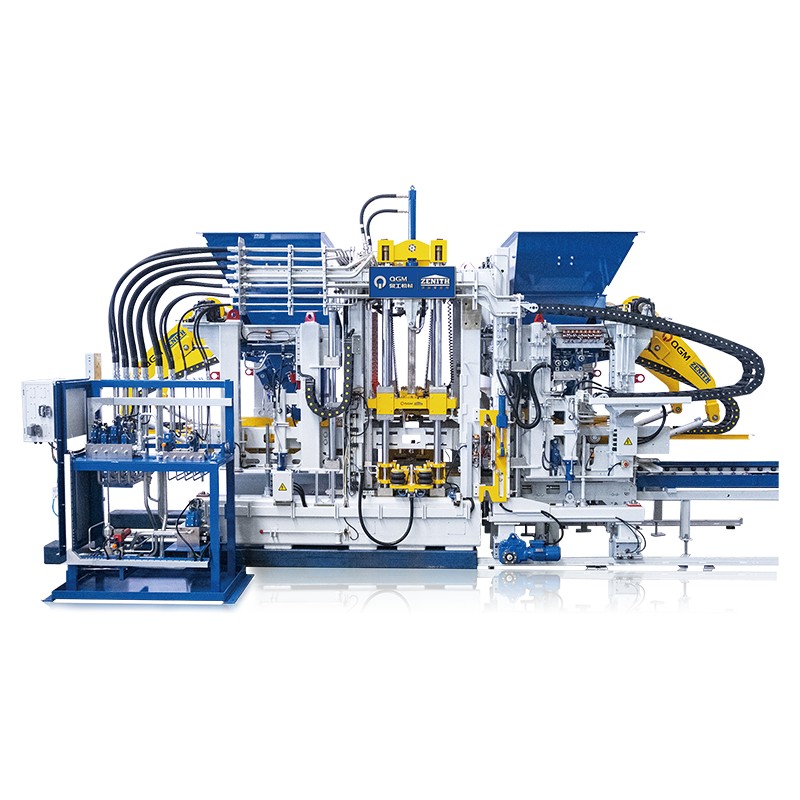
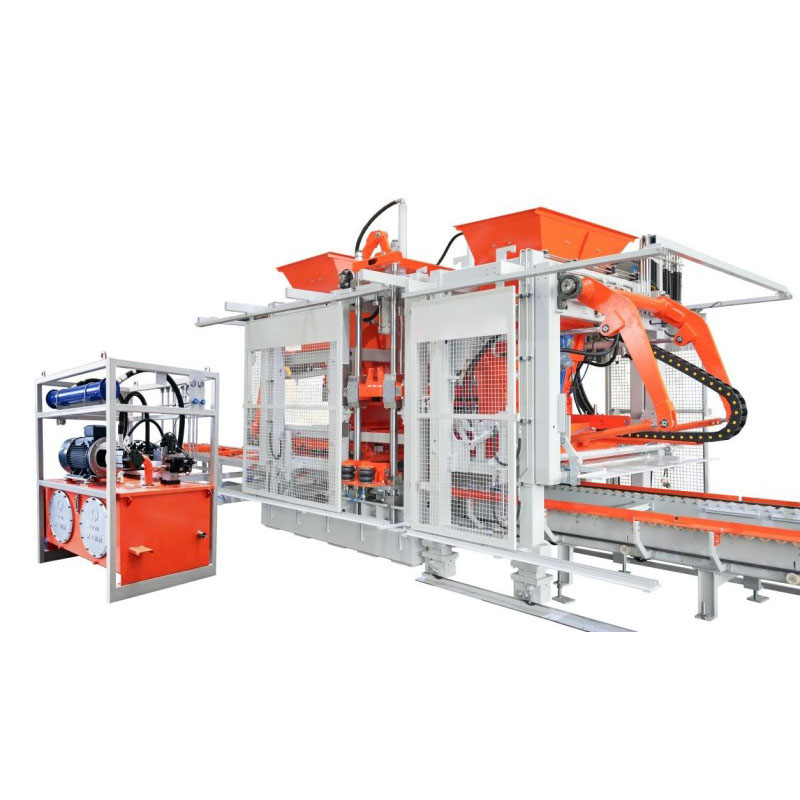
△QGM Automatic Block Making Machines for Reliable and Efficient Concrete Production
The right equipment is determined by the application, not simply by the highest available specifications.
Before choosing a concrete block machine, manufacturers should conduct a comprehensive assessment of their production goals, product requirements, and operating environment. Important factors include the target range of concrete products, required output capacity, available raw materials, desired level of automation, factory layout and site conditions, applicable product quality standards, and long-term technical support requirements. Evaluating these factors in advance helps buyers select a block making machine that is properly matched to their production needs, improves equipment utilization, and supports reliable and cost-effective concrete block manufacturing.
These factors directly influence machine configuration, mold selection, production line layout, material handling, and automation requirements.
Different concrete products require different production configurations.
A plant producing hollow blocks may have different requirements from one focused on interlocking pavers or kerbstones. Paving products often require precise dimensional control and consistent surface quality, while structural blocks may place greater emphasis on strength, density, and production volume.
Depending on market demand and application requirements, concrete product manufacturers may produce a wide range of products, including concrete masonry blocks, solid and hollow blocks, interlocking concrete pavers, kerbstones, permeable paving products, landscaping products, and customized concrete components. Therefore, when selecting a block making machine, manufacturers should consider not only current product requirements but also the machine’s mold compatibility, product size range, and production flexibility. A properly configured block making machine allows manufacturers to efficiently switch between different product types and adapt their production capabilities to changing market demands.
△Concrete Products and Applications of QGM Block Making Machines
Higher machine capacity is not automatically a better investment.
If production capacity significantly exceeds local demand, equipment utilization may remain low while capital and operating costs increase. On the other hand, insufficient capacity can limit business growth and make it difficult to meet customer delivery schedules.
A professional block making machine manufacturer should evaluate the required output together with product mix, working hours, factory layout, labor availability, and future expansion plans.
This helps ensure that the production line is sized for realistic operating conditions rather than theoretical maximum output alone.
The characteristics of locally available raw materials can influence concrete mix design and production performance.
Depending on the region, manufacturers may work with natural aggregates, sand, stone powder, fly ash, slag, recycled aggregates, or other suitable materials.
Material particle size, moisture content, grading, and consistency can affect mixing, feeding, forming, and final product quality.
For this reason, an experienced equipment supplier should consider raw material conditions when designing a concrete block production line rather than applying the same configuration to every market.
A block production plant is made up of multiple systems that must work together.
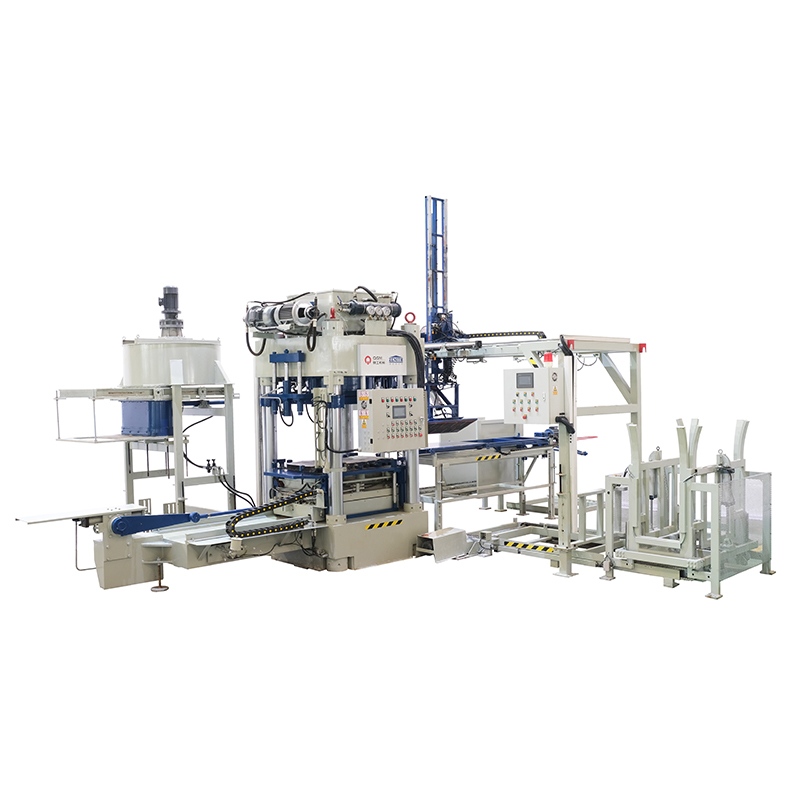
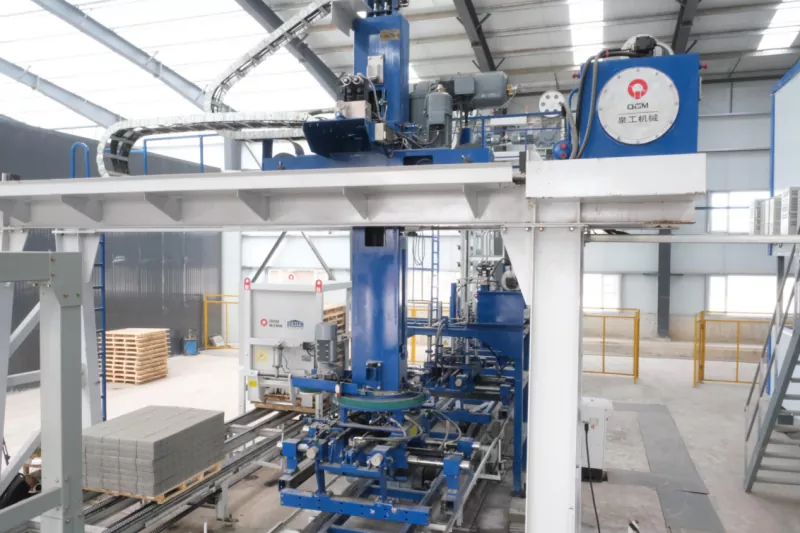
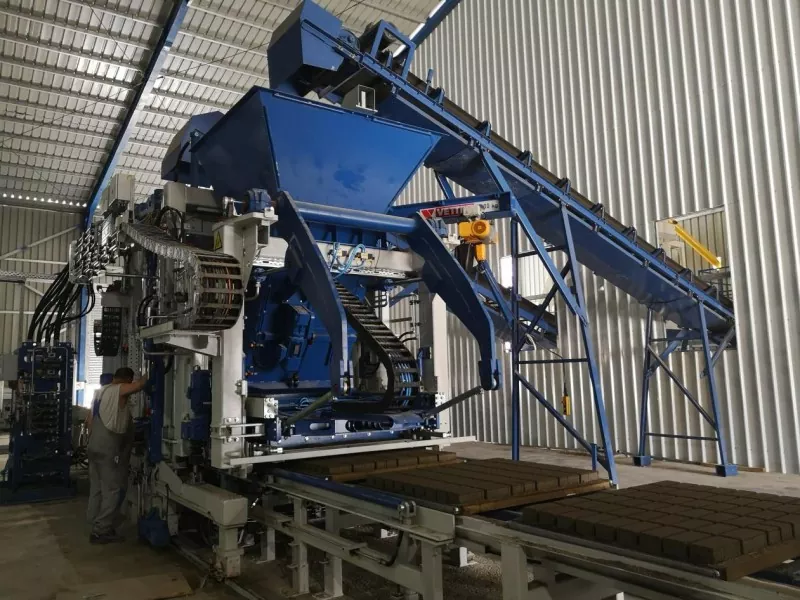
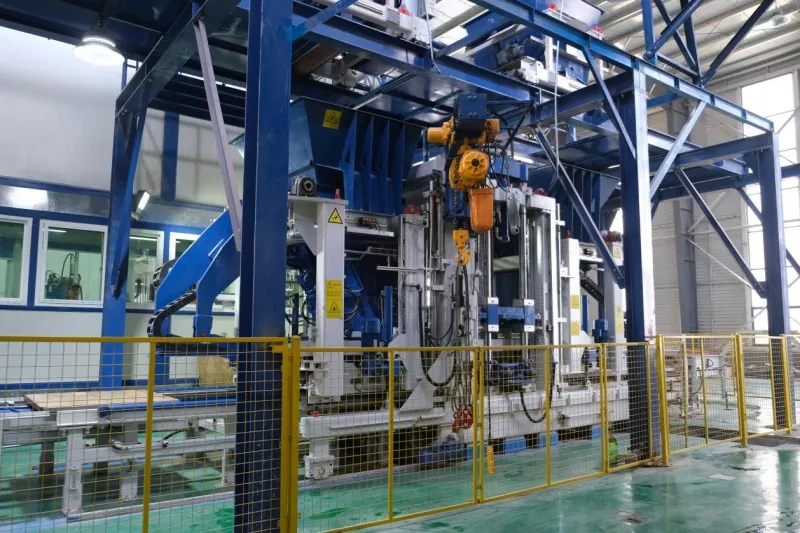
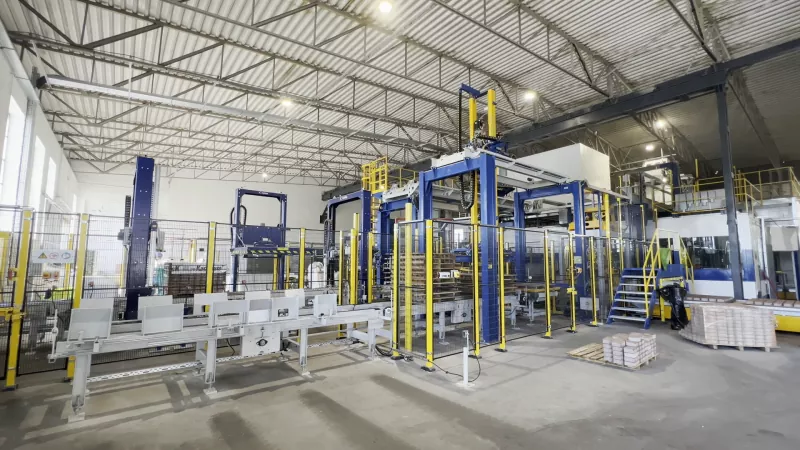
An automatic block making machine serves as the primary forming unit of a modern concrete block production line, but efficient manufacturing depends on the coordinated operation of multiple upstream and downstream systems. A complete production line may integrate aggregate and cement storage, batching and concrete mixing, material conveying and feeding, pallet circulation, block forming and vibration, curing, product handling, stacking, transportation, and automated packaging.
When these systems are properly configured and integrated, material flow and production processes can work together more efficiently, helping manufacturers maintain stable output, reduce process bottlenecks, and improve overall equipment utilization. For this reason, buyers should evaluate a supplier’s engineering and system-integration capabilities rather than assessing a block making machine solely by its purchase price or individual technical specifications.
An experienced concrete block production line supplier should be able to match the main block machine with the supporting equipment, factory layout, production capacity, product requirements, and automation level. This integrated approach helps manufacturers establish a more reliable production system, control operating risks, and achieve better long-term value from their equipment investment.
Automation has become increasingly important in modern concrete product manufacturing.
A fully or highly automated automatic block making machine can coordinate key production processes and reduce unnecessary manual intervention. Intelligent control systems can help operators manage production parameters more consistently and improve process repeatability.
Automation in concrete block manufacturing delivers value beyond simply increasing production output. An advanced automatic block making machine can help manufacturers maintain more consistent production cycles, improve process control, reduce manual intervention, and achieve greater product uniformity. Automated material handling and production monitoring can also optimize labor utilization, simplify daily production management, and provide better visibility into overall equipment performance.
For high-volume concrete product manufacturing, these improvements can directly influence production efficiency, labor requirements, material utilization, and operating costs. By integrating automation across key production stages, manufacturers can build a more stable and predictable manufacturing process while improving long-term equipment utilization and operational performance.
Selecting a block making machine should begin with the actual production requirements rather than machine specifications alone. Different applications, materials, labor conditions, and project scales require different equipment configurations and levels of automation.
|
Production Requirement |
Key Factors to Evaluate |
|
High-volume concrete block production |
Machine output, cycle-time stability, automation level, and continuous production capability |
|
Interlocking paver manufacturing |
Mold flexibility, dimensional accuracy, vibration performance, and surface finish |
|
Multiple concrete product types |
Product range, mold-changing system, machine versatility, and production flexibility |
|
Local or recycled raw materials |
Material adaptability, batching accuracy, mixing configuration, and feeding performance |
|
Limited labor availability |
Automation level, automatic pallet handling, material conveying, and production monitoring |
|
Large-scale infrastructure projects |
Production capacity, equipment reliability, line integration, and project implementation capability |
|
Overseas production facilities |
Installation and commissioning, operator training, spare parts availability, and technical support |
|
Future production expansion |
Modular line design, scalable equipment configuration, and capacity expansion options |
The right concrete block production solution is not necessarily the largest or most powerful machine available. Instead, manufacturers should select a system that is appropriately matched to their product requirements, target output, raw materials, factory conditions, labor availability, investment budget, and long-term development plans. A well-engineered solution can improve production efficiency, optimize equipment utilization, reduce operational risks, and provide greater value throughout the equipment lifecycle.
A block making machine is heavy industrial equipment designed for continuous production.
Its frame, vibration system, hydraulic components, forming system, control system, and other critical components must withstand repeated operating cycles and demanding working conditions.
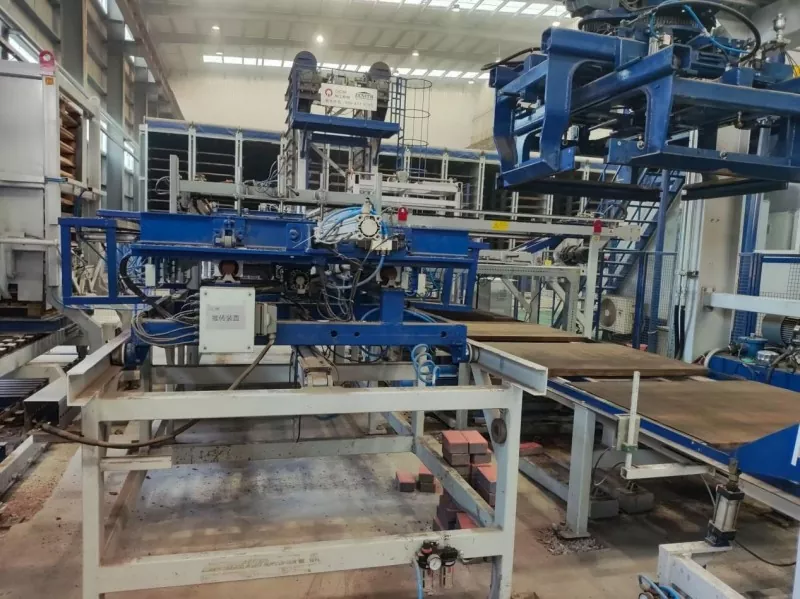
A manufacturer’s in-house production capability is closely linked to the reliability and long-term performance of its block making machines. When evaluating a concrete block machine supplier, buyers should look beyond product brochures and marketing claims and assess the manufacturer’s actual engineering and manufacturing capabilities, including production facilities, machine assembly processes, component quality control, manufacturing process management, equipment testing, engineering expertise, and quality assurance procedures.
Strong in-house manufacturing capabilities allow a block machine manufacturer to maintain tighter control over key production processes, verify equipment performance before delivery, and respond more effectively to project-specific technical requirements. This level of manufacturing control can contribute to more consistent equipment quality, greater production reliability, and stronger long-term support for concrete block production projects.
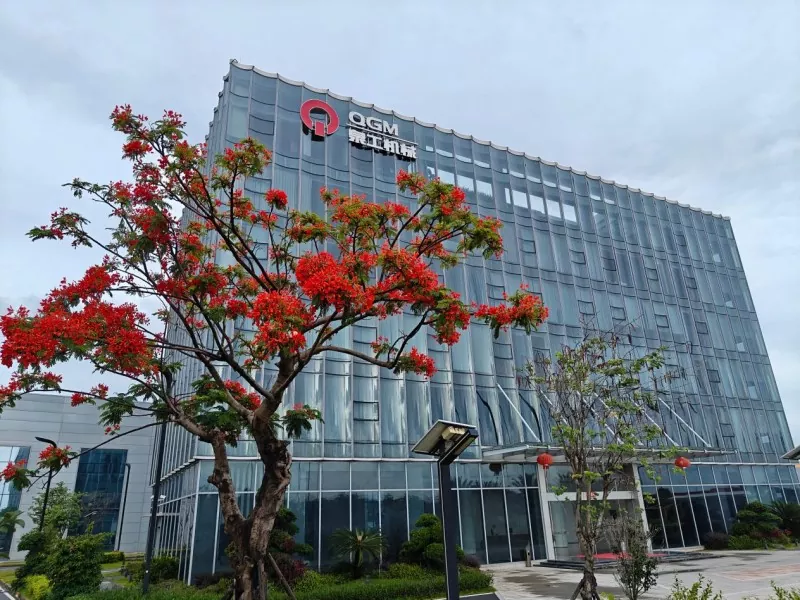
QGM has specialized in block making machinery since 1979.Over more than four decades, the company has developed from an equipment manufacturer into an integrated provider of block making solutions, covering machine manufacturing, production line engineering, automation, project implementation, and lifecycle technical support.
Rather than treating every project as a standard equipment order, QGM develops solutions around the customer's products, production targets, raw materials, factory conditions, and market requirements.
A production line designed for one market may not necessarily be suitable for another.
Climate, raw materials, electricity standards, construction practices, product specifications, labor availability, and operating conditions can vary significantly between countries.
QGM has delivered equipment and solutions to customers in more than 150 countries and regions, providing experience in a wide range of international operating environments.
This global project experience supports more effective equipment selection, engineering communication, installation, commissioning, and technical assistance.
The quality of a concrete block machine begins long before the machine reaches the customer's factory.
QGM operates modern manufacturing facilities with advanced production equipment and controlled manufacturing processes. Digital production management and precision manufacturing help maintain consistency across components and machine assembly.
For customers, this manufacturing foundation supports the long-term reliability and operational stability expected from heavy industrial equipment.
Purchasing a machine is only one step in establishing a concrete products plant.
An integrated concrete block production solution can cover the major stages of a project, from initial planning and production line engineering to equipment manufacturing, delivery, installation, commissioning, operator training, and ongoing after-sales support. By coordinating these stages under one project framework, manufacturers can simplify project management, improve communication between different systems, and reduce the complexity of working with multiple equipment suppliers.
A turnkey concrete block production line can be engineered according to the customer’s products, production capacity, raw materials, factory conditions, and automation requirements. Depending on the project scope, the system may integrate aggregate batching and concrete mixing, material conveying, block forming and vibration, pallet handling, curing, product stacking, and other supporting equipment.
Rather than combining individual machines from different sources, this integrated approach treats the production line as one coordinated manufacturing system. Proper system integration helps improve material flow, production stability, equipment utilization, and process control while providing a stronger foundation for long-term concrete product manufacturing performance.
Standardized equipment provides efficiency in manufacturing, but every production project has its own requirements.
A concrete block production system may require project-specific customization to match product specifications, target output, raw material characteristics, and site conditions. Depending on the application, customization can involve product dimensions and mold configurations, machine capacity, pallet specifications, material handling systems, factory layout, automation requirements, and local operating conditions. The objective is not to customize every component unnecessarily, but to configure the production line so that each system works efficiently within the customer’s actual manufacturing environment.
Different product strategies can also require different equipment priorities. For example, a manufacturer specializing in interlocking pavers may place greater emphasis on precise mold control, forming accuracy, vibration performance, and surface quality, while a high-volume concrete block producer may prioritize continuous production capacity, automated material and pallet handling, and overall line efficiency.
A capable block making machine manufacturer should therefore combine proven standard technologies with project-specific engineering expertise. By balancing standardized equipment platforms with application-focused customization, manufacturers can achieve a production system that is better matched to their products, operating conditions, and future production goals while maintaining reliable performance and cost-effective operation.
When comparing potential suppliers, several factors deserve particular attention.
Look for a manufacturer with a proven history in block machinery rather than a general machinery supplier entering the market.
Long-term specialization can provide valuable knowledge of equipment design, production processes, maintenance, and field applications.
A reliable supplier should be able to provide the major systems required for the production process.
This may include batching and mixing systems, block forming machines, pallet handling, conveyors, stacking equipment, and automated packaging solutions.
Large-scale production projects require coordination between engineering, manufacturing, logistics, installation, and commissioning.
A supplier with international project experience can help reduce communication and implementation risks.
Ask whether the supplier can adapt the equipment and production process to the available raw materials and target products.
This is particularly important when the plant uses locally sourced aggregates, industrial by-products, or recycled materials.
Equipment performance depends on proper installation, operation, maintenance, and timely technical assistance.
Before purchasing, buyers should understand how the manufacturer supports customers after commissioning, including spare parts, troubleshooting, operator training, maintenance recommendations, and remote technical assistance.
The true test of an equipment manufacturer often comes when standard solutions are no longer enough.
In one overseas project, a customer faced challenging operating conditions and production bottlenecks that affected the performance of its production line.
QGM's technical team analyzed the customer's operating environment and production requirements before developing a targeted solution.
Following commissioning and technical adjustments, the equipment achieved stable performance under the customer's working conditions.
The customer's positive experience with both the equipment and technical support subsequently led to the purchase of additional spare parts.
For an industrial equipment manufacturer, this type of project experience demonstrates an important principle: equipment value extends beyond the initial sale.
A reliable supplier should remain involved when customers encounter real production challenges in the field.
For international buyers, selecting QGM means partnering with an established block machinery manufacturer that brings equipment engineering, production line integration, and lifecycle support together under one organization. With more than 40 years of experience in block making technology, QGM provides automatic block making machines and complete concrete block production line solutions that can be configured for different products, production capacities, raw materials, and operating environments.
QGM’s international project experience across more than 150 countries and regions is supported by capabilities covering equipment manufacturing, system engineering, installation and commissioning, operator training, spare parts supply, and ongoing technical and after-sales service. This integrated project approach helps customers coordinate equipment and production-line requirements through a single technical partner while reducing the complexity of managing multiple suppliers.
For buyers evaluating a concrete block production investment, the decision therefore goes beyond the initial machine purchase. Considering equipment performance, production line integration, technical support, maintenance requirements, and long-term operational needs together can help manufacturers improve production reliability, control lifecycle costs, and achieve greater value from their block production equipment over time.
There is no single block making machine that can meet the requirements of every manufacturer. The right equipment depends on a combination of factors, including the types of concrete products to be manufactured, target production capacity, available raw materials, required automation level, factory conditions, and the technical support needed throughout the equipment lifecycle.
For this reason, selecting a block making machine manufacturer should begin with a clear understanding of the application rather than focusing solely on machine output or individual specifications. Instead of asking, “Which block machine has the highest production capacity?”, buyers should consider a more important question: “Which manufacturer can engineer the right production system for my products, market requirements, raw materials, operating conditions, and long-term production goals?”
An experienced concrete block machine manufacturer should be able to address these requirements through professional engineering analysis, proven equipment technology, project implementation experience, and comprehensive lifecycle support. This includes evaluating production needs, configuring the appropriate block making machine and supporting systems, integrating the complete production line, and providing installation, commissioning, training, spare parts, and technical assistance after delivery.
With more than 40 years of experience in block making technology, strong manufacturing capabilities, international project expertise, and integrated production solutions, QGM helps manufacturers develop concrete product production systems around their actual operating requirements. From establishing a new automatic block production line and expanding an existing facility to developing a complete turnkey concrete block production line, QGM provides equipment and engineering solutions designed to support reliable production, efficient operation, and long-term business growth.
If you are planning a new concrete block production project or upgrading an existing facility, QGM can evaluate your product requirements, production targets, raw materials, factory conditions, and automation needs to develop a suitable production solution. Contact QGM to discuss your project requirements and explore the right block making machine and production line configuration for your business.
△QGM – Automatic Block Making Machine Manufacturer and Concrete Production Solution Provider
Consider the manufacturer's experience, manufacturing capabilities, equipment portfolio, customization capabilities, international project experience, and after-sales support. The supplier should be able to provide a production solution that matches your products, capacity, raw materials, and operating conditions.
Key factors include the products you plan to manufacture, required production capacity, raw material characteristics, automation level, factory layout, product quality requirements, and long-term maintenance and service needs.
Yes. Depending on the machine configuration and molds, a modern block making machine can produce products such as hollow blocks, solid blocks, interlocking pavers, kerbstones, permeable paving products, and other customized concrete products.
A complete production line may include aggregate batching, concrete mixing, material conveying, block forming, pallet handling, curing, stacking, and packaging systems. The configuration should be designed according to the customer's products, production capacity, and factory conditions.
Yes. QGM provides installation and commissioning assistance, operator training, technical support, spare parts, maintenance guidance, and lifecycle services to help international customers maintain stable equipment performance and production efficiency.