In the modern concrete products industry, block strength is far more than a technical parameter. It directly affects structural safety, product quality, customer confidence, and long-term business competitiveness.
When concrete blocks begin to crack, absorb excessive water, or fail compressive strength tests, manufacturers often face more than just material waste. Poor-quality blocks can damage brand reputation, increase project risks, and reduce market trust.
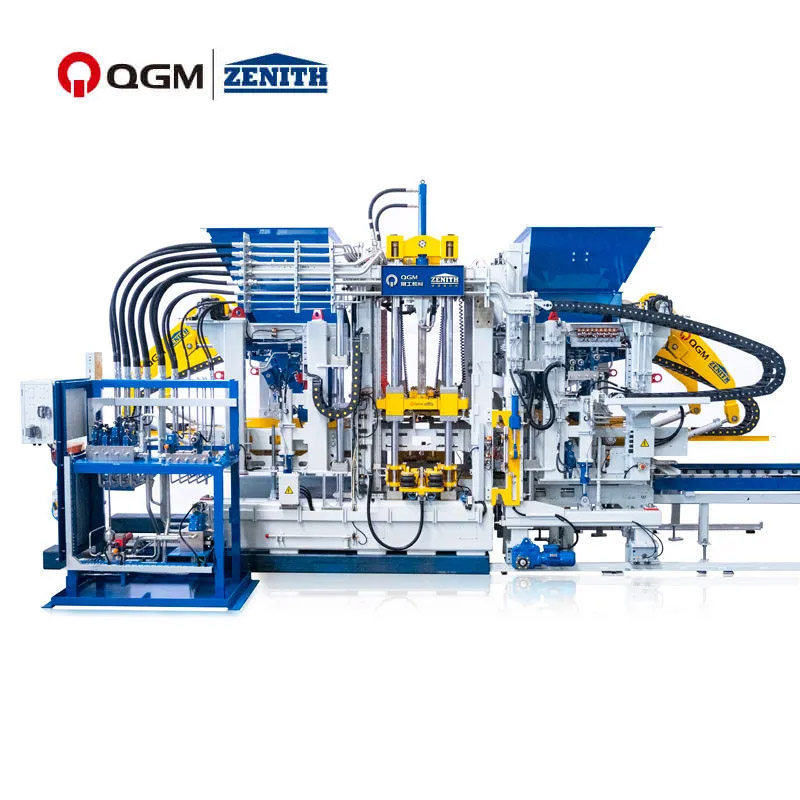
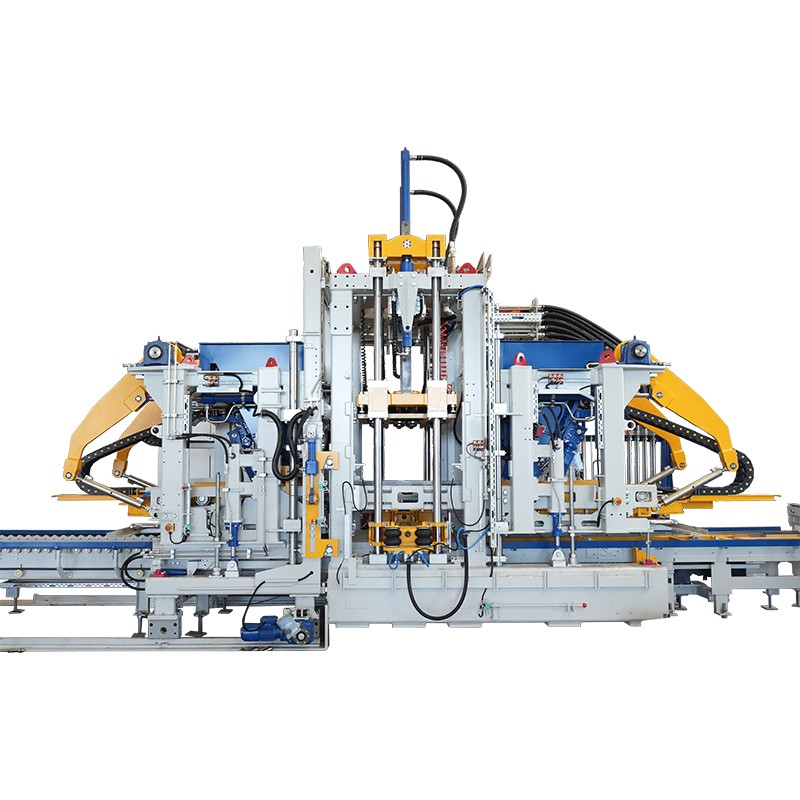
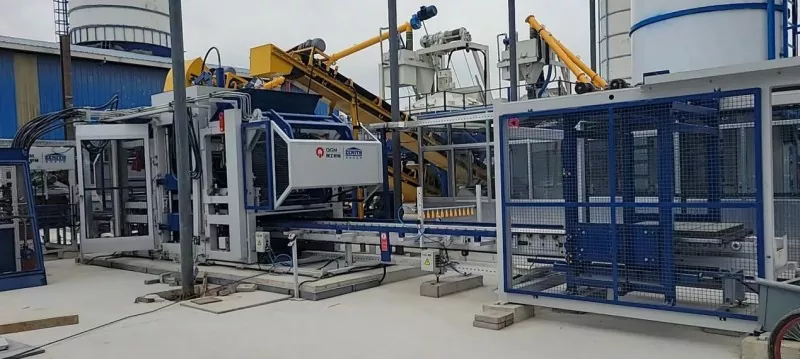
For factories operating a QGM block machine or a fully automatic concrete block production line, understanding the causes of weak concrete blocks is essential for achieving stable and sustainable production.
The good news is that most concrete block quality problems can be effectively prevented. In many cases, weak blocks are not caused by a single major issue, but rather by multiple small production inconsistencies throughout the manufacturing process.
This article explores the key reasons behind low-strength concrete blocks and explains how QGM intelligent block production technology helps manufacturers improve product quality and production efficiency.
Even the most advanced block making machine cannot compensate for poor-quality raw materials.
Low-quality aggregates may contain excessive clay, dust, organic impurities, or unstable particle grading. These issues weaken the internal bonding structure of the concrete and significantly reduce compressive strength.
Similarly, low-grade or improperly stored cement may lose hydration performance before production even begins.
Properly graded aggregates
Stable cement quality
Controlled moisture content
Clean water supply
In many factories, unstable raw materials remain one of the most underestimated reasons for weak concrete blocks.
Even small changes in aggregate moisture content can directly affect compaction density and curing performance.
The water-to-cement ratio is one of the most critical factors in concrete block production.
Too much water increases internal porosity after curing, resulting in lower density and weaker block strength. Insufficient water, on the other hand, prevents proper cement hydration and reduces bonding performance.
Some inexperienced operators attempt to improve concrete flowability by adding extra water during mixing. While this may temporarily improve workability, it often reduces the final compressive strength of the blocks.
A properly configured QGM concrete block production line maintains a balanced mix design to ensure both effective compaction and sufficient hydration.
Modern batching and intelligent mixing systems provide far more stable production consistency than manual operation alone.
Compaction quality directly determines concrete density and block strength.
If vibration force is unstable or unevenly distributed, air voids remain trapped inside the concrete structure. These voids weaken compressive performance and increase the risk of cracking during transportation and construction.
This is why advanced vibration technology is one of the core technologies in every high-performance QGM block making machine.
QGM adopts advanced servo vibration systems and precision vibration table technology to improve vibration efficiency and ensure uniform material distribution inside the mould cavity.
More uniform concrete compaction
Higher product density
Better surface quality
Reduced cement consumption
Improved dimensional consistency
In practical production, stable and uniform vibration is often more important than simply increasing vibration intensity.
Mould precision directly affects block density, dimensional accuracy, and product appearance.
When mould components become worn, several production problems may occur:
Uneven material distribution
Inconsistent block dimensions
Poor edge formation
Reduced compaction efficiency
Surface cracking during demoulding
QGM mould systems are manufactured with high-precision processing technology and undergo professional heat treatment to improve wear resistance and operational stability.
This ensures:
Accurate mould installation
Stable machine operation
Smooth demoulding performance
Consistent product geometry
In industrial concrete block manufacturing, mould precision is a critical factor in ensuring long-term product consistency and production stability.
Even perfectly formed blocks can become weak if curing conditions are not properly controlled.
Concrete strength develops through cement hydration, not simple drying. If moisture evaporates too quickly, hydration becomes incomplete and the internal structure becomes brittle.
●Direct sunlight exposure immediately after production
●Insufficient curing time
●Poor humidity management
●Irregular water spraying
For this reason, curing management should be considered an essential part of the entire production process.
●Higher compressive strength
●Lower rejection rates
●Better product consistency
Hydraulic system stability plays a major role in block quality.
Unstable hydraulic pressure may affect:
●Pressing force
●Vibration coordination
●Mould synchronization
●Product density distribution
QGM fully automatic block machines adopt advanced hydraulic control systems with precise pressure regulation and stable cycle transitions.
●Stable operating pressure
●Improved energy efficiency
●Reduced mechanical wear
●More reliable continuous production
For high-temperature production environments, optional oil cooling systems help maintain hydraulic stability and prevent overheating-related pressure fluctuations.
Reliable hydraulic performance is especially important for large-scale automatic block production lines operating under heavy workloads.
Many production problems are caused not by machine failure, but by inconsistent operational management.
Operators may unintentionally change:
●Water ratios
●Feeding volumes
●Vibration duration
●Production parameters
without fully understanding the impact on block quality.
This is where intelligent automation becomes increasingly valuable.
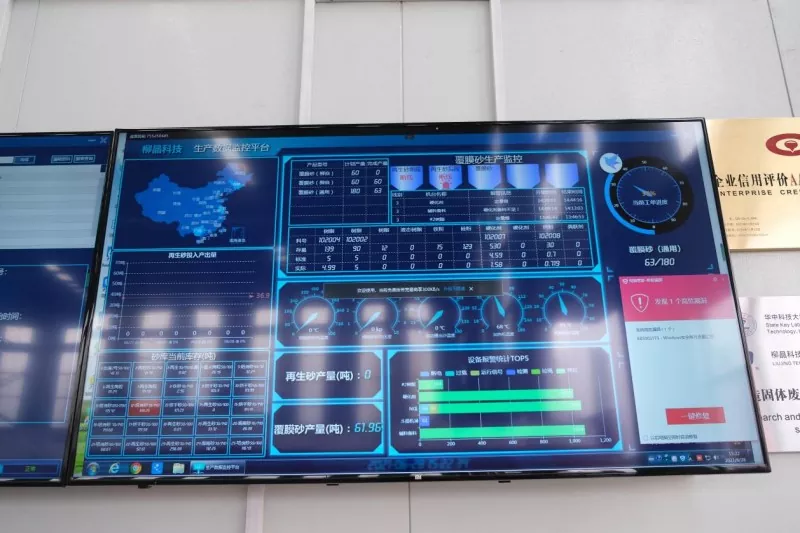
QGM integrates advanced PLC control systems, intelligent touchscreen operation, intelligent cloud service system, and remote diagnostic technology to ensure stable and efficient production management.
Through real-time data monitoring, manufacturers can:
●Optimize production parameters
●Reduce human error
●Improve product consistency
●Increase operational efficiency
In modern concrete block manufacturing, stable process control is becoming more important than manual experience alone.
Manufacturers aiming to improve concrete block quality should focus on systematic production optimization rather than isolated adjustments.
Recommended strategies include:
●Using stable, high-quality raw materials
●Maintaining accurate water-cement ratios
●Improving vibration consistency
●Regularly inspecting mould wear
●Strengthening curing management
●Monitoring hydraulic system stability
●Standardizing operator procedures
●Implementing intelligent automation systems
Long-term product quality is achieved through disciplined process control and stable production management.
Weak concrete blocks are rarely caused by a single problem. In most cases, they result from multiple hidden inconsistencies throughout the production process.
Every production stage matters:
●Raw material quality
●Mixing accuracy
●Vibration efficiency
●Mould precision
●Hydraulic coordination
●Curing management
●Intelligent process control
When one part of the system becomes unstable, overall block quality inevitably suffers.
For manufacturers operating in increasingly competitive markets, product quality is no longer just an advantage — it is the foundation of long-term business success.
QGM combines German technology, intelligent automation, and advanced manufacturing systems to help customers achieve:
●Higher block strength
●Better product consistency
●Lower production costs
●Greater operational reliability
Because behind every high-quality concrete block stands a reliable and intelligent production system.
Incorrect water-to-cement ratio and insufficient compaction are among the most common causes. Poor raw materials and improper curing conditions also significantly reduce block strength.
Yes. Worn moulds reduce compaction consistency and dimensional accuracy, which may lead to internal weakness and surface defects.
Proper vibration removes trapped air and increases concrete density, improving compressive strength and reducing cracking risk.
Curing time depends on materials and environmental conditions, but maintaining proper moisture during the early curing stage is critical for strength development.
Yes. Intelligent PLC systems and real-time monitoring help maintain stable production parameters, reduce human error, and improve production consistency.