In today's concrete products industry, block quality is far more than a visual assessment. It is a critical performance benchmark that directly affects structural reliability, service life, and compliance with construction standards. Whether blocks are used in residential developments, commercial projects, or infrastructure applications, consistent quality control is essential for achieving dependable results.
For manufacturers, accurately evaluating concrete block quality helps reduce rejection rates, improve customer confidence, and maintain a competitive position in the market. A comprehensive assessment should combine standardized testing, production data analysis, and process consistency verification.
A high-performance concrete block is the result of controlled raw materials, precise manufacturing, and stable curing conditions. Rather than focusing on a single property, quality should be assessed through a combination of physical, mechanical, and dimensional characteristics.
Key evaluation criteria include:
●Compressive strength to verify load-bearing capability
●Density uniformity throughout the block structure
●Dimensional accuracy for reliable installation and alignment
●Water absorption performance to assess moisture resistance
●Surface consistency and finish quality for appearance and durability
Together, these indicators provide a complete picture of how a concrete block will perform under actual service conditions.
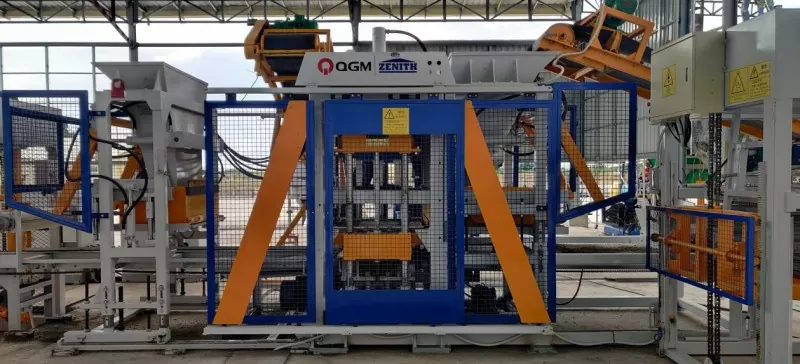
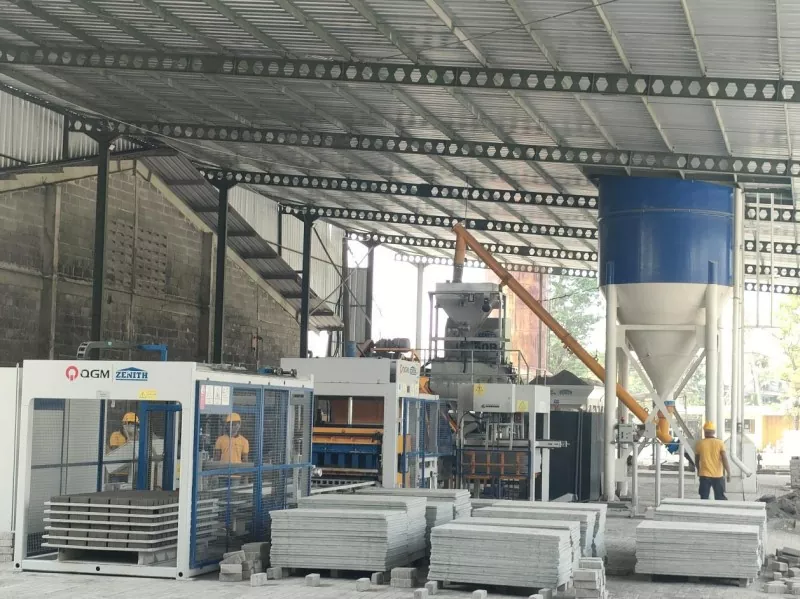
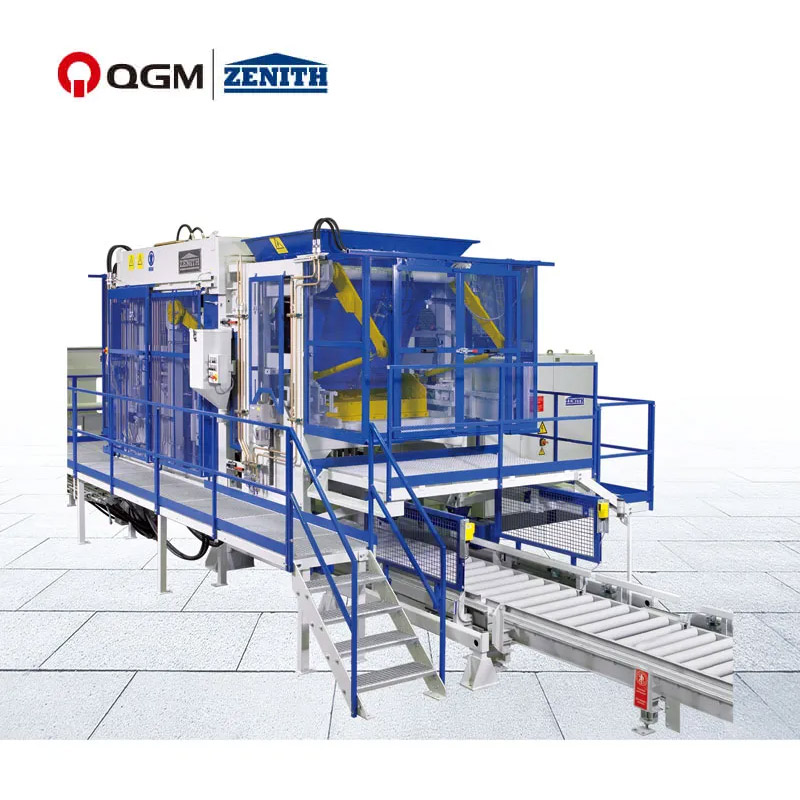
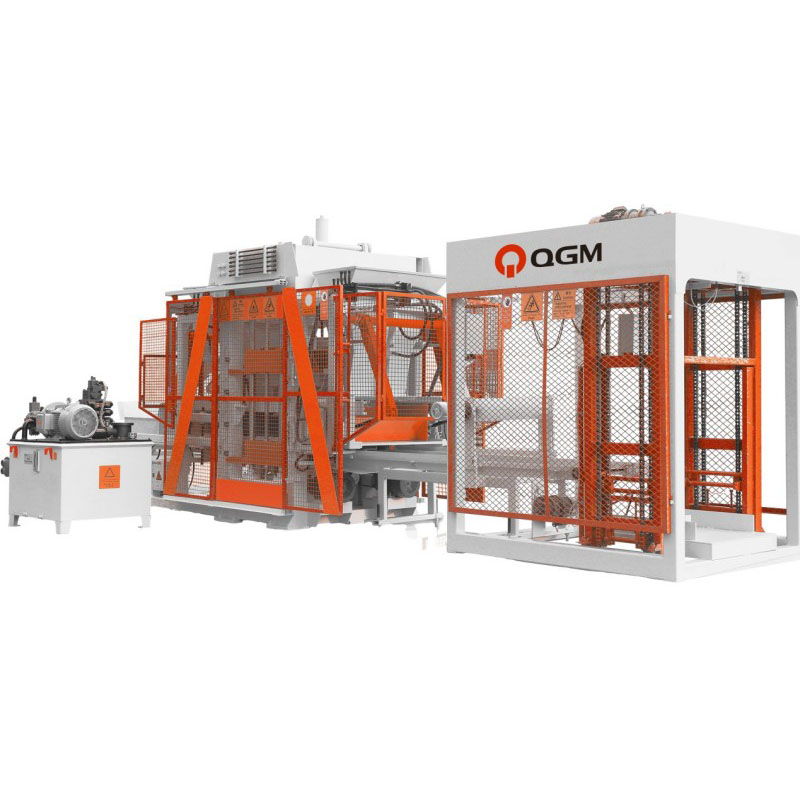
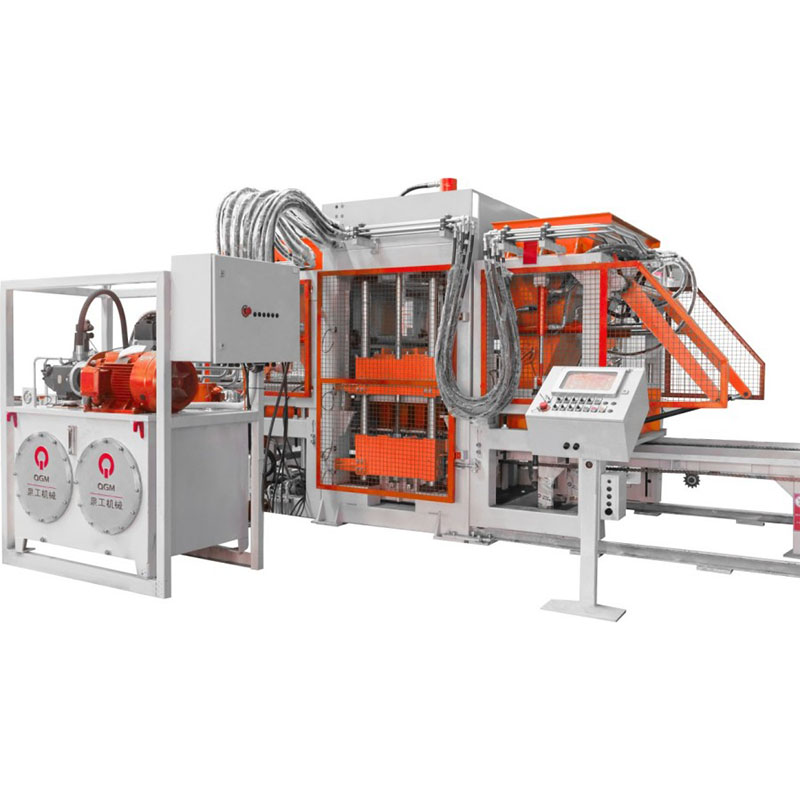
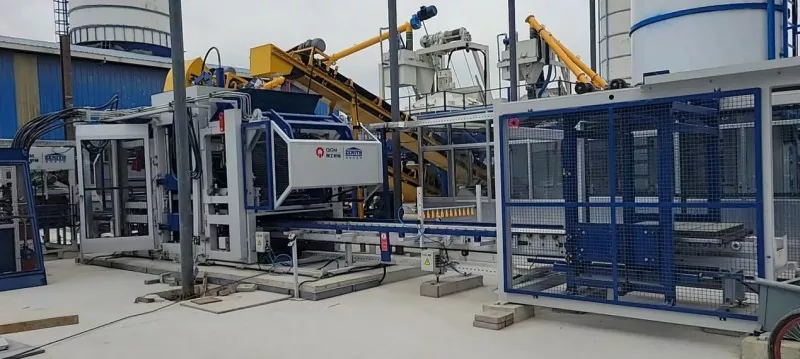
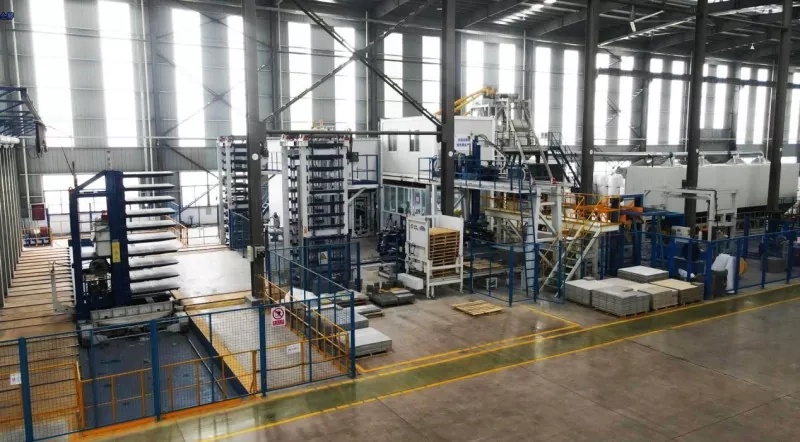
Modern production systems from QGM are designed to support this quality-focused approach by combining advanced compaction technology, precise hydraulic control, intelligent automation, and high-accuracy mold engineering. The result is a manufacturing process capable of producing concrete blocks with repeatable quality and predictable performance across every production batch.
Ultimately, quality is not determined by appearance alone—it is defined by measurable properties that ensure a concrete block can meet structural requirements, withstand environmental exposure, and deliver long-term reliability in the field.
Among all quality indicators, compressive strength remains the most critical benchmark. This test determines how much pressure a concrete block can withstand before structural failure occurs.
During testing, samples are placed in a compression testing machine and subjected to increasing force until failure.
Important evaluation criteria include:
●Compressive strength measured in MPa
●Consistency between multiple test specimens
●Uniform force application during testing
A concrete paving block that achieves the target strength consistently across production batches is often a stronger indicator of manufacturing quality than occasional peak test results.
Domain Knowledge: Significant variations between samples frequently point to inconsistencies in compaction, moisture control, or curing conditions rather than deficiencies in raw materials.
Even high-strength blocks can create installation problems if dimensional tolerances are not maintained.
Quality inspections typically verify:
●Overall length, width, and height
●Corner squareness
●Edge straightness
●Compliance with specified tolerances
Accurate dimensions improve wall alignment, reduce mortar consumption, and increase construction efficiency on-site.
When dimensions begin to drift outside acceptable limits, mold wear, machine alignment, or process instability may be the underlying cause.
Density provides valuable information about material distribution and compaction effectiveness.
The calculation is straightforward: Density = Mass ÷ Volume
Generally:
●Higher density contributes to improved strength and durability
●Lower density may indicate trapped air pockets or incomplete compaction
●Consistent density across batches reflects stable production conditions
For manufacturers, density testing serves as an effective way to verify that forming parameters remain properly controlled.
Moisture resistance is a major factor in the service life of concrete products.
Water absorption testing measures the increase in block weight after immersion under controlled conditions.
Lower absorption rates typically indicate:
●Reduced porosity
●Better weather resistance
●Improved durability in demanding environments
Excessive absorption can contribute to deterioration over time, especially in regions exposed to heavy rainfall, freeze-thaw cycles, or aggressive environmental conditions.
While laboratory testing provides quantitative data, visual inspections remain an important first line of quality control.
Inspectors should look for:
●Surface uniformity
●Edge integrity
●Color consistency
●Cracks, chips, or honeycombing
●Defects caused by improper compaction
Visible imperfections often reveal process variations that may later affect structural performance.
Testing identifies quality levels, but manufacturing technology determines whether those results can be repeated consistently.
Equipped with the Zenith Ultra Dynamic Vibration System, QGM concrete paving block making machine achieve highly efficient material compaction through optimized vibration distribution. The system promotes higher concrete density, increases production efficiency, and lowers raw material costs by minimizing unnecessary cement usage.
The result is a more homogeneous block structure with improved strength consistency.
Forming pressure must remain stable throughout every production cycle.
QGM hydraulic systems combine precision-controlled proportional and directional valves from Japan with high-performance hydraulic pumps from the United States. This configuration delivers:
●Smooth machine movement
●Accurate pressure control
●Consistent block formation
●Reliable operation during continuous production
Modern quality control begins on the production floor.
QGM integrates the SIEMENS S7-1500 PLC platform with touchscreen operation and remote monitoring functionality. Operators can:
●Monitor machine performance in real time
●Adjust production parameters quickly
●Track process stability
●Reduce variability between shifts
This data-driven approach helps maintain repeatable product quality over long production runs.
Dimensional accuracy starts with mold quality.
QGM manufactures molds compatible with major industry platforms, including MASA, HESS, ZENITH, POYATOS, BESSER, and TIGER. Each mold undergoes heat treatment to improve wear resistance and maintain dimensional precision throughout its service life.
Benefits include:
●Consistent block geometry
●Improved demolding performance
●Reduced production defects
●Extended mold lifespan
The most successful manufacturers treat quality testing as a continuous improvement tool rather than a final inspection procedure.
Testing results should directly guide production adjustments:
●Strength fluctuations may indicate the need to optimize material ratios or vibration settings.
●Dimensional deviations often suggest mold wear or alignment issues.
●Density inconsistencies may require adjustments to compaction parameters.
●Elevated absorption rates can point to curing or mix-design problems.
By connecting testing data with process optimization, manufacturers create a closed-loop quality management system that continuously improves performance.
Concrete block manufacturing is evolving from experience-based production toward precision-driven manufacturing. Today's leading producers focus not only on meeting specifications but on achieving repeatable quality across every batch.
QGM supports this approach through the integration of advanced vibration technology, intelligent automation, precision hydraulic control, and high-performance mold engineering. Together, these systems enable manufacturers to produce concrete blocks with predictable strength, dimensional accuracy, and long-term durability.
The first benchmark is usually compressive strength, as it reflects the block’s load-bearing capability. However, a complete evaluation should also include density, moisture absorption, dimensional tolerance, and surface integrity to ensure overall product performance.
Industry practice typically recommends testing a representative group of samples rather than a single block. Evaluating at least several units from the same production batch helps identify variations and provides a more accurate picture of manufacturing consistency.
Not entirely. Surface checks can reveal obvious defects such as cracks, edge damage, or color inconsistencies, but they cannot accurately measure internal strength, density, or absorption characteristics. Laboratory and field tests remain essential for objective quality verification.
Yes. Factors such as vibration efficiency, forming pressure, raw material consistency, curing conditions, and mold accuracy all affect the final test values. Even small process deviations can lead to noticeable differences in block performance.
In commercial construction projects, uniform performance across every block is more valuable than a few exceptionally strong samples. Consistent quality improves installation efficiency, reduces structural uncertainty, and helps ensure long-term durability throughout the entire project lifecycle.