Introduction: The Foundation of Premium Block Manufacturing
In the realm of concrete block manufacturing, machinery like those from QGM sets the standard for production efficiency, but the true foundation of product excellence lies in the precise balance of cement and aggregate. This foundational ratio is the ultimate determinant of a block’s compressive strength, structural density, long-term durability, and aesthetic surface finish. Even marginal miscalculations in this formula can cascade into severe quality defects, including structural cracking, inconsistent curing, and compromised integrity. Mastering these material proportions is not just about avoiding failures; it is the strategic key to delivering consistently superior blocks while optimizing raw material expenditures.
1. Functional Synergy of Cement and Aggregate
Every ingredient in a concrete block formulation serves a distinct mechanical purpose:
●Cement acts as the chemical binder, undergoing hydration to create a rigid, enduring matrix that locks the materials together.
●Aggregate functions as the structural backbone, occupying volume, minimizing voids, and dictating the overall mass and density of the finished product.
Simply increasing cement content is a flawed strategy; it drives up operational costs and elevates the risk of shrinkage cracking. Conversely, poorly graded aggregate creates vulnerable internal zones. The true engineering sweet spot lies in achieving optimal particle packing density. By maximizing how well the aggregates interlock, manufacturers can significantly boost structural integrity while keeping cement consumption—and associated expenses—at a minimum.
2. Optimizing Ratios for Maximum Compressive Strength
Compressive strength remains the primary benchmark for block quality, and it is heavily dictated by the precise balance between cement and aggregate. While boosting cement levels enhances bonding capacity initially, there is a definitive point of diminishing returns where added material only inflates costs without yielding proportional strength gains.
A meticulously proportioned aggregate blend minimizes empty spaces, facilitates uniform compaction under pressure, and maximizes inter-particle adhesion. Suboptimal ratios, on the other hand, result in porous structures, compromised density, and unpredictable performance across production batches.
Engineering Note: Relying on generic formulas is insufficient. Empirical testing tailored to the specific characteristics of local cement and regional aggregates is mandatory to guarantee consistent, reliable block performance.
3. Balancing Workability with Structural Integrity
Achieving a highly workable mix is essential for smooth molding operations, but overcompensating with water introduces severe structural flaws. Excess moisture leaves behind microscopic pores as it evaporates, directly degrading both density and compressive strength. The ideal mix design strikes a delicate balance: providing just enough fluidity for seamless production while maintaining a strictly controlled, low water-to-cement ratio to maximize final strength.
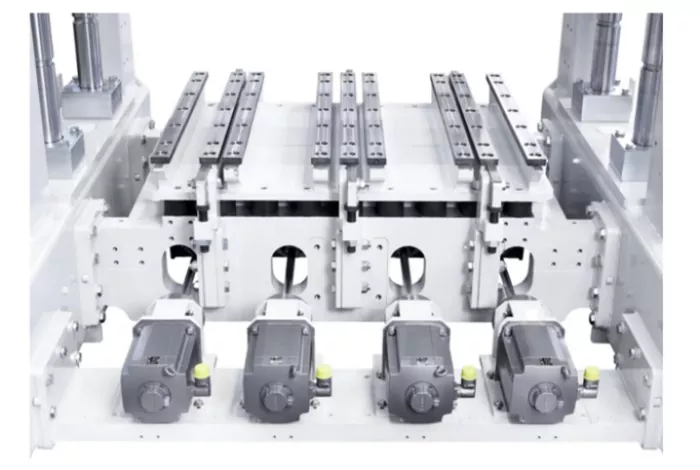
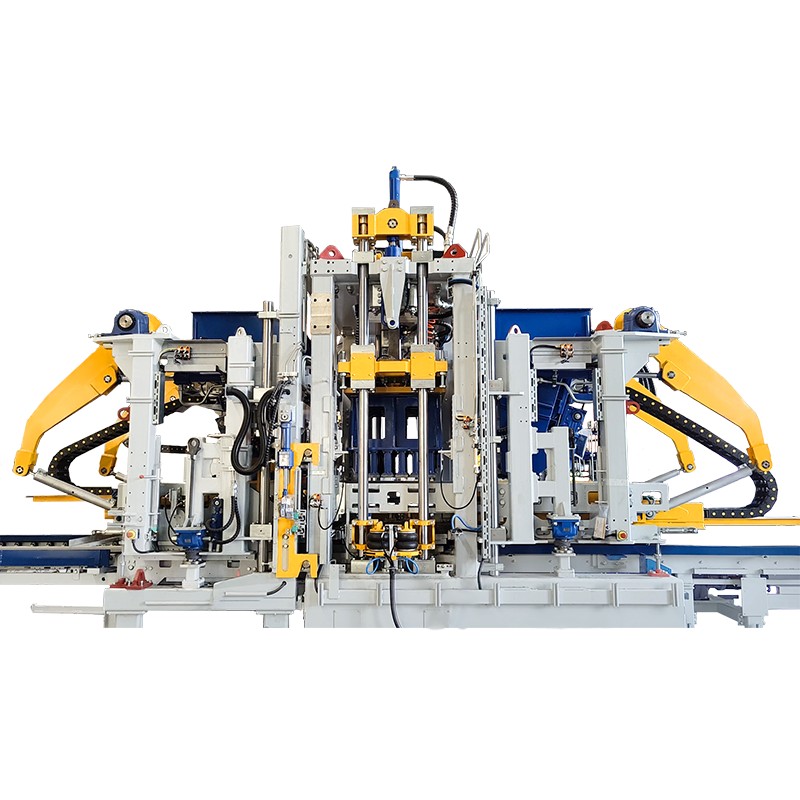
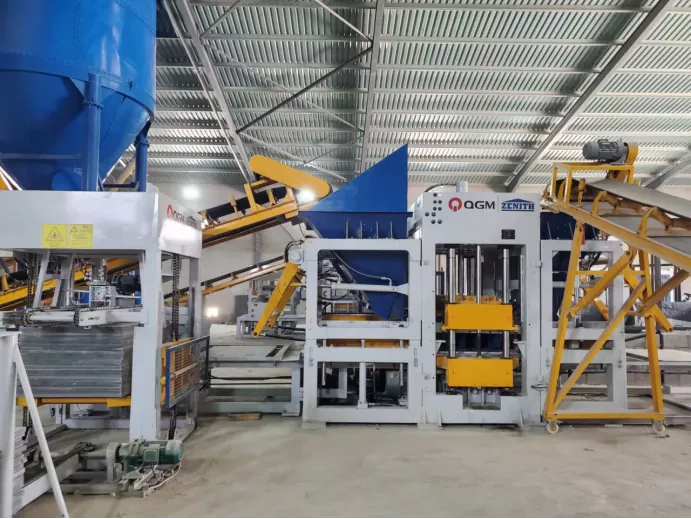
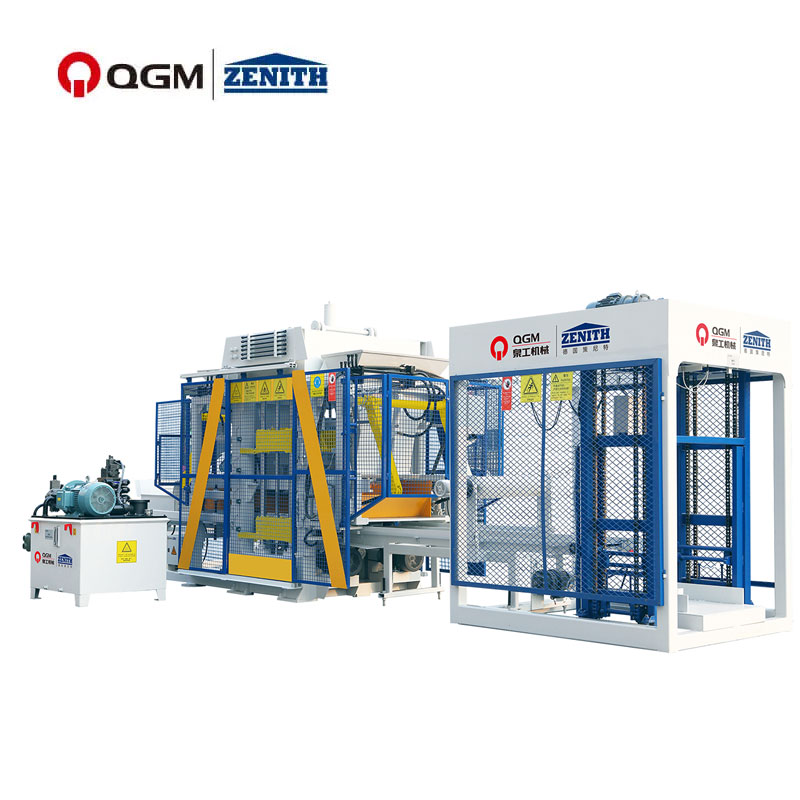
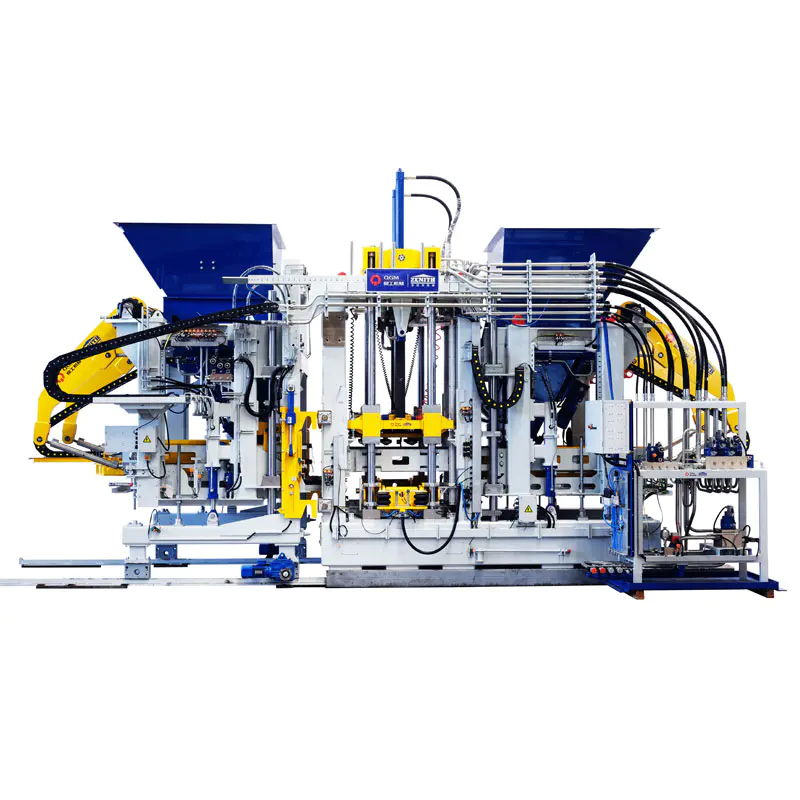
This equilibrium is made possible through advanced mechanical compaction. QGM innovative Zenith ultra dynamic vibration system. This specialized external configuration drastically reduces internal resistance during the vibration phase, ensuring flawless compaction. The result is a denser, stronger block that requires less cement, ultimately driving superior production efficiency and cost-effectiveness.
4. Ensuring Batch-to-Batch Consistency
Even the most scientifically sound mix design will fail if the proportions fluctuate during production, leading to dimensional inaccuracies and unpredictable curing times. To eliminate human error and stabilize outcomes, modern manufacturing relies heavily on intelligent automation.
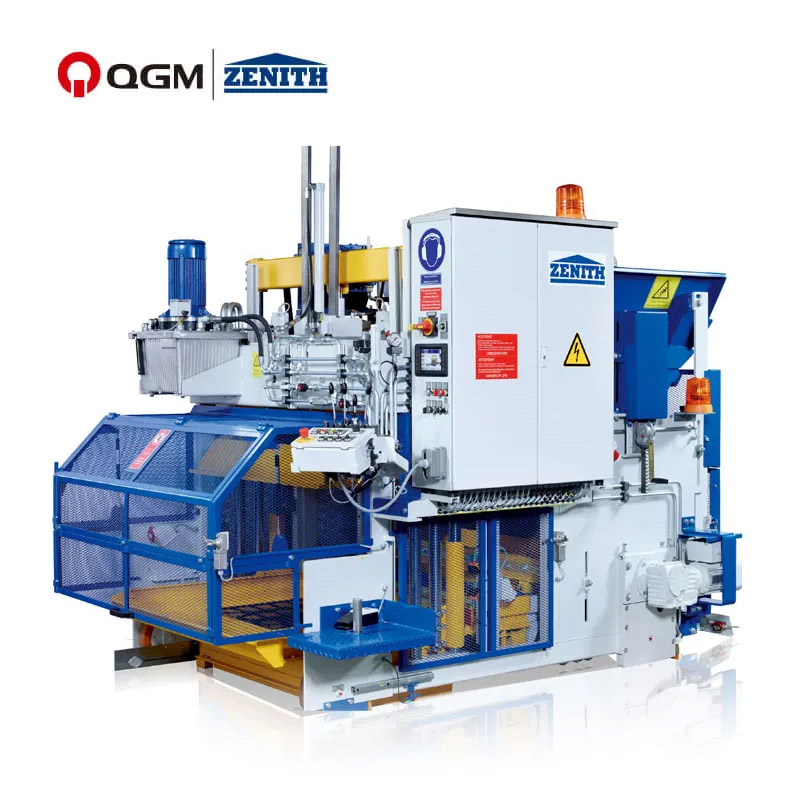
QGM integrates an advanced SIEMENS S7-1500 PLC control system equipped with a user-friendly touch panel and remote monitoring capabilities. This centralized control allows operators to track real-time machine performance, make precise parameter adjustments remotely, and guarantee that every single batch of blocks meets strict quality standards without deviation.
5. The Importance of Hydraulic Precision
A perfectly optimized material ratio is useless if the feeding mechanism cannot deliver it accurately. QGM addresses this critical need through a premium hydraulic station engineered for ultimate precision. The system ensures exact material flow rates. This flawless synchronization prevents aggregate segregation and maintains absolute mixture homogeneity in every single mold cavity.
6. Mold Engineering and Dimensional Accuracy
The mold serves as the ultimate blueprint, dictating the block's geometry, surface texture, and overall dimensional tolerance. QGM manufactures highly durable molds designed to be fully compatible with major international brands such as MASA, HESS, ZENITH, POYATOS, BESSER, and TIGER. Through rigorous heat treatment and precision machining, these molds ensure consistent sizing, exceptionally smooth finishes, and extended operational lifespan under demanding production conditions.
7. Driving Cost Efficiency via Mix Optimization
Strategic refinement of cement and aggregate ratios empowers manufacturers to significantly lower raw material expenses while simultaneously elevating structural strength. By leveraging superior particle packing principles alongside advanced mechanical compaction techniques, producers can consistently manufacture premium-grade blocks using less cement, thereby maximizing profit margins.
Conclusion: Quality Begins at the Formulation Stage
Ultimately, superior concrete block manufacturing is where advanced machinery meets applied materials science. The fundamental interplay between cement and aggregate dictates the final product's strength, durability, and consistency.
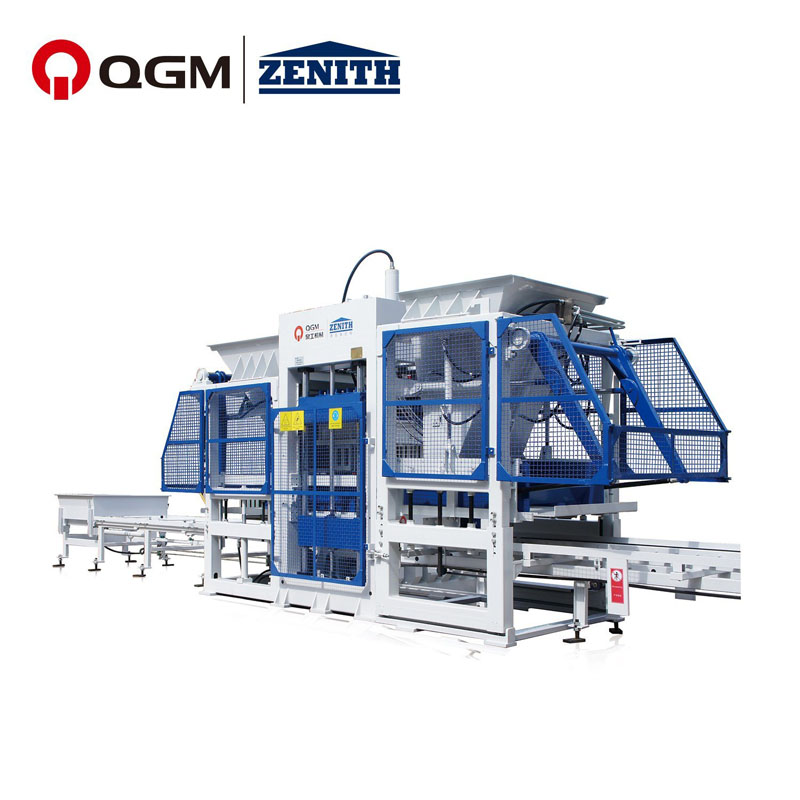
When meticulous material optimization is paired with QGM state-of-the-art equipment—featuring precision hydraulics, intelligent PLC control systems, and innovative four-shaft vibration compaction technology—manufacturers unlock new levels of efficiency and sustainability. Mastering the delicate balance of mix ratios remains the true cornerstone of producing competitive, top-tier concrete blocks in today's market.
Frequently Asked Questions (FAQ)
1. Is there a single best cement-to-aggregate ratio for maximum block strength?
There is no universal "magic number" for mix proportions, as the ideal ratio heavily depends on the specific properties of your raw materials and your target strength requirements. Rather than simply maximizing the amount of cement, the most effective approach is to focus on optimizing particle packing density. A well-graded aggregate blend provides superior structural integrity without relying solely on excessive cement content.
2. How can manufacturers reduce cement consumption without sacrificing block quality?
It is entirely possible to lower cement usage while maintaining high compressive strength and density. This is achieved through two key factors: precise aggregate proportioning and highly effective mechanical compaction. When aggregates are properly graded and subjected to optimal vibration pressure, they interlock tightly, allowing you to use less cement paste while still producing dense, durable blocks.
3. What role does equipment play in executing an optimized mix design?
Even a perfectly calculated mix will fail if the machinery cannot execute it accurately. Advanced manufacturing equipment plays a vital role in translating theoretical ratios into consistent physical performance. Features such as precision hydraulic feeding systems, high-efficiency vibration mechanisms, and automated monitoring prevent material segregation and ensure uniform distribution. This guarantees that every block achieves the exact density and strength intended by the mix design.
We use cookies to offer you a better browsing experience, analyze site traffic and personalize content. By using this site, you agree to our use of cookies.Privacy Policy